
Helium-3 Mining on the Moon: Future Energy Solution Explained
Discover what Helium-3 is and why lunar mining could revolutionize future energy production. Explore the potential of Helium-3 as a clean fuel source.
Understanding Helium-3 and Its Growing Importance
Helium-3 represents one of the most promising energy resources that scientists and space entrepreneurs are targeting for future development. This rare isotope has captured significant attention as demand for clean and sustainable energy solutions continues to escalate globally. Helium-3 mining on the moon has emerged as a strategic objective for several nations and private space companies looking to secure energy independence and advance technological capabilities.
Helium-3 is a stable, non-radioactive isotope of helium that contains two protons and one neutron. Unlike its more common counterpart, Helium-4, this isotope offers unique properties that make it exceptionally valuable for advanced applications. The element was discovered in lunar samples brought back by Apollo astronauts, revealing that substantial quantities exist within the moon's surface material. This discovery fundamentally changed how space agencies and researchers view our natural satellite.
Why Helium-3 Is So Valuable
The exceptional value of Helium-3 stems from multiple factors that intersect economics, physics, and environmental concerns. On Earth, Helium-3 is extraordinarily scarce and expensive to produce or extract. Current production methods are limited and costly, making the element prohibitively expensive for most applications. Market analysts forecast that demand for Helium-3 will surge dramatically over the coming decades as industries recognize its potential benefits.
One of the most compelling reasons for Helium-3's importance relates to nuclear fusion technology. Researchers worldwide are developing fusion reactors that could utilize Helium-3 as a fuel source, potentially providing virtually limitless clean energy without the radioactive waste problems associated with traditional nuclear fission. This breakthrough could fundamentally transform global energy production and address climate change concerns more effectively than existing renewable technologies.
Beyond fusion applications, Helium-3 possesses valuable uses in medical imaging, semiconductor manufacturing, and advanced detection systems. Medical institutions require Helium-3 for neutron detection in diagnostic equipment, while electronics manufacturers depend on it for precision applications. The combination of limited terrestrial supply and expanding industrial demand creates a perfect scenario for exploring alternative sources.
Lunar Deposits and Mining Potential
The moon's surface contains significant concentrations of Helium-3 that accumulated over billions of years. Solar wind continuously bombards the lunar regolith, embedding Helium-3 particles within the soil. Scientists estimate that the moon contains millions of tons of Helium-3, a quantity sufficient to meet global energy demands for centuries if extraction and utilization technology can be properly developed.
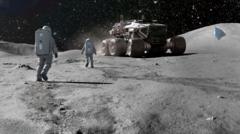
Mining Helium-3 on the moon presents both tremendous opportunities and substantial technical challenges. The proposed extraction process would involve heating lunar regolith to release trapped helium isotopes, which would then be collected and transported back to Earth. Early studies suggest that a modest mining operation could extract enough Helium-3 to significantly impact global energy markets and technological development.
Technological and Logistical Challenges
Establishing Helium-3 mining operations on the lunar surface requires overcoming numerous engineering obstacles. Transportation costs represent one of the most significant barriers, as moving equipment and personnel to the moon remains extraordinarily expensive. Space agencies are actively developing reusable rocket systems and autonomous mining equipment to reduce operational costs and make lunar mining economically viable.
Environmental factors also complicate mining efforts. The harsh lunar environment, characterized by extreme temperature fluctuations, vacuum conditions, and radiation exposure, demands specialized equipment and protection systems. Robotic mining systems would need to operate reliably for extended periods without maintenance, requiring revolutionary advances in autonomous technology and materials science.
International cooperation and legal frameworks must also be established before commercial Helium-3 mining can commence. The Outer Space Treaty of 1967 governs space exploration activities, though specific provisions regarding resource extraction remain ambiguous. Nations are currently negotiating agreements to clarify ownership rights and establish guidelines for lunar mining operations.
Future Prospects for Space-Based Energy Solutions
Multiple organizations have announced ambitious plans to develop lunar mining capabilities within the next two decades. Space agencies including NASA, ESA, and private companies like SpaceX are investing in technologies that could make Helium-3 extraction feasible. These initiatives represent a significant shift in how humanity approaches energy security and space resource utilization.
The convergence of fusion technology development, declining launch costs, and growing energy demand creates favorable conditions for lunar Helium-3 mining to become reality. Successful implementation could fundamentally reshape global energy markets and establish permanent human presence on the moon. This transformation would represent one of humanity's most significant achievements in space exploration and scientific advancement.


