
Technology's Growing Role in Wildfire Detection
Explore how tech innovations are enhancing wildfire monitoring and detection systems while firefighters remain essential for suppression efforts.
The Evolution of Wildfire Detection Systems
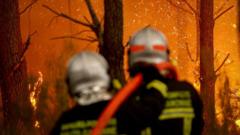
Wildfire detection technology has undergone significant transformation in recent years, revolutionizing how authorities identify and respond to emerging threats. While advanced systems now provide unprecedented monitoring capabilities, the reality remains that human firefighters continue to play an indispensable role in actual suppression operations across the globe.
The integration of wildfire detection technology into emergency management protocols represents a crucial advancement in fire prevention strategy. Satellite imagery, drone surveillance, and artificial intelligence algorithms now work in concert to identify smoke and heat signatures across vast territories. These innovations have dramatically reduced response times and improved situational awareness for incident commanders coordinating ground operations.
Current Technological Innovations in Fire Monitoring
Satellite and Remote Sensing Systems
Modern satellite networks continuously scan landscapes for thermal anomalies and smoke patterns associated with active fires. These fire monitoring systems can detect fires within minutes of ignition, transmitting real-time data to command centers. The precision of contemporary sensors allows dispatchers to pinpoint fire locations with remarkable accuracy, enabling faster resource deployment to threatened communities.
Artificial Intelligence and Predictive Analysis
Machine learning algorithms now analyze historical fire patterns, weather conditions, and vegetation density to predict high-risk areas. These systems process vast amounts of meteorological and geographic data simultaneously, identifying zones where conditions favor rapid fire spread. Such predictive capabilities allow agencies to pre-position resources strategically before emergencies occur.
Drone Technology and Real-Time Assessment
Unmanned aerial vehicles provide ground-level perspectives that static sensors cannot capture. Drones equipped with thermal cameras assess fire intensity, identify structures at risk, and locate civilians needing evacuation assistance. This aerial reconnaissance capability significantly enhances firefighter safety by providing critical information before personnel enter dangerous zones.
Why Firefighters Remain Essential
The Human Element in Suppression
Despite technological advances, emergency response technology cannot replicate the adaptability and decision-making capabilities of trained firefighters. Suppression operations involve complex tactical assessments that require experience, judgment, and split-second adjustments to changing conditions. Trained personnel must navigate hazardous terrain, operate heavy equipment, and coordinate rescue missions—tasks that remain fundamentally human-dependent.
Ground-Level Operations and Safety
Wildfire prevention and actual fire suppression demand on-site presence and immediate action. Firefighters conduct controlled burns, construct firebreaks, remove dangerous vegetation, and rescue people and animals in immediate danger. These hands-on operations cannot be automated or conducted remotely, making personnel irreplaceable during active incidents.
The Complementary Partnership Model
The most effective fire response systems combine technological innovation with human expertise. Fire monitoring systems provide situational awareness that allows commanders to deploy resources more strategically. Technology handles information gathering and pattern recognition, while trained firefighters focus on direct intervention and emergency management.
Agencies worldwide are investing in hybrid approaches that maximize technological advantages while maintaining robust firefighting personnel and training programs. This integrated model acknowledges that technology enhances but does not replace human capability in battling wildfires.
Future Outlook for Wildfire Management
Continued development of wildfire detection technology will likely improve response capabilities further. However, climate change and expanding wildland-urban interfaces suggest that actual suppression demands will increase rather than decrease. This reality underscores that technology serves as a force multiplier for firefighters rather than a substitute for their critical role.
Investment in both advanced monitoring systems and trained emergency response personnel represents the most prudent strategy for communities facing increasing wildfire threats. The synergy between sophisticated technology and experienced firefighters creates the most effective defense against these escalating natural disasters.


