Why Feral Children Deserve Freedom to Explore
Discover why allowing children to roam freely builds independence and resilience. Expert insights on feral children and modern parenting challenges.
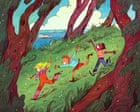
The Paradox of Modern Childhood
Society sends contradictory messages about feral children and how young people should navigate the world. Parents hear constant pressure to encourage their kids to be more independent, explore their surroundings, and take up space in the community. Yet the moment children actually do venture out and embrace adventure, adults demand silence and restraint. This fundamental contradiction shapes how feral children grow up and what opportunities they miss.
The concept of feral children—those given freedom to roam, play unsupervised, and develop autonomy—challenges conventional parenting wisdom. These youngsters learn resilience, problem-solving, and self-reliance in ways that structured, supervised childhoods simply cannot provide. Understanding why feral children thrive requires examining how childhood transitions in different environments and what independence truly means.
Island Life and the Journey to Adolescence
On Maine's Peaks Island, a small community situated approximately three miles off Portland's coast and accessible only by boat, childhood undergoes a dramatic transformation at a specific milestone. The island hosts an elementary school serving younger students, but adolescents face an inevitable change when they reach sixth grade. This moment marks a genuine rite of passage, as young islanders must begin their daily commute via the 7:15 AM ferry to mainland schools for their secondary education.
This geographic reality creates natural conditions for developing independence that feral children in other settings might struggle to obtain. Island youth learn navigation, responsibility, and adaptability from an early age. They manage ferry schedules, interact with diverse passengers, and handle the logistics of transportation independently. These practical skills emerge organically from necessity rather than through parental orchestration.
Building Resilience Through Unstructured Exploration
Feral children benefit profoundly from spaces where exploration happens without constant adult supervision. When young people roam their neighborhoods, forests, or islands without helicopter parents monitoring every movement, they develop crucial problem-solving abilities. They learn to assess risks independently, recover from minor injuries, and navigate social conflicts with peers.
Research increasingly supports what previous generations intuitively understood: feral children who experience genuine freedom develop stronger emotional regulation and confidence. They encounter real consequences for their choices, learn from failures in low-stakes environments, and build genuine competence. These experiences cannot be manufactured through organized activities or simulated in controlled settings.
The Modern Resistance to Free-Range Youth
Contemporary culture increasingly views feral children with suspicion rather than admiration. Unstructured play, unsupervised exploration, and independent wandering are now frequently labeled as neglectful parenting. Legal consequences in some jurisdictions have criminalized allowing feral children the freedom previous generations considered normal.
This cultural shift stems partly from legitimate safety concerns amplified by media coverage and partly from scheduling pressures that have eliminated unstructured time from many childhoods. Organized sports, structured tutoring, and supervised activities fill calendars, leaving little room for the spontaneous exploration that creates feral children in the traditional sense.
Island Communities and Natural Independence
Geographic isolation paradoxically creates ideal conditions for raising feral children who develop genuine autonomy. Island communities like Peaks Island inherently limit adult supervision options. Children cannot be driven everywhere; they must navigate independently or stay home. This structural reality encourages the kind of unstructured childhood that builds resilience.
Feral children in island settings learn environmental awareness as practical necessity. They understand tides, weather patterns, and seasonal changes through lived experience. They develop navigation skills and learn to plan their movements according to ferry schedules and natural conditions rather than parental convenience.
Reconciling Contradictory Messages About Childhood
Society must confront the fundamental contradiction underlying current attitudes toward feral children. Adults simultaneously demand that children become independent and restrict their independence through constant supervision, scheduled activities, and limited unsupervised time.
Creating space for feral children to develop does not require abandoning safety considerations. Rather, it requires distinguishing between genuine risks and imagined dangers inflated by anxiety and media narratives. Feral children can be protected while remaining free to explore, play independently, and learn self-reliance through experience.
The Long-Term Value of Freedom
Young adults who experienced childhood with freedom to roam—who were essentially feral children—report greater confidence in their decision-making abilities and stronger social connections formed through unsupervised play. They describe childhoods filled with adventure, creativity, and genuine accomplishment rather than mere participation in adult-organized activities.
The transition periods that mark changing stages—like island children boarding the ferry to reach secondary school—become meaningful milestones rather than arbitrary dates on a calendar. Feral children who experience these natural transitions develop narratives of growth and capability that shape their adult identities.
Conclusion: Rethinking Childhood Freedom
Defending feral children means acknowledging that some childhood freedom serves essential developmental purposes that structured environments cannot replicate. It requires trusting young people with genuine autonomy, permitting unstructured time for play and exploration, and resisting cultural pressures that treat all unsupervised childhood as neglect. Island communities and other environments where feral children naturally develop demonstrate that independence, resilience, and capability flourish when children have space to explore, fail safely, and discover their own competence.