
Venezuela Earthquake Death Toll Reaches 188 as Rescue Teams Search Debris
Venezuela earthquake devastation: Two powerful 7+ magnitude quakes kill at least 188 people. Nearly 1,500 injured as rescue teams search rubble for survivors ac...
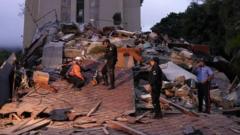
Venezuela Earthquake Crisis: 188 Deaths Confirmed
A catastrophic Venezuela earthquake has claimed the lives of at least 188 people following two consecutive powerful seismic events that struck the nation within seconds of each other. The devastating sequence has left thousands displaced and created a humanitarian emergency requiring immediate international assistance and coordinated rescue efforts.
Emergency response teams and international rescue organizations have mobilized across affected areas, with search and rescue personnel working around the clock to locate survivors trapped beneath collapsed structures. The Venezuela earthquake situation remains fluid, with authorities continuing damage assessments and updating casualty figures as rescue operations progress throughout affected communities.
Magnitude and Impact of the Seismic Events
Both earthquakes registered magnitude 7.0 or higher on the Richter scale, with experts describing them as shallow-depth tremors. The proximity of the two events—occurring just seconds apart—intensified the damage across multiple regions. Buildings that withstood the initial shock wave collapsed during the second tremor, trapping residents and complicating rescue operations significantly.
Structural engineers have reported widespread damage to residential buildings, commercial establishments, hospitals, and critical infrastructure. The shallow nature of these earthquakes meant that seismic energy was transmitted more directly to surface structures, resulting in greater destruction compared to deeper seismic events of similar magnitude.
Casualty Figures and Injured
Beyond the confirmed 188 deaths attributed to the Venezuela earthquake, approximately 1,500 individuals have sustained injuries ranging from minor to critical. Medical facilities in affected regions are operating at maximum capacity, with many hospitals suffering significant structural damage that compromises their ability to treat the wounded effectively.
Healthcare professionals are working in challenging conditions, performing surgeries and emergency treatments in makeshift facilities. The shortage of medical supplies and the overwhelming number of patients requiring attention has created a critical situation for emergency medical services across the nation.
Rescue Operations Underway
Search and rescue teams are systematically working through collapsed buildings and debris fields, utilizing trained dogs and specialized equipment to locate trapped survivors. The Venezuela earthquake rescue effort involves coordination between government agencies, military personnel, and international humanitarian organizations.
Rescue workers have recovered survivors from beneath rubble days after the initial disaster, offering hope despite challenging conditions. However, the expanding death toll indicates that many individuals remain unaccounted for, and recovery operations are expected to continue for weeks.
International Response and Aid
Nations around the world have pledged humanitarian assistance to support Venezuela's earthquake relief efforts. International rescue teams, medical personnel, and emergency supplies have begun arriving to supplement local response capabilities. The United Nations and various humanitarian organizations have coordinated efforts to provide emergency shelter, food, water, and medical care to displaced persons.
Regional governments have also contributed resources and personnel to assist in recovery operations. This coordinated international approach reflects the severity of the Venezuela earthquake disaster and the need for comprehensive support across multiple sectors.
Infrastructure Damage Assessment
Preliminary reports indicate severe damage to transportation networks, including roads, bridges, and communication infrastructure. Power distribution systems have been compromised, leaving numerous communities without electricity. Water supply systems have also sustained damage, creating additional challenges for public health and sanitation.
Restoration of critical infrastructure is proceeding in phases, with priority given to routes needed for emergency response and humanitarian aid delivery. Engineers are conducting structural assessments to determine which buildings can be salvaged and which require demolition.
Community Response and Support
Citizens in unaffected areas have mobilized to provide assistance to disaster victims, establishing collection centers for donations and organizing volunteer efforts. Community leaders are coordinating with government agencies to ensure equitable distribution of aid and fair access to resources for affected families.
The Venezuela earthquake has demonstrated both the vulnerability of communities to natural disasters and the resilience and solidarity of people coming together during crisis situations. Mental health support services are being established to address the psychological trauma experienced by survivors and rescue personnel.
Looking Forward: Recovery Timeline
Officials estimate that full recovery from the Venezuela earthquake will require months or years, depending on the scope of reconstruction needed. Immediate priorities include completing search operations, providing emergency care, and establishing temporary housing for displaced persons. Long-term recovery will involve rebuilding infrastructure, restoring livelihoods, and implementing earthquake-resistant construction standards to reduce future vulnerability.


