
Ukraine Faces Critical Interceptor Missile Shortage Amid New Attacks
Ukraine warns of severe interceptor missile shortages as Russian attacks intensify. President Zelensky reports 68 missiles and 351 drones in Kyiv region assault...
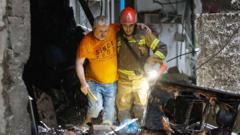
Ukraine Confronts Escalating Interceptor Missile Shortage Challenge
Ukraine faces an increasingly critical interceptor missile shortage as Russian military operations continue to escalate across the nation. The country's air defense capabilities have become strained under the relentless assault of advanced weaponry, prompting urgent warnings from government officials regarding supply constraints and operational readiness.
The situation has intensified following a devastating weekend assault on Ukrainian territory. President Volodymyr Zelensky characterized the Sunday offensive as a "massive Russian attack," revealing the scale and sophistication of the coordinated assault that targeted the Kyiv region and surrounding areas.
Scale of the Russian Military Offensive
The scale of Russia's aerial campaign demonstrates unprecedented coordinated warfare tactics. According to official statements, the assault consisted of 68 ballistic and cruise missiles combined with 351 strike-capable unmanned aerial systems, known as drones. This combined offensive represented one of the most comprehensive aerial bombardment campaigns witnessed during the ongoing conflict.
The dual-pronged attack strategy employed both conventional missiles and drone technology, creating multiple simultaneous threats across different altitudes and trajectories. Ukrainian air defense personnel faced overwhelming challenges in intercepting such volume and diversity of incoming weaponry simultaneously.
Casualty Reports and Impact on Kyiv Region
The assault resulted in significant casualties within the Kyiv region, with reports confirming at least 23 individuals killed during the attack. Beyond fatalities, infrastructure damage across residential, commercial, and strategic locations added to the humanitarian toll. Emergency services mobilized extensively to address casualties, conduct rescue operations, and provide medical assistance to the wounded.
The targeting of civilian and mixed-use areas raised additional humanitarian concerns regarding civilian protection protocols and potential violations of international conflict regulations.
Ukraine's Interceptor Missile Crisis Explained
The interceptor missile shortage represents one of Ukraine's most pressing military vulnerabilities. Air defense systems require continuous replenishment of interceptor missiles to maintain operational capability. Each missile launched in defensive operations reduces available inventory for subsequent engagements.
Ukrainian military analysts have publicly acknowledged that current interceptor missile production and international supply routes cannot adequately match consumption rates during intense Russian offensive operations. This supply-demand imbalance threatens long-term air defense sustainability.
International Support and Supply Concerns
Ukraine depends significantly on international military assistance for air defense systems and ammunition. Western allies have provided modern air defense platforms, yet the supply of compatible interceptor missiles remains insufficient relative to Russian offensive capabilities.
Discussions between Ukrainian officials and international partners focus on accelerating arms shipments and identifying alternative sources of compatible air defense ammunition. The strategic importance of addressing the interceptor missile shortage cannot be overstated for maintaining Ukrainian territorial security.
Forward Operations and Strategic Implications
Ukrainian military command continues organizing air defense operations despite resource constraints. Tactical adjustments include prioritizing missile interception for high-value targets while attempting to maximize existing inventory efficiency through selective engagement protocols.
The persistent Russian assault strategy appears designed to deplete Ukrainian air defense resources through attrition, forcing difficult operational choices regarding ammunition allocation and asset deployment.
Government Response and Public Statements
President Zelensky's statements regarding the Sunday attack emphasized both the severity of Russian aggression and Ukraine's determination to maintain defensive operations. His public acknowledgment of weaponry numbers served dual purposes: documenting Russian actions for international scrutiny and signaling domestic resolve.
Ukrainian officials have initiated diplomatic channels seeking emergency military aid packages prioritizing air defense capabilities, underscoring the critical nature of addressing the current interceptor missile shortage urgently.
Looking Ahead: Sustainability and Defense Strategy
Ukraine's long-term defense strategy must address fundamental sustainability questions regarding air defense operations. Future military planning incorporates expectations for continued Russian offensive campaigns, requiring robust supply chains and international support commitments.
The convergence of escalating Russian attacks, casualty reports, and acknowledged resource constraints frames an urgent humanitarian and security crisis demanding comprehensive international response mechanisms and accelerated military assistance programs supporting Ukrainian defense capabilities.


