
Trump Reduces US-South Korea Military Drills Following Iran Tensions
Trump announces scaling back military exercises with South Korea, citing his relationship with North Korea's leader as key factor in the strategic decision.
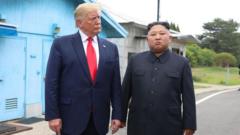
Trump Administration Announces Military Exercise Reductions
The Trump administration has announced plans to reduce the scale of US military drills conducted jointly with South Korea, marking a significant shift in the region's defense strategy. This decision regarding US military drills South Korea comes as the administration reassesses its approach to maintaining stability in Northeast Asia while managing broader international tensions.
In explaining the rationale behind this strategic pivot, administration officials emphasized the importance of diplomatic relationships in shaping military planning decisions. The announcement reflects an evolving approach to how the United States balances its alliance commitments with other foreign policy objectives.
Trump's North Korea Diplomacy Factor
President Trump cited his establishment of what he characterized as a "very good relationship" with North Korea's leader as a primary consideration in determining the scale of future military exercises. This relationship has consistently influenced White House decisions regarding defense postures in the Korean Peninsula, demonstrating how personal diplomatic connections can reshape military strategy at the highest levels.
The president's unique approach to North Korean engagement has fundamentally altered the traditional approach to US-South Korea relations. Rather than maintaining the extensive military drills that characterized previous administrations, the current approach prioritizes dialogue and relationship-building as mechanisms for achieving security objectives.
Strategic Context and Regional Implications
South Korea's decision to remain uninvolved in recent Iran-related military operations played a role in prompting this reassessment. The administration's announcement suggests that allied nations' positions on other global conflicts may influence the nature and scope of joint defense commitments. This interconnected approach to military planning reflects broader shifts in how the administration views multilateral security arrangements.
The scaling back of exercises represents one of the most tangible manifestations of Trump's unconventional approach to alliance management. Unlike traditional frameworks that maintain consistent exercise schedules regardless of diplomatic developments, this strategy directly ties military activities to the current state of relationships with adversarial nations.
Implications for Alliance Dynamics
Military exercises between the United States and South Korea have historically served multiple functions: demonstrating combined defense capabilities, maintaining readiness, and affirming alliance commitments. Reducing their scope raises questions about how these objectives will be achieved through alternative means.
South Korean officials must now adapt their own defense planning to accommodate smaller joint exercises while maintaining domestic readiness. This requires recalibration of training schedules, personnel deployment, and resource allocation across the military establishment.
Historical Context of US-South Korea Drills
Joint US-South Korea military exercises have been conducted regularly for decades, representing one of the most visible symbols of the alliance. These drills typically involved tens of thousands of personnel and demonstrated the integrated capabilities of both nations' armed forces. The decision to scale back these operations marks a departure from long-established security practices.
Previous administrations maintained the exercise schedule as a non-negotiable component of alliance management, viewing them as essential for operational readiness and deterrence. The shift toward reduced exercises under the Trump administration reflects different strategic assumptions about what best serves national security interests.
North Korea's Position in Strategic Calculations
The Trump administration's consideration of North Korea in decisions about US military drills South Korea demonstrates how Pyongyang's actions and statements continue to influence broader regional security arrangements. By emphasizing his personal relationship with North Korea's leadership, President Trump suggests that maintaining diplomatic channels takes precedence over traditional military demonstrations.
This approach carries both potential benefits and risks. On one hand, it prioritizes dialogue over military posturing. On the other hand, it may be perceived as reducing deterrent effects that extensive joint exercises provide.
Looking Forward: The Future of Joint Exercises
The announcement raises important questions about the future trajectory of US-South Korea defense cooperation. How will scaled-back exercises be structured? What specific areas will see reductions? How will this affect training cycles and readiness assessments? These practical questions will require detailed coordination between military planners in both nations.
Military officials from both countries will need to work closely to ensure that reductions in exercise scale do not compromise operational effectiveness or interoperability between forces. This technical challenge will be as important as the diplomatic considerations driving the policy change.
The Trump administration's decision regarding military drills demonstrates how contemporary geopolitical considerations can reshape traditional security arrangements. As these plans move from announcement to implementation, their actual impact on regional stability and deterrence will become clearer.


