
Medical Exam Retake: Heightened Security Measures for Indian Students
Indian students face strict biometric checks and frisking in medical exam retake following paper leak allegations. Air Force deployed for enhanced security.
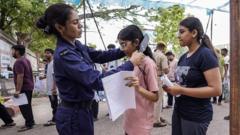
Enhanced Security Protocol Implemented for Medical Examination Retake
Medical exam security India has become a critical focus as authorities implement comprehensive security measures for the rescheduled examination following serious allegations of paper compromise. Educational officials have announced that millions of aspirants participating in the medical entrance examination will undergo rigorous security procedures to ensure the integrity of the assessment process.
Biometric Verification and Physical Screening
All candidates attending the rescheduled medical exam will be required to pass through multiple layers of identification and verification. Biometric checks, including fingerprint scanning and facial recognition systems, have been established at examination centers nationwide. These technological measures work in conjunction with traditional security protocols to prevent unauthorized access and ensure that only registered participants can enter testing facilities.
Physical frisking procedures have also been implemented as a standard requirement for all test-takers. Security personnel positioned at entry points will conduct thorough body checks to detect any prohibited materials or electronic devices that could facilitate cheating or information leakage. This dual-approach security methodology represents a significant intensification compared to previous examination protocols.
Air Force Deployment for Enhanced Oversight
In an unprecedented move, the Indian Air Force has been mobilized to provide additional security infrastructure and supervision throughout the examination process. Military personnel will be stationed at key examination centers to oversee the distribution, collection, and storage of exam papers. This deployment underscores the seriousness with which authorities are treating the allegations of previous paper breaches and their commitment to preventing similar incidents.
The Air Force's involvement extends beyond physical presence at testing locations. Military logistics teams have been assigned to manage the secure transportation of examination materials from printing facilities to examination centers, ensuring that documents remain under continuous surveillance and protection throughout the distribution chain.
The Paper Leak Allegations Background
The decision to implement these extraordinary security measures stems from serious allegations that examination papers were compromised before the original test date. Multiple candidates reported accessing question papers through unauthorized channels, raising substantial concerns about the credibility and fairness of the initial examination. Education ministry officials acknowledged these breaches and determined that a complete retake was necessary to maintain the integrity of the selection process for medical education programs.
The scope of the alleged leak prompted immediate action from educational authorities and government agencies. Rather than attempting damage control or accepting results from a potentially compromised examination, officials chose the more complex but ultimately more defensible path of completely rescheduling the assessment. This decision, while operationally challenging and costly, demonstrates commitment to maintaining standards within medical education admissions.
Scale of Participation and Logistics
The medical exam security India initiative must accommodate an enormous number of candidates. Millions of students across the nation are preparing for the rescheduled examination, necessitating coordination among hundreds of examination centers and thousands of trained invigilators and security personnel. This scale of operation requires meticulous planning and resource allocation to ensure consistent application of security protocols across all locations.
Examination authorities have established detailed guidelines for center managers, security staff, and invigilators to ensure uniform implementation of heightened security measures. Training sessions have been conducted to familiarize all personnel with new procedures and technological systems being deployed for the first time on this scale.
Technology and Traditional Security Integration
The comprehensive approach combines cutting-edge technological solutions with proven traditional security methods. In addition to biometric systems and Air Force oversight, examination centers will feature surveillance cameras with continuous recording capabilities, secure document storage facilities with controlled access, and communication systems enabling real-time coordination between security personnel at different locations.
Cryptocurrency-grade verification systems have been explored to ensure that examination papers are authentic and have not been tampered with or reproduced. These technical measures complement human oversight and create multiple redundancies in the security infrastructure, making it exponentially more difficult for any breach to occur undetected.
Impact on Candidates and Testing Experience
While the enhanced security measures are necessary, they do introduce additional time requirements and procedures for candidates. Students should expect extended check-in periods and must comply with all security protocols without exception. Educational authorities have advised all participants to arrive early, bring required identification documents, and follow all instructions provided by examination center personnel and security staff.
The inconvenience imposed by these procedures, however, is considered an acceptable trade-off for ensuring that examination results accurately reflect student knowledge and capability rather than access to compromised materials. Candidates who successfully complete the retake can be confident that their qualifications have been legitimately earned and will be widely recognized as credible.
Future Implications for Educational Security
The medical exam security India crisis and subsequent response will likely influence examination security protocols across the Indian education system. Other entrance examinations, competitive assessments, and certification programs may adopt similar biometric systems, enhanced surveillance, and government oversight mechanisms. Educational administrators are already reviewing current security frameworks and considering upgrades based on lessons learned from this significant incident.
The deployment of military resources for civilian examination security also establishes a precedent that may be referenced in future situations where institutional security is deemed insufficient. Government commitment to maintaining examination integrity through whatever resources necessary sends a clear message about the importance placed on fair and credible assessment within higher education.


