
Former Model Details Lucrative Freud Portrait Behind £25m Auction Sale
Sue Tilley recounts her experience posing for Lucian Freud in his unconventional studio, leading to a record £25m art sale at auction.
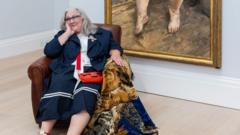
Model's Intimate Account of Posing for Lucian Freud
Sue Tilley has provided a candid recollection of her experiences as a subject for the renowned artist Lucian Freud, whose portrait of her recently achieved a remarkable £25 million price tag at auction. The model's memories paint an evocative picture of the creative process behind one of the art world's most significant contemporary works.
Inside Freud's Unconventional Workspace
Tilley describes Freud's studio environment as distinctly unpretentious and bohemian in character. The artist's working space, despite his international reputation and substantial financial success, maintained a notably informal atmosphere. Rather than the pristine, meticulously organized studios one might expect from a world-class painter, Freud's creative sanctuary reflected his personality—cluttered, artistic, and deliberately detached from conventional aesthetics.
The studio itself housed an impressive collection of artistic artifacts and curiosities. Among its most unusual features was a valuable Rodin sculpture, which Freud repurposed as a simple doorstop rather than displaying it in a position of prominence. This detail exemplifies the artist's unconventional approach to both art and life, suggesting that functionality and immediate practicality often superseded traditional notions of reverence toward established masterpieces.
The Champagne Lunches and Social Atmosphere
Beyond the purely artistic dimensions of her sessions, Tilley fondly remembers the social dynamics that characterized her time in the studio. Champagne lunches served as regular interludes during the intensive portrait-sitting sessions, creating moments of relaxation and conversation between the artist and his subject. These breaks from the rigorous demands of posing provided opportunity for genuine human connection.
The inclusion of such refined refreshments contrasts sharply with the shabby, unpretentious nature of the studio itself. This juxtaposition reveals Freud's complex personality—a man of considerable sophistication and refined tastes who nonetheless chose to work in deliberately austere surroundings. The champagne lunches represented not pretension, but rather an appreciation for life's pleasures amidst the demanding work of creating art.
The Significance of the £25 Million Sale
The subsequent auction result, commanding £25 million, underscores the profound value the art market has placed upon Freud's work and specifically upon this particular portrait. Such monetary achievement reflects not merely commercial success, but recognition of artistic merit and historical importance within contemporary art circles.
This substantial valuation testifies to Tilley's presence as a compelling artistic subject. Freud's ability to capture her essence on canvas—to translate the experience of their studio sessions into visual form—resulted in a work that has only increased in cultural and financial significance since its creation. The portrait has transcended its origins as a documentation of a specific moment and relationship between artist and model to become a landmark achievement in twentieth-century portraiture.
Freud's Legacy and Artistic Practice
Lucian Freud's approach to portraiture, exemplified through his work with Tilley, represents a distinctive methodology within contemporary art. His preference for extended sitting sessions, his engagement with his subjects beyond the purely professional, and his commitment to unflinching representation established him as one of the most important figurative painters of his generation.
The artist's studio practices and personal interactions with his subjects informed the character of his finished works. Rather than creating idealized or sanitized representations, Freud pursued psychological depth and authentic human presence in his portraits. His subjects emerged not as polished versions of themselves, but as complex, three-dimensional individuals captured across moments of intensive artistic scrutiny.
Reflection on Artistic Process and Memory
Tilley's recollections serve as valuable testimony to the artistic process underlying masterworks. Her memories of the studio environment, the champagne breaks, and Freud's unorthodox methods provide insight into how significant art is actually created—not in rarefied, sterile conditions, but in lived, embodied experiences between artist and subject.
These accounts humanize both Freud and the artistic enterprise itself, revealing that the creation of works commanding multimillion-pound valuations emerges from relatively humble, personal interactions. The portrait that sold for £25 million originated not in grand artistic vision alone, but in the genuine relationship between two people—an artist devoted to capturing truth and a model willing to submit to prolonged, intensive scrutiny in service of creating art.
Sue Tilley's reflections on her time in Lucian Freud's studio represent an irreplaceable historical record of a significant artistic relationship. Her testimony enriches public understanding of both the man and the work, demonstrating that even masterpieces at the apex of market valuation retain their roots in authentic human experience and creative collaboration.


