
Colombia's Escalating Gang Violence Shapes Presidential Election
Colombia's internal conflict and gang violence dominate the presidential election race between a left-wing senator favoring negotiations and a Trump-backed outs...
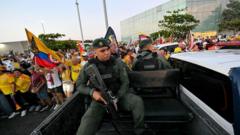
Colombia's Internal Conflict Takes Center Stage in Presidential Race
Colombia's presidential election has become increasingly defined by the nation's escalating gang violence and internal conflict, as voters face a critical choice between two starkly different approaches to addressing the country's security challenges. The presidential contest features a left-wing senator who advocates for dialogue with armed gangs competing against an outsider candidate who has received endorsement from former U.S. President Donald Trump. This electoral showdown reflects deep divisions within Colombian society regarding how best to combat organized crime and restore stability to conflict-affected regions.
The prominence of Colombia's internal conflict in this election underscores the severity of the security crisis that has plagued the nation for decades. Armed gang violence continues to spread across multiple regions, creating humanitarian emergencies and displacing civilian populations. As citizens prepare to cast their votes, the question of gang violence and internal conflict has become impossible to ignore, forcing candidates to articulate concrete solutions to the country's most pressing problems.
The Left-Wing Senator's Position on Gang Negotiations
The left-wing senator in this race has emerged as a prominent advocate for pursuing diplomatic solutions to gang violence. This candidate supports initiating talks with armed gangs, arguing that negotiation and dialogue represent viable paths toward reducing violence and achieving long-term peace in Colombia. Proponents of this approach contend that engagement with organized crime groups could lead to voluntary disarmament agreements and reduce the brutal conflicts that have devastated communities throughout the country.
This candidate's strategy reflects a broader perspective that emphasizes addressing root causes of gang recruitment and violence. Supporters argue that dialogue-based approaches, combined with socioeconomic development in conflict-affected areas, could prove more effective than purely military interventions. The senator has consistently advocated for policies that prioritize peace negotiations while maintaining Colombia's commitment to dismantling criminal organizations.
Challenges to the Negotiation Approach
Critics of the negotiation strategy argue that engaging in talks with armed gangs could be perceived as rewarding criminal behavior and encouraging further violence. Opponents question whether armed organizations would genuinely commit to disarmament agreements or simply use negotiations as temporary respites to reorganize operations. The debate over whether Colombia's internal conflict can be resolved through negotiation remains deeply polarizing within Colombian political circles and among international observers.
The Trump-Endorsed Outsider Candidate
The opposition candidate represents an outsider alternative to traditional Colombian politics, having garnered explicit support from Donald Trump. This candidate has positioned himself as a tough-on-crime contender who promises aggressive action against gang violence and criminal organizations. The Trump endorsement signals alignment with hardline security policies and an emphasis on confrontational approaches to addressing Colombia's internal conflict.
This candidate's campaign focuses on strengthening military operations, enhancing law enforcement capabilities, and pursuing a more confrontational stance against armed gangs. Supporters believe this approach demonstrates stronger commitment to eliminating the threat posed by organized crime groups and restoring security throughout the nation. The outsider status of this candidate appeals to voters seeking change from traditional political establishment figures.
International Dimensions of the Race
The Trump endorsement adds an international dimension to Colombia's presidential election, reflecting broader geopolitical considerations. The explicit backing from the former U.S. president influences how the campaign unfolds and shapes voter perceptions about which candidate might better align with American interests. This international attention underscores Colombia's strategic importance within hemispheric politics and security affairs.
Gang Violence as Electoral Battleground
Gang violence has become the dominant issue separating the two presidential frontrunners. Both candidates recognize that Colombian voters prioritize security concerns above most other policy matters. The brutal reality of armed gang violence in neighborhoods, rural areas, and major cities has created an environment where security solutions dominate campaign messaging and voter decision-making processes.
Recent escalations in violence between competing criminal organizations have intensified public concern about personal safety and government effectiveness. Communities across Colombia have experienced increased extortion, territorial disputes, and violent confrontations that claim civilian lives. This deteriorating security situation has elevated gang violence as the central issue that will likely determine election outcomes.
Regional Impact and Humanitarian Concerns
Beyond electoral implications, Colombia's internal conflict generates significant humanitarian consequences. Thousands of civilians have been displaced from their homes as gang violence intensifies territorial control struggles. Local economies suffer when criminal organizations establish control over regions, disrupting legitimate commerce and development opportunities.
The presidential election presents an opportunity for Colombian voters to determine which policy direction might better address these humanitarian dimensions of gang violence. The choice between negotiation-focused and confrontation-focused approaches carries profound implications for how the nation's internal conflict evolves in coming years.
Looking Forward
As Colombia's presidential election approaches, the nation's internal conflict and escalating gang violence remain at the forefront of political discourse. Voters must weigh the merits of each candidate's approach to addressing the armed gangs and criminal organizations that perpetuate violence and instability. The outcome of this election will significantly influence Colombia's trajectory regarding security policy and internal conflict resolution for the foreseeable future.


