
Artificial Ice Pyramids: India's Mountain Villages' Water Solution
Discover how Himalayan communities build artificial glaciers to ensure reliable water supplies for crops. Learn about this innovative water conservation techniq...
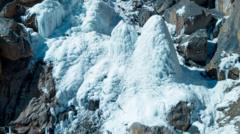
Himalayan Communities Turn to Artificial Glaciers for Water Security
Mountain villages across the Indian Himalayas are implementing innovative artificial glacier technology to address critical water scarcity issues affecting their agricultural practices. These artificial glaciers, often constructed in pyramid-like formations, represent a breakthrough approach to securing reliable water supplies during the crucial spring growing season when traditional water sources remain frozen or depleted.
The Challenge of Mountain Water Management
Rural communities nestled in high-altitude regions face unprecedented challenges in accessing sufficient water for their crops. Climate change has altered traditional precipitation patterns and glacial melt cycles, forcing local farmers to seek alternative solutions. The artificial glacier initiative emerged as a practical response to this environmental crisis, enabling villages to harvest and store water during winter months for use when their agricultural lands need irrigation most.
How Artificial Glaciers Work
The construction of artificial glaciers involves a remarkably simple yet effective process. Engineers channel water from mountain streams into specially designed channels that direct the flow toward elevated areas during winter months. As temperatures drop below freezing in these high-altitude zones, the water naturally accumulates as ice formations. These ice masses gradually accumulate in distinctive pyramid-shaped structures, maximizing surface area to enhance preservation and regulate melting rates.
The pyramid design proves particularly effective because it slows the melting process during warmer months. Rather than water disappearing rapidly, the geometric configuration ensures steady water release that extends throughout the spring season. This controlled release mechanism provides consistent irrigation supplies exactly when farmers need them for planting and crop development.
Benefits for Rural Agriculture
Communities implementing artificial glacier technology report significant improvements in crop yields and agricultural reliability. Farmers gain confidence in planning their planting schedules, knowing they have guaranteed water access regardless of seasonal variations. The artificial glaciers also reduce dependency on external water sources and government aid, promoting agricultural independence and economic stability.
Beyond immediate agricultural benefits, this technology strengthens community resilience. Villages become less vulnerable to drought conditions and climate-related disruptions that have historically devastated mountain farming economies. Multiple harvests per year become feasible in regions where water availability previously limited cultivation to single growing seasons.
Community Implementation and Local Innovation
What makes this approach particularly remarkable is how local communities have developed and refined the technology through collective knowledge and experimentation. Villagers work together to identify optimal locations for glacier construction, considering altitude, water source proximity, and seasonal freeze patterns. Their practical understanding of local geography and climate conditions has proven invaluable in optimizing artificial glacier placement and design.
Several Himalayan regions have established successful artificial glacier projects, with communities sharing expertise and construction techniques. This knowledge exchange has accelerated adoption rates and improved success rates across different villages and elevation zones. The collaborative spirit demonstrates how traditional community cooperation combines with innovative environmental solutions.
Challenges and Future Development
Despite impressive results, artificial glacier projects face certain limitations and ongoing challenges. Construction requires significant initial investment, which strains already limited village resources. Maintenance demands skilled labor, and climate unpredictability occasionally disrupts expected freezing patterns. Some villages struggle to secure adequate water sources for channeling during winter months.
However, government agencies and environmental organizations increasingly recognize the technology's potential and have begun supporting expansion efforts. Research institutions are studying artificial glacier performance data to optimize designs further. These partnerships promise to address current limitations while scaling successful projects to additional communities.
Environmental and Social Impact
Beyond agricultural applications, artificial glacier development carries profound environmental significance. The projects demonstrate how communities can adapt to climate change through innovative, low-technology solutions requiring minimal external resources. They exemplify sustainable development principles that benefit local populations while respecting ecological balance.
The social dimension proves equally important. Artificial glaciers strengthen community bonds as villagers collaborate on construction and maintenance. Young people gain practical environmental knowledge and witness tangible solutions to existential challenges facing mountain communities. This fosters environmental consciousness and commitment to sustainable practices among future generations.
Global Significance and Potential Replication
The success of artificial glaciers in Indian Himalayan villages has attracted international attention from climate adaptation experts and sustainable development organizations. Similar water scarcity challenges affect mountain communities globally, from Central Asia to South America, making this technology potentially applicable across diverse regions and climates. Several countries have begun exploring artificial glacier implementation based on Indian village experiences.
As climate change continues altering precipitation patterns and glacial dynamics worldwide, low-cost, community-based water solutions become increasingly valuable. The artificial glacier approach offers developing nations practical alternatives to expensive infrastructure projects, requiring primarily local labor and natural resources. This accessibility makes the technology particularly relevant for remote communities with limited funding access.


