

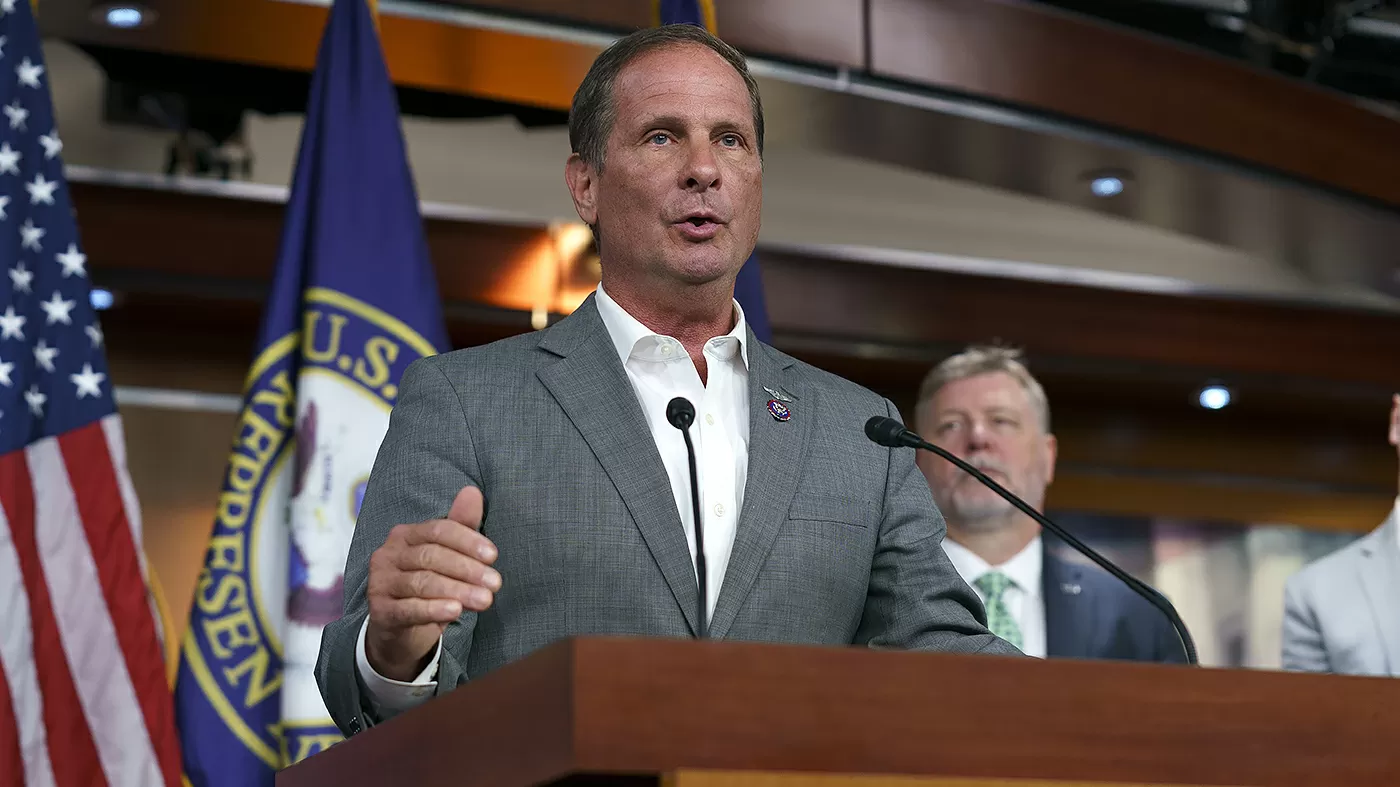
In a bold move to safeguard the future of Artificial Intelligence (AI), two former congressmen have joined forces to launch two super PACs aimed at supporting candidates who are committed to protecting the public interest against the influence of big tech companies.
Former Republican Congressman Chris Stewart from Utah and Democratic Congressman Brad Carson from Oklahoma announced on Tuesday their plans to create separate super PACs, one for each party, with the goal of raising $50 million to support candidates who will advocate for sensible AI regulation.
The decision to launch these super PACs comes at a time when the use of AI technology is rapidly increasing and its impact on society is becoming more apparent. While AI has the potential to revolutionize our lives for the better, it also raises ethical concerns and the need for responsible regulation.
Stewart and Carson are both no strangers to the world of politics, having served in Congress for several years before retiring from their positions. They understand the intricacies of the political landscape and the influence of special interest groups, particularly in the tech industry.
Their super PACs will serve as a counterweight to the industry-backed groups that often lobby for weaker regulations on AI. By raising significant funds and endorsing candidates who prioritize the public’s interest over corporate interests, Stewart and Carson hope to create a more balanced and responsible approach to AI regulation.
The need for such action is evident, especially when considering the recent controversies surrounding the use of AI. From facial recognition technology to biased algorithms, the unchecked use of AI has raised concerns about privacy, discrimination, and the potential for abuse.
Stewart and Carson’s super PACs aim to address these concerns by supporting candidates who will advocate for safeguards and responsible use of AI. This includes measures such as transparency in the development and use of AI, protecting individuals’ privacy rights, and ensuring that AI does not perpetuate discriminatory practices.
Both former congressmen are passionate about the potential of AI to improve our lives. However, they also recognize the need for responsible regulation to prevent any negative impact on society. Their bipartisan approach to this issue is a refreshing change in today’s polarized political climate.
The launch of these super PACs also sends a strong message to the tech industry and its lobbyists. The influence of big tech companies in politics has been a growing concern, and Stewart and Carson’s initiative highlights the need for a more balanced approach to decision-making.
The support of AI safeguards should not be a partisan issue. It is a matter of protecting the public’s interest and ensuring that technology is used for the betterment of society, not for the benefit of a few corporations.
Stewart and Carson’s super PACs have the potential to make a significant impact in the upcoming elections. With their experience and determination, they are well-equipped to support candidates who prioritize the responsible use of AI.
In conclusion, the launch of these super PACs by two former congressmen is a positive step towards safeguarding AI and its impact on society. By raising awareness and supporting candidates who share their vision, Stewart and Carson are paving the way for a more responsible approach to AI regulation. Let us hope that their efforts will bring about positive change and ensure that AI is used for the greater good of humanity.
