

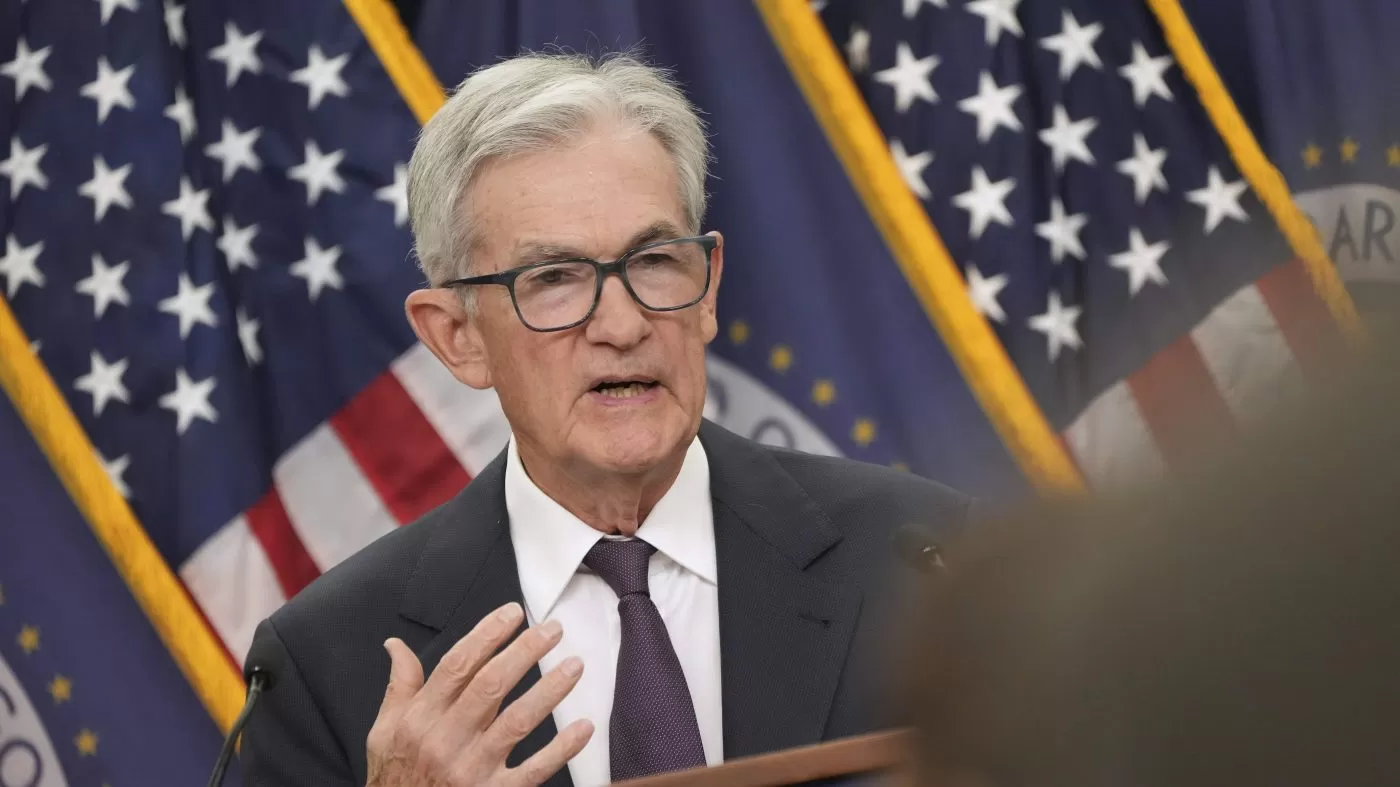
Federal Reserve Chair Jerome Powell has made a bold statement regarding the current state of artificial intelligence (AI) investment and spending. In a press conference following the Fed’s latest rate cut, Powell expressed his belief that the rapid growth of AI companies is not a bubble, unlike the infamous dot-com bubble of the early 2000s.
Powell’s remarks come at a time when AI is gaining significant traction in various industries, from healthcare to finance to transportation. The technology has shown immense potential in improving efficiency, reducing costs, and enhancing decision-making processes. As a result, companies are pouring billions of dollars into AI research and development, leading to a surge in investment and spending.
However, some skeptics have raised concerns about the possibility of an AI bubble, similar to the dot-com bubble that burst in the early 2000s. This bubble was characterized by a frenzy of investment in internet-based companies, which eventually led to a market crash and significant losses for investors.
But Powell believes that the current AI landscape is different from the dot-com era. He pointed out that the dot-com bubble was fueled by speculation and hype, with many companies lacking a solid business model. In contrast, AI companies today are backed by real-world applications and tangible results.
Powell’s statement is supported by recent data, which shows that AI investment and spending are not slowing down anytime soon. According to a report by IDC, global spending on AI is expected to reach $97.9 billion in 2023, more than double the $37.5 billion spent in 2019. This growth is driven by increased adoption of AI technologies, such as machine learning, natural language processing, and robotics.
Moreover, the COVID-19 pandemic has further accelerated the adoption of AI, as companies look for ways to streamline operations and adapt to the new normal. From contactless delivery to virtual healthcare, AI has played a crucial role in helping businesses and industries navigate the challenges posed by the pandemic.
Powell also highlighted the potential of AI to drive economic growth and create new job opportunities. While some fear that AI will replace human jobs, Powell believes that it will instead create new roles and enhance existing ones. He emphasized the importance of investing in education and training to equip the workforce with the necessary skills to thrive in an AI-driven economy.
The Fed’s stance on AI is crucial, as it sets the tone for how the technology will be perceived by investors and businesses. Powell’s confidence in the current state of AI investment and spending is a positive sign for the industry, as it shows that the Fed sees it as a sustainable and valuable asset.
In conclusion, Powell’s statement on AI investment and spending is a testament to the technology’s potential and its impact on the economy. The Fed’s support and confidence in AI will further encourage companies to invest in its development and adoption, leading to continued growth and innovation. As we move towards a more AI-driven future, it is essential to have leaders like Powell who understand and embrace the potential of this transformative technology.
