

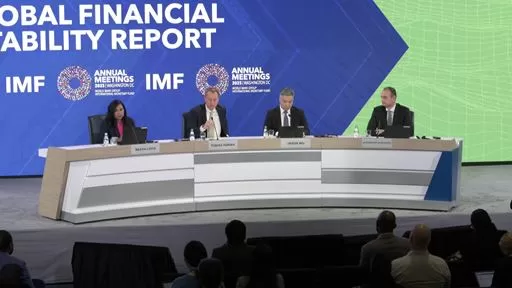
The International Monetary Fund (IMF) has recently issued a warning that the apparent calm in global financial markets may be deceiving, as there are still significant vulnerabilities that could potentially disrupt the stability of the global economy. This warning comes at a time when many countries are experiencing economic growth and the stock markets are reaching record highs. However, the IMF has urged caution and vigilance in the face of these seemingly positive developments.
In its latest Global Financial Stability Report, the IMF highlighted several key areas of concern that could potentially threaten the current state of the global economy. One of the main concerns is the high level of debt that has accumulated in both the public and private sectors. The report states that global debt has reached a record high of $164 trillion, which is equivalent to 225% of the world’s gross domestic product (GDP). This level of debt is not sustainable in the long run and could lead to a financial crisis if not addressed.
Another area of concern is the increasing reliance on non-bank financial institutions, such as hedge funds and private equity firms, which have been growing at a rapid pace in recent years. These institutions are less regulated and could pose a threat to financial stability if they were to face significant losses. The IMF also warned about the potential risks posed by the rise of digital currencies, which could disrupt the traditional financial system and create new vulnerabilities.
The IMF’s warning serves as a reminder that the global economy is still facing challenges and that the current state of calm in financial markets may not last forever. It is crucial for policymakers and investors to remain vigilant and take necessary precautions to mitigate these risks. The IMF has called for a coordinated effort from all countries to address these vulnerabilities and strengthen the resilience of the global financial system.
Despite these warnings, the IMF also acknowledged that the global economy is in a much better position than it was a decade ago, thanks to the efforts of policymakers and regulators in implementing reforms and strengthening the financial system. The IMF has praised the steps taken by central banks to gradually raise interest rates and reduce their balance sheets, which has helped to prevent excessive risk-taking and maintain financial stability.
The IMF’s warning should not be taken as a cause for panic, but rather as a call to action. It is a reminder that the global economy is still recovering from the 2008 financial crisis and that there is still work to be done to ensure its long-term stability. The IMF has urged countries to continue implementing structural reforms, such as reducing debt levels and strengthening financial regulations, to address the vulnerabilities in the global financial system.
In conclusion, the IMF’s warning serves as a wake-up call for all stakeholders in the global economy. While the current state of financial markets may seem stable, there are still significant vulnerabilities that could potentially disrupt the progress made in recent years. It is essential for countries to work together and take necessary measures to address these risks and ensure the long-term stability of the global financial system. By doing so, we can continue to enjoy the benefits of a growing and resilient global economy.
