

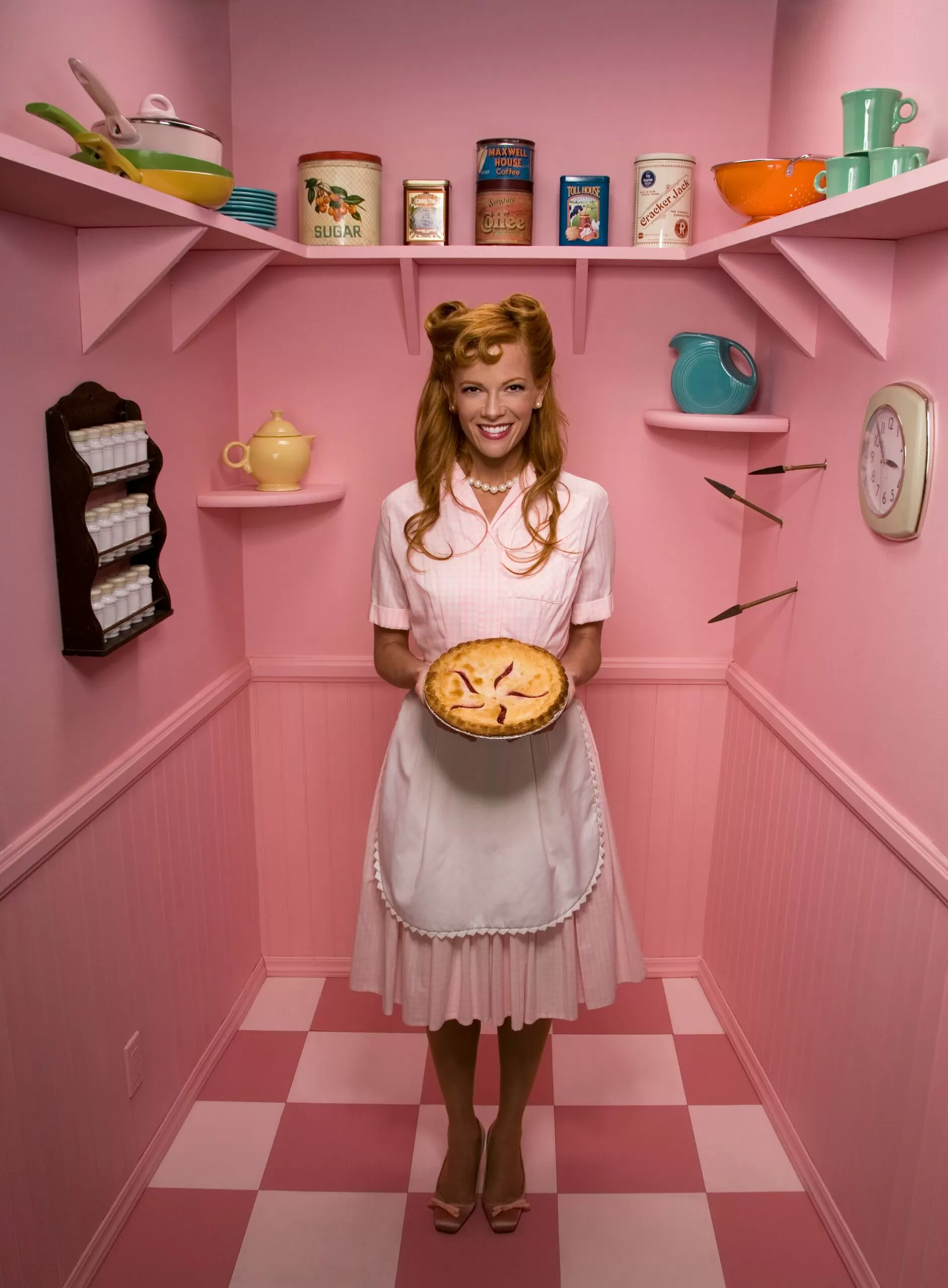
In the September edition of The Evidence, Josephine Lethbridge delves into the growing trend of the “tradwife” lifestyle and its connection to the far-right movement. This controversial lifestyle has gained attention in recent years, with some praising it as a return to traditional values and others criticizing it as regressive and harmful. But what exactly is a “tradwife” and why is it causing such a stir?
The term “tradwife” is a shortened form of “traditional wife” and refers to a woman who embraces traditional gender roles and domestic duties within a marriage. This includes being a homemaker, taking care of the children, and supporting her husband’s career. While this may seem like a personal choice for some, the “tradwife” movement has taken on a more political tone in recent years, with many of its followers aligning themselves with far-right ideologies.
One of the main reasons for the rise of the “tradwife” lifestyle is the growing dissatisfaction with modern feminism. Many women feel that the feminist movement has gone too far and has led to the breakdown of traditional family values. They see the “tradwife” lifestyle as a way to reclaim their femininity and reject the idea that women should strive for equality with men in all aspects of life.
However, this rejection of feminism has also led to a dangerous alliance with the far-right movement. The “tradwife” lifestyle has become a gateway for women to enter the world of far-right politics, where they are often exposed to extremist ideologies and conspiracy theories. This has been referred to as the “tradwife to far-right pipeline” and has raised concerns about the potential radicalization of women.
One of the main attractions of the “tradwife” lifestyle is the promise of a return to traditional gender roles and the idea of a “traditional” family. This is often seen as a way to combat the perceived breakdown of society and the erosion of traditional values. However, this idealized version of the past ignores the fact that traditional gender roles were often oppressive and limiting for women. It also ignores the diversity of family structures and the fact that not all women want to conform to these roles.
Furthermore, the “tradwife” lifestyle reinforces harmful gender stereotypes and perpetuates the idea that a woman’s worth is tied to her ability to fulfill traditional domestic duties. This can be damaging to women who do not fit into this narrow definition of femininity and can lead to feelings of inadequacy and self-doubt.
The “tradwife” lifestyle also has implications for gender equality and women’s rights. By promoting the idea that women should be subservient to men and prioritize their husband’s needs above their own, it undermines the progress that has been made towards gender equality. It also ignores the fact that women have the right to make their own choices and should not be confined to traditional gender roles.
It is important to note that not all women who identify as “tradwives” are aligned with far-right ideologies. For some, it is simply a personal choice to embrace traditional gender roles within their marriage. However, the danger lies in the fact that this lifestyle has become a breeding ground for far-right beliefs and has the potential to radicalize women.
In conclusion, the “tradwife” lifestyle may seem like a harmless personal choice, but it has deeper implications for gender equality and women’s rights. While it is important to respect individual choices, it is also crucial to recognize the potential harm that can come from aligning oneself with far-right ideologies. As a society, we must continue to challenge traditional gender roles and promote equality for all, regardless of gender.
