

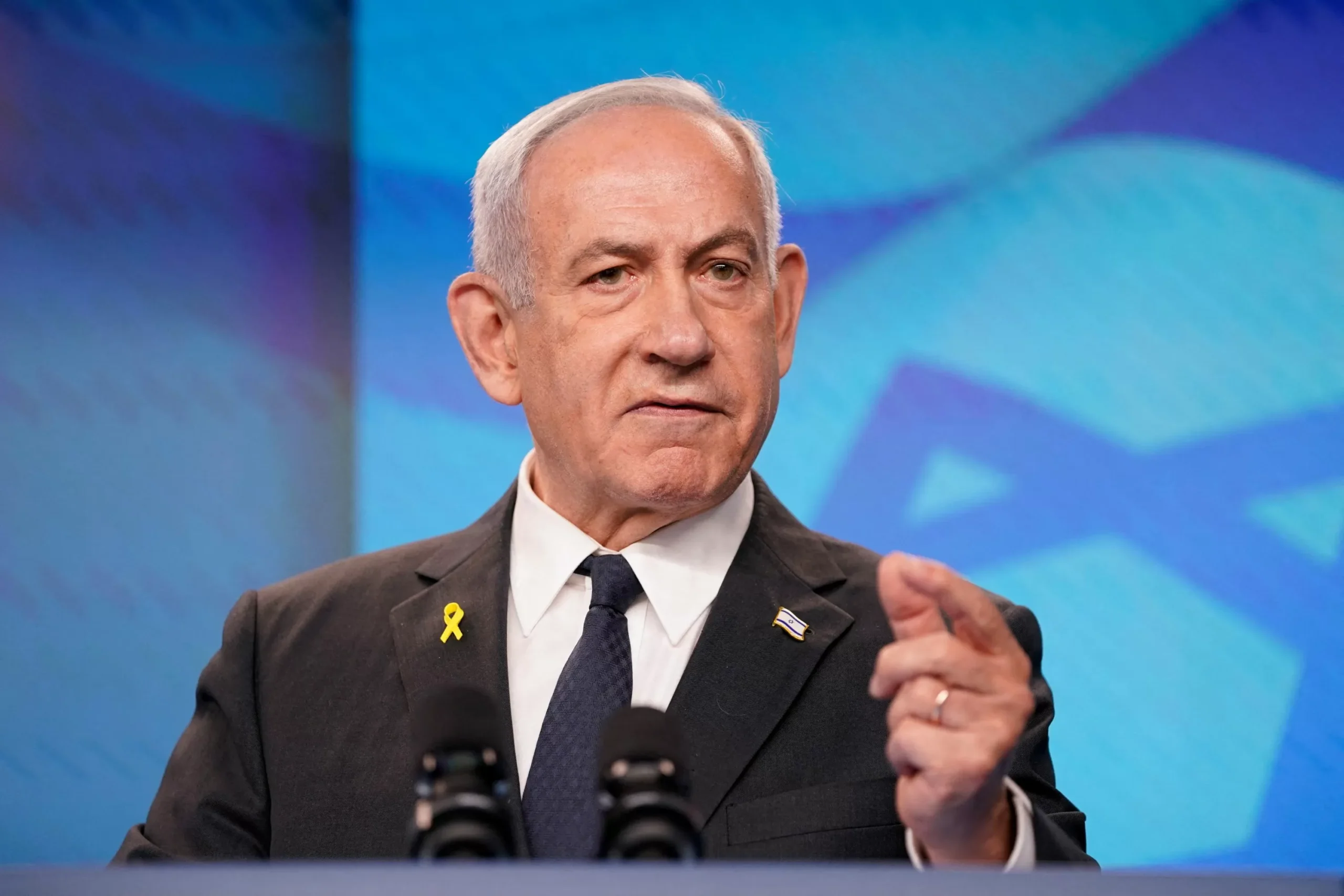
Slovenia, a small but influential country in the European Union, has taken a bold stand in support of international law and human rights. On Thursday, the Slovenian government announced that it would be barring Israeli Prime Minister Benjamin Netanyahu from entering the country due to his alleged involvement in war crimes.
This decision, which has been met with both praise and criticism, is a clear message from Slovenia that it will not tolerate any violation of human rights and will hold accountable those who are responsible for such actions.
In a statement released by the Slovenian Foreign Ministry, it was stated that “Slovenia is committed to upholding international law and the principles of human rights. As such, we cannot allow any individual who has been accused of war crimes to enter our country.”
This move comes after a petition was launched by a group of Slovenian academics and activists, urging the government to take a stand against Netanyahu’s visit. The petition highlighted the Israeli government’s treatment of Palestinians and the ongoing conflict in the region, which has been condemned by the international community.
Slovenia’s decision has been applauded by many, including human rights organizations and activists who have long been advocating for justice for the Palestinian people. It is a bold move that sends a powerful message to the world that human rights should not be compromised for political gains.
The decision also reflects Slovenia’s commitment to the European Union’s values and principles. As a member of the EU, Slovenia has a responsibility to uphold these values and ensure that they are not undermined by any individual or government.
Furthermore, this decision is not just about one individual, but it is a statement against the ongoing conflict in the Middle East. Slovenia has always been a strong supporter of a peaceful resolution to the Israeli-Palestinian conflict and has consistently called for an end to the violence and bloodshed.
The Slovenian government has made it clear that this decision is not meant to isolate Israel or its people. In fact, Slovenia has a strong and friendly relationship with Israel and its people. This move is solely focused on holding accountable those who are responsible for war crimes and human rights violations.
Moreover, this decision is not just symbolic. It also has practical implications, as it means that Netanyahu will not be able to attend the upcoming EU-Israel summit in Slovenia. This sends a strong message to Israel that its actions will have consequences and that it cannot continue to disregard international law.
Slovenia’s decision has also sparked a debate in other EU countries, with some calling for similar actions to be taken. This move has the potential to inspire other countries to stand up for human rights and uphold the values of justice and equality.
In conclusion, Slovenia’s decision to bar Israeli Prime Minister Benjamin Netanyahu from entering the country is a courageous and principled move that reaffirms its commitment to international law and human rights. It is a reminder to the world that no one is above the law and that human rights must be protected at all costs. This decision is a step towards a more just and peaceful world, and Slovenia should be commended for taking this bold stand.