

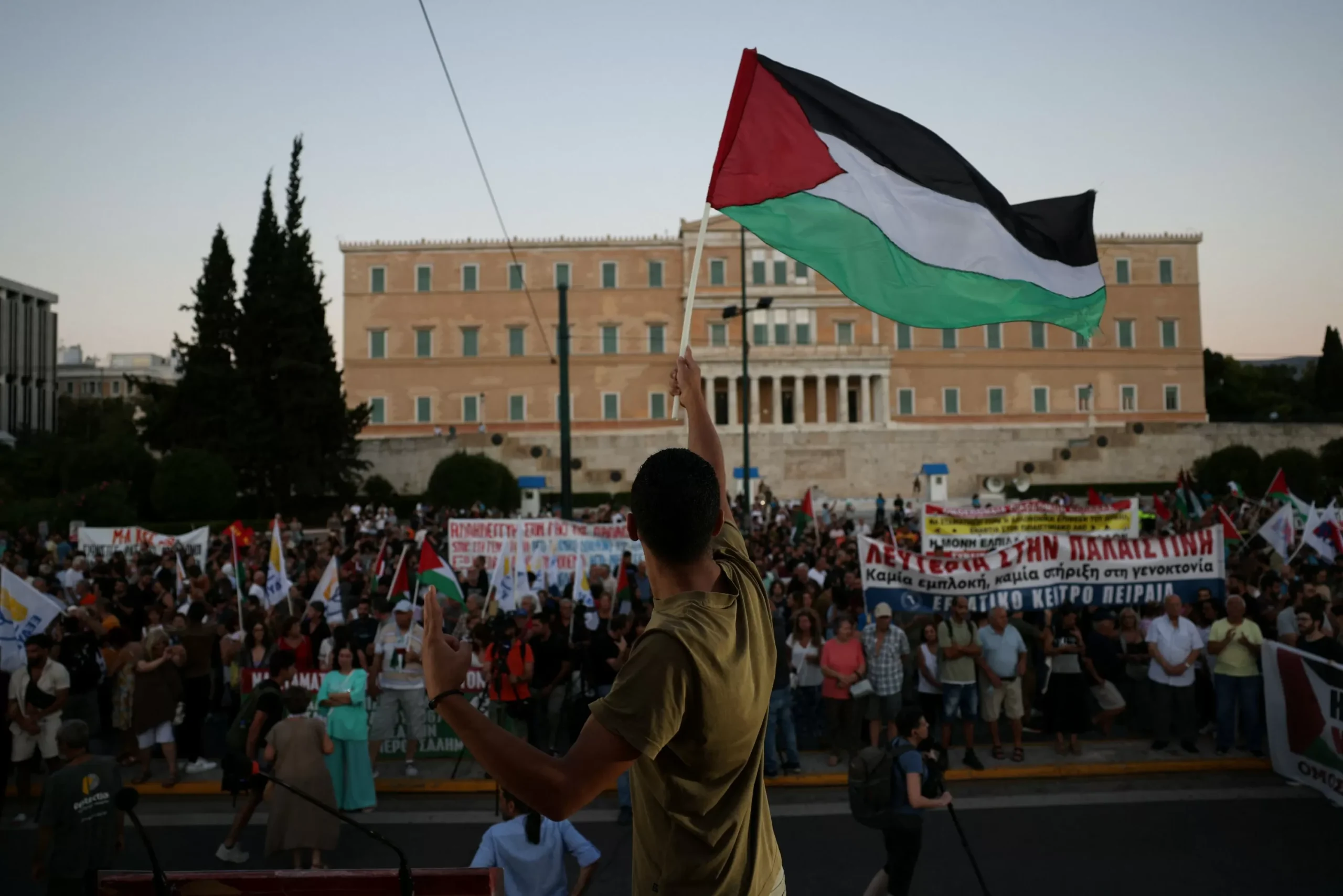
Former Greek Prime Minister George Papandreou has always been a strong advocate for peace and stability in the Middle East. Recently, he stated that recognizing Palestine as a state would not only benefit the Palestinians, but it would also bring about peace for the Israelis and the entire region.
In an article published on Monday, Papandreou emphasized the importance of recognizing Palestine as a sovereign state. He believes that this step, although seemingly small, would have a profound impact on the ongoing conflict between Israel and Palestine.
The issue of Palestinian statehood has been a contentious topic for decades. However, as Papandreou rightly points out, recognizing Palestine as a state is a necessary step towards achieving lasting peace in the region. It is a crucial step towards acknowledging and respecting the rights and aspirations of the Palestinian people.
For too long, the Palestinians have been living under the oppression of occupation and denied their right to self-determination. By recognizing their statehood, the international community would be sending a strong message of support to the Palestinian people. They deserve to have their own state, with defined borders and equal rights, just like any other nation.
But it’s not just about the Palestinian people. Papandreou also believes that recognizing Palestine as a state would greatly benefit the Israeli people. He argues that by acknowledging Palestinian statehood, Israel would no longer have to worry about being labeled as an occupying force. This, in turn, would relieve some of the tension and hostility between the two sides, ultimately leading to a more peaceful coexistence.
Moreover, recognizing Palestine as a state would also pave the way for economic cooperation and development between Israel and Palestine. Currently, Palestinian businesses face numerous barriers and restrictions due to the occupation, hindering their growth and economic prosperity. The recognition of Palestine would open doors for trade, investment, and tourism, benefiting both nations.
But the impact would not be limited to just Israel and Palestine. As Papandreou highlights, the recognition of Palestine as a state would have a positive ripple effect on the entire region. It would serve as an example that peaceful negotiations and diplomacy can lead to the resolution of conflicts and the establishment of stable and democratic states.
Furthermore, recognizing Palestine as a state would also help in countering extremism and radicalization in the region. The ongoing conflict between Israel and Palestine has been exploited by extremist groups to fuel their agendas and recruit vulnerable individuals. By addressing the root cause of the conflict and promoting a peaceful resolution, the international community can weaken the hold of these radical elements.
Papandreou’s call for the recognition of Palestine as a state comes at a crucial time. The Middle East is currently facing numerous challenges, including the ongoing conflict in Syria and the rise of extremism. In these difficult times, it is essential to take steps towards peace and stability, and recognizing Palestine as a state would be a step in the right direction.
Many countries, including Greece, have already recognized Palestine as a state, but there is still a long way to go. The United Nations and other international organizations must also play their part in this process. They have a responsibility to uphold the principles of justice and equality and to support the rights of the Palestinian people.
In conclusion, Papandreou’s words hold weight and must be taken seriously. Recognizing Palestine as a state would not only be a win for the Palestinians, but it would also bring about peace and prosperity for Israel and the wider region. It is time for the international community to come together and support the Palestinian people in their struggle for statehood. As Papandreou says, “this is a step towards peace for all.” Let’s take this step together and pave the way for a brighter and more peaceful future for the Middle East.