

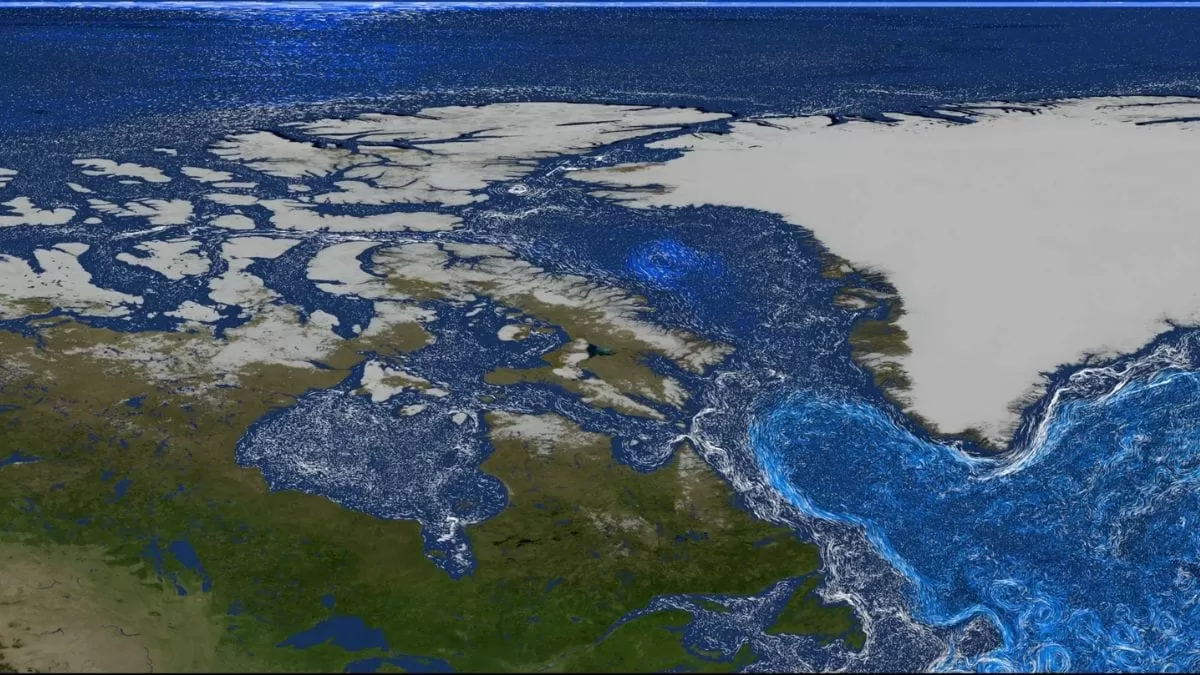
A new study by NASA has shed light on the impact of Greenland’s melting glaciers on life in the Arctic Ocean. The study, led by NASA, has revealed that the melting glaciers are actually fueling life in the Arctic Ocean. This finding has important implications for our understanding of the delicate balance of marine ecosystems and the role of glaciers in mitigating climate change.
Each summer, massive freshwater plumes from glaciers, such as Jakobshavn, drag deep-sea nutrients upward, resulting in a significant boost in phytoplankton growth. This boost can be as much as 40%, which is a significant increase in the base of the marine food web. These microscopic organisms play a crucial role in the carbon absorption process, making them essential for the health of our oceans.
The study, which was conducted using NASA’s Earth Observing System, or ECOS, has revealed the vital role that melting glaciers play in the Arctic Ocean’s ecosystem. The ECOS is a comprehensive system of satellites, instruments, and data systems that provide valuable information about Earth’s land, atmosphere, oceans, and ice. With this advanced technology, scientists were able to observe and track the movement of the massive freshwater plumes from the melting glaciers and their impact on the marine environment.
The results of the study have been eye-opening. It has long been known that melting glaciers contribute to rising sea levels and ocean acidification. However, this study has revealed that they also play a crucial role in sustaining life in the Arctic Ocean. The freshwater plumes carry nutrients from the glaciers and deliver them to the surface of the ocean, providing a much-needed source of food for phytoplankton.
Phytoplankton, although invisible to the naked eye, are the foundation of the marine food web. They are responsible for producing around half of the oxygen we breathe and absorbing a significant amount of carbon from the atmosphere. Without them, the delicate balance of the ocean’s ecosystem would be disrupted, leading to a domino effect on marine life and the health of our planet.
The study’s findings have also highlighted the interconnectedness of different elements of the Earth’s system. The melting glaciers in Greenland are not only impacting the Arctic Ocean, but they also have implications for the global climate. The massive freshwater plumes from these glaciers are altering the ocean’s salinity and circulation patterns, which can have far-reaching effects on ocean currents and weather patterns.
The study’s lead author, Dr. Ian Fenty, a researcher at NASA’s Jet Propulsion Laboratory, has emphasized the importance of understanding the role of glaciers in the marine environment. He stated, “Glaciers are not just melting blocks of ice; they are dynamic systems that impact our planet in various ways. Our study highlights the critical role of glaciers in sustaining life in the Arctic Ocean and the need for further research to fully understand their impact.”
The findings of this study have important implications for how we approach climate change and the protection of our oceans. It is essential to recognize and understand the intricate relationship between different components of the Earth’s system and how they are all interconnected. The study also highlights the need for continued monitoring and research to track the changing dynamics of glaciers and their impact on the marine environment.
The study’s results also have significance for local communities in the Arctic region, which depend on the ocean for food and livelihoods. The increase in phytoplankton growth due to the melting glaciers can have a positive impact on local fisheries and support the sustainability of these communities.
In conclusion, the new NASA-led study has revealed the critical role of Greenland’s melting glaciers in fueling life in the Arctic Ocean. The findings highlight the interconnectedness of our planet’s systems and the need for further research to fully understand the impact of climate change on our oceans. It is essential to continue monitoring and studying the changing dynamics of glaciers to inform effective strategies for mitigating the effects of climate change and protecting our planet’s delicate ecosystems.
