

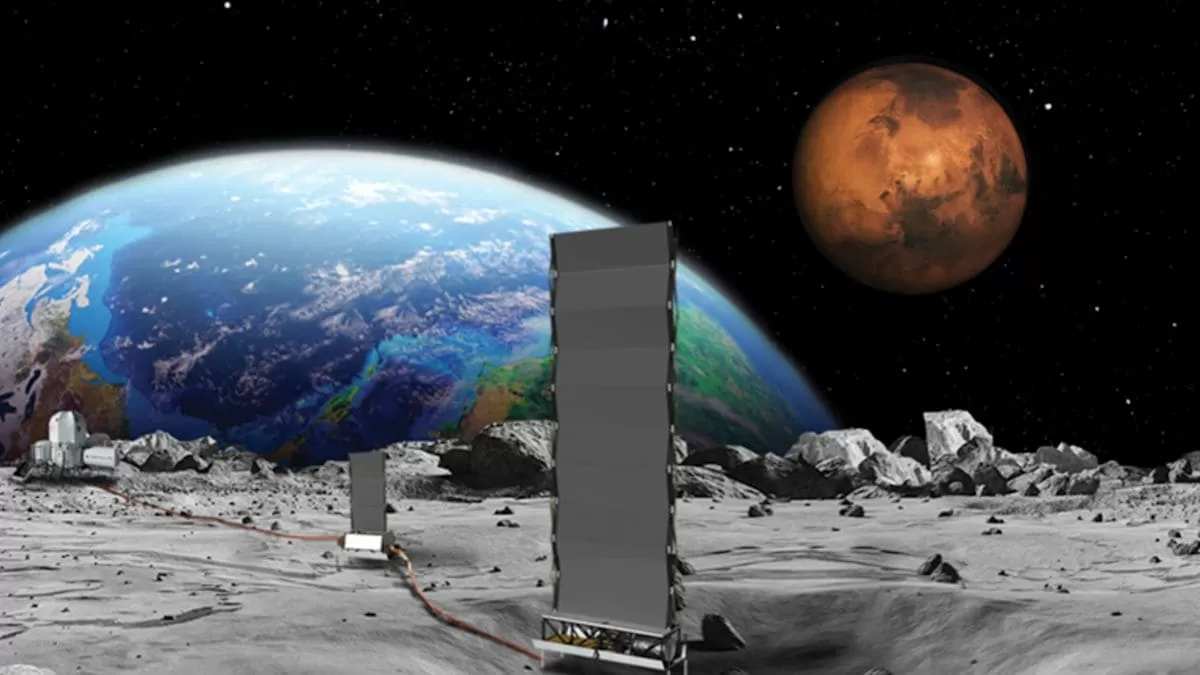
NASA, the renowned space agency of the United States, is accelerating its plans to deploy a 100-kilowatt nuclear reactor on the Moon by 2030. This ambitious project, according to interim head Sean Duffy, will not only ensure steady power through long lunar nights but also help secure water-ice resources at the Moon’s south pole. This move by NASA has sparked a geopolitical “moon race” as China and Russia also aim to have their own lunar reactors by the mid-2030s.
The idea of using nuclear power on the Moon is not a new one. In fact, it has been discussed and studied by scientists and space agencies for decades. However, it is only now that NASA is taking concrete steps towards making it a reality. This decision has been met with both excitement and skepticism, but one thing is for sure – it will be a game-changer in our exploration of the Moon.
The Moon, Earth’s only natural satellite, has always been a source of fascination for mankind. It has been a subject of countless scientific studies and has even been the destination of several successful space missions. However, one of the biggest challenges of exploring the Moon is its harsh environment. The lunar surface experiences extreme temperature changes, with temperatures reaching up to 260 degrees Fahrenheit during the day and dropping to -280 degrees Fahrenheit at night. This makes it difficult for any equipment to function properly, especially during the long lunar nights that can last up to two weeks.
This is where the nuclear reactor comes in. The 100-kilowatt reactor, which is about the size of a refrigerator, will provide a steady and reliable source of power for any future lunar missions. It will be able to operate continuously, even during the long lunar nights, and will not be affected by the extreme temperatures. This means that astronauts will have a constant supply of electricity to power their equipment and conduct their experiments, making their stay on the Moon more efficient and productive.
But the benefits of the nuclear reactor on the Moon go beyond just providing power. It will also play a crucial role in securing water-ice resources at the Moon’s south pole. Water-ice, which is believed to be present in large quantities in the permanently shadowed regions of the Moon, can be used for drinking, as well as for producing rocket fuel. This will be a game-changer for future space missions as it will eliminate the need to transport water from Earth, which is a costly and challenging task.
Moreover, the nuclear reactor will also pave the way for more ambitious and long-term missions on the Moon. With a reliable source of power, astronauts will be able to stay on the lunar surface for extended periods, allowing them to conduct more in-depth research and experiments. This will not only advance our understanding of the Moon but also serve as a stepping stone for future missions to Mars and beyond.
However, the deployment of a nuclear reactor on the Moon is not without its challenges. Safety is, understandably, a major concern. NASA has assured that the reactor will be designed and built with the highest safety standards in mind. It will also be heavily shielded to prevent any radiation leaks. The agency has also stated that the reactor will be remotely operated and monitored from Earth, minimizing the risk to astronauts.
Another challenge is the cost of the project. Building and deploying a nuclear reactor on the Moon will require a significant amount of funding. However, NASA is confident that the benefits of this project far outweigh the costs. It will not only advance our scientific knowledge but also have practical applications for future space exploration.
NASA’s decision to accelerate its plans for a lunar nuclear reactor has also sparked a “moon race” with China and Russia. Both countries have announced their own plans to have their own lunar reactors by the mid-2030s. This competition is a testament to the growing interest and investment in space exploration and will only lead to more advancements and breakthroughs in the field.
In conclusion, NASA’s plan to deploy a 100-kilowatt nuclear reactor on the Moon by 2030 is a bold and ambitious move that will have a significant impact on our exploration of the lunar surface. It will provide a steady source of power, secure vital resources, and pave the way for more ambitious missions in the future. This project is a testament to NASA’s commitment to pushing the boundaries of space exploration and will undoubtedly inspire and motivate future generations to reach for the stars.
