

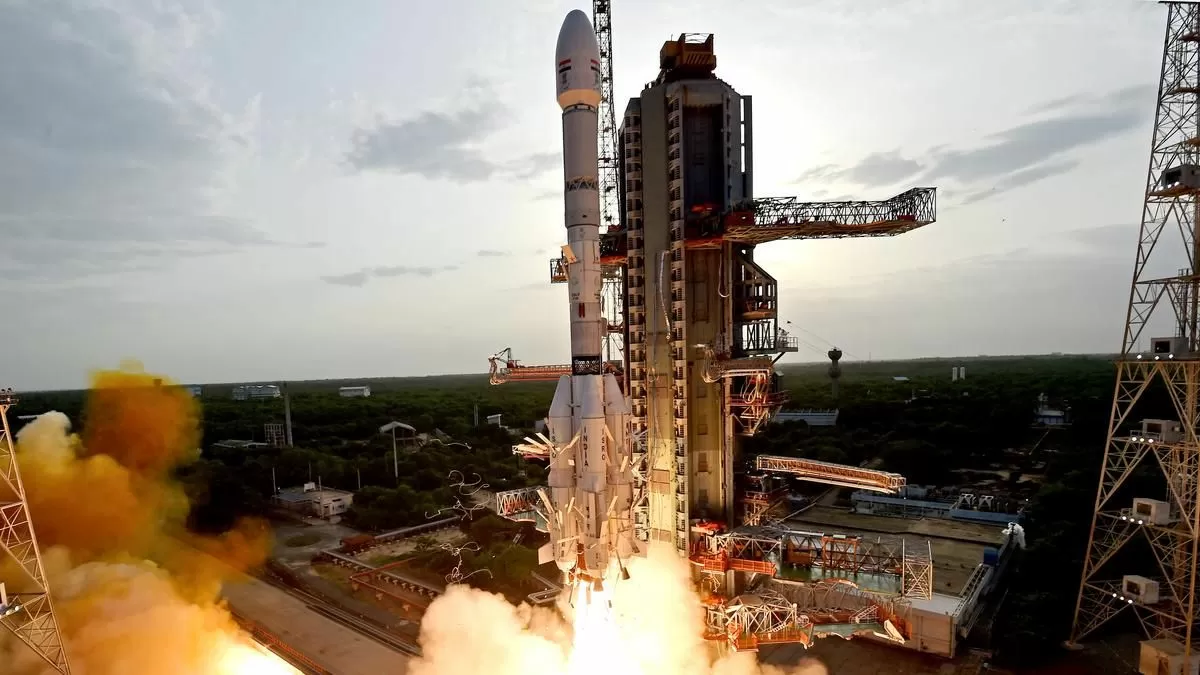
ISRO, the Indian Space Research Organization, has yet again made the nation proud with its successful launch of the NISAR satellite aboard the GSLV-F16 rocket. This feat, achieved in collaboration with NASA, marks a significant milestone in India’s space program as it aims to track Earth’s changes, aid disaster prediction, and support agriculture.
The National Aeronautics and Space Administration (NASA) has been a pioneer in space exploration and has always been at the forefront of technological advancements. This collaboration with ISRO is a testament to the trust and confidence that NASA has in India’s capabilities in the field of space technology.
The NISAR (NASA-ISRO Synthetic Aperture Radar) satellite is a joint project between the two space agencies and is equipped with advanced radar technology that will provide high-resolution images of the Earth’s surface. This will enable scientists to monitor and track changes in the planet’s surface, including natural disasters, deforestation, and glacier movements. The data gathered by NISAR will play a crucial role in disaster prediction and management, thus helping to save lives and reduce the impact of natural calamities.
One of the major objectives of the NISAR mission is to study the Earth’s agriculture and monitor crop patterns. With its advanced radar technology, the satellite will be able to provide accurate and timely data on soil moisture levels, crop growth, and other variables that affect agriculture. This will be extremely beneficial for farmers as it will help them make informed decisions about crop planning and management, thereby increasing their productivity and income.
The successful launch of NISAR is a proud moment for India as it showcases the nation’s technological capabilities and its commitment to using space technology for the betterment of society. The launch also marks a significant step towards achieving self-reliance in the field of space technology, a vision that has been at the core of ISRO’s mission since its inception.
The GSLV-F16 rocket, which carried the NISAR satellite, is a testament to the prowess of ISRO’s engineers and scientists. The Geosynchronous Satellite Launch Vehicle (GSLV) is a three-stage rocket that has been developed indigenously by ISRO and has a successful track record of launching various satellites into orbit. The successful launch of GSLV-F16 not only demonstrates India’s expertise in rocket technology but also its ability to undertake complex and challenging missions.
The NISAR satellite is also a symbol of the strong collaboration between India and the United States in the field of space technology. This partnership between the two nations has not only resulted in technological advancements but has also strengthened diplomatic ties and fostered mutual understanding and cooperation.
The launch of NISAR is also a significant achievement for the global scientific community as it will provide valuable data for various research and development activities. The satellite’s advanced radar technology will not only benefit India but also other countries in tracking Earth’s changes and improving disaster management.
The successful launch of NISAR also highlights India’s commitment to using space technology for sustainable development. The satellite’s findings will play a crucial role in addressing various environmental challenges and helping in the conservation of our planet.
In conclusion, the successful launch of NISAR with NASA aboard GSLV-F16 is a proud moment for India and a significant step towards achieving its ambitious space goals. The satellite’s advanced radar technology will provide valuable data for disaster prediction, agriculture, and environmental conservation, thus making a positive impact on society. This remarkable achievement by ISRO and NASA is a testament to the power of collaboration and the limitless possibilities of space technology.
