

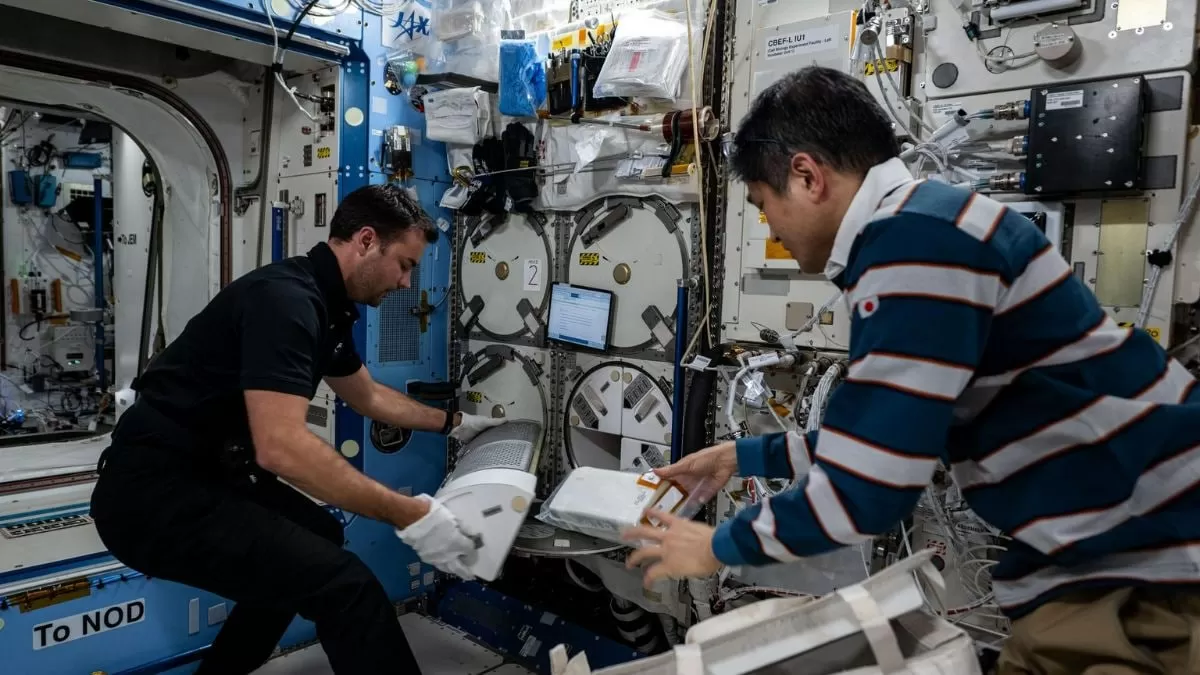
Crews aboard the International Space Station (ISS) are pushing the boundaries of human capability by conducting vital biomedical research focused on immunity and muscle function in space. In recent groundbreaking efforts, JAXA’s Takuya Onishi and the Ax-4 astronauts have made significant contributions to ongoing health studies. As these dedicated individuals continue to pave the way for future space exploration, engineers have been diligently completing maintenance tasks and offloading cargo from the recent Progress 92 mission. These activities not only demonstrate the determination of the ISS crew but also mark another significant step forward in preparing humans for long-term space travel.
Since the beginning of human presence on the ISS, scientific research has been a top priority. This is crucial in understanding the effects of microgravity on the human body and finding ways to combat them in preparation for longer space missions. The immune system is a crucial aspect of human health, and its response to space travel has been a topic of great interest. In an effort to better understand the immune system’s response to space travel, Takuya Onishi and the Ax-4 astronauts have participated in a series of experiments and studies. These studies aim to identify any changes in the immune system and develop effective countermeasures to keep astronauts healthy during future long-duration space missions.
Additionally, the crew has been focusing on muscle function in space, as maintaining muscle mass and strength is essential for astronauts to perform their duties effectively. In a microgravity environment, the body does not have to work against the force of gravity, leading to muscle atrophy and loss of bone density. To combat this, the crew has been conducting exercises using specialized equipment and participating in studies to monitor muscle function. These efforts will not only benefit astronauts on the ISS but also pave the way for future missions to Mars and beyond.
In addition to the vital research being conducted by the crew, engineers have been working tirelessly to ensure the ISS is functioning at its best. Maintenance tasks, such as replacing equipment and repairing any malfunctions, are necessary to keep the station in top working condition. These tasks are even more critical when considering the harsh environment of space, where any malfunction could have severe consequences. The crew has also been busy offloading cargo from the recent Progress 92 mission, which delivered essential supplies and equipment for the crew.
The space station is not only a hub for groundbreaking research and technological advancements, but it is also a symbol of international cooperation and collaboration. The ISS is an excellent example of how nations can come together to achieve extraordinary feats and push the boundaries of human capability. The efforts of the JAXA crew and their international counterparts serve as a shining example of what can be achieved when working together towards a common goal.
The ongoing research and tasks being carried out on the ISS are crucial in preparing humans for long-term space travel. As our dreams of exploring other planets become closer to reality, the knowledge gained from these studies will be invaluable. The dedication and determination of the ISS crew, along with the support of engineers and scientists on the ground, are paving the way for humanity to reach new frontiers.
In conclusion, the recent activities aboard the ISS, including crucial biomedical research focused on immunity and muscle function in space, as well as maintenance tasks and cargo offloading, demonstrate the unwavering commitment of the crew and their international partners. These efforts not only push the boundaries of human capability but also pave the way for future space explorations. With each step forward, humanity gets closer to fulfilling our dreams of traveling to other planets and beyond. The ISS truly embodies the spirit of exploration and inspires us all to reach for the stars.
