

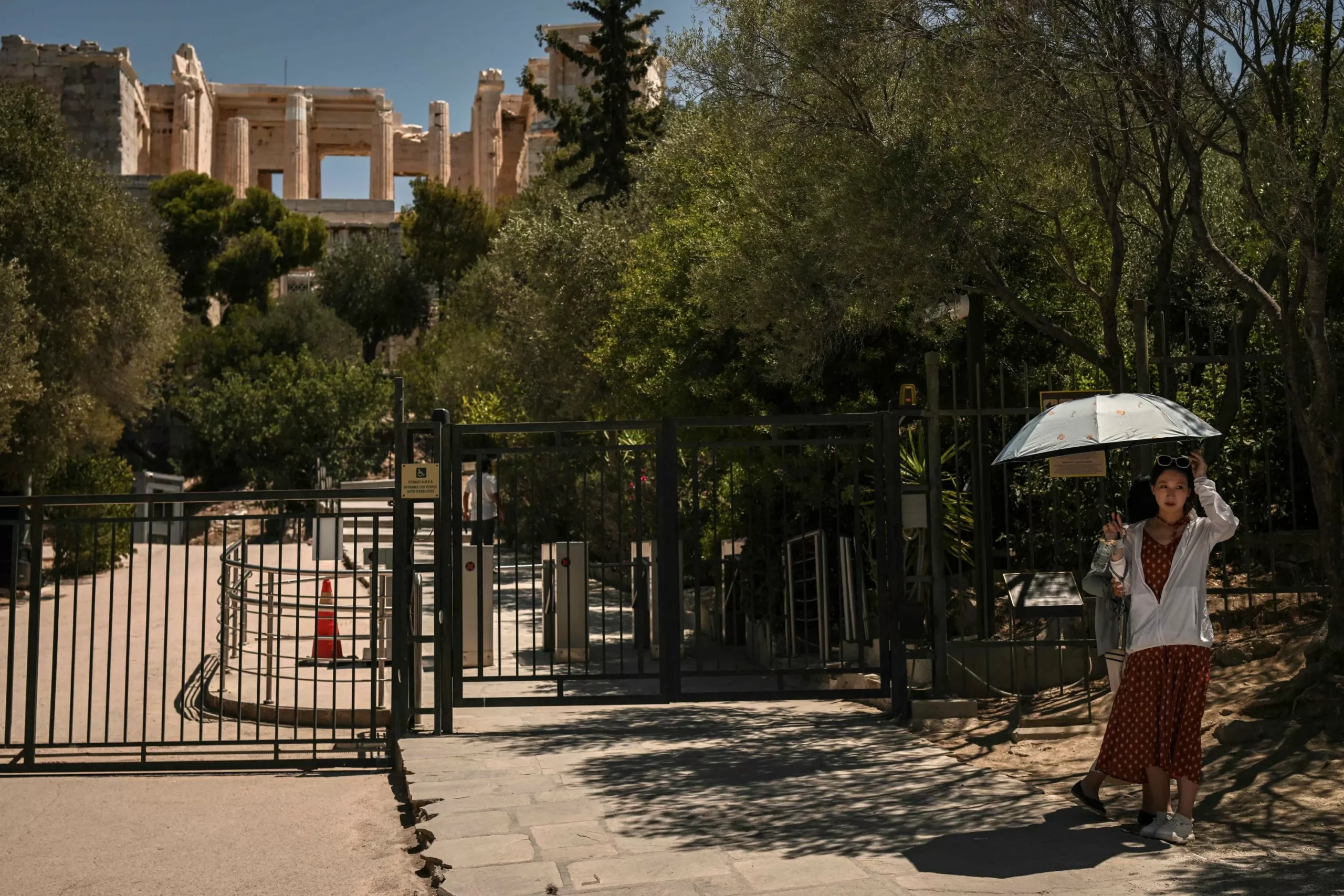
Greece Closes Acropolis Due to Heat Wave
Greece has been hit with a second major heat wave, with temperatures reaching a scorching 41 degrees Celsius (107.6 degrees Fahrenheit). As a result, the country has taken precautionary measures to protect its historical landmarks, including the iconic Acropolis.
On Tuesday, the Greek government announced the temporary closure of the Acropolis, one of the most visited tourist attractions in the country. The decision was made in order to ensure the safety of both visitors and the ancient site itself.
This is not the first time the Acropolis has been closed due to extreme weather conditions. In 2019, the site was also shut down during a heat wave, and in 2018, it was closed for a day due to heavy snowfall. The Greek Ministry of Culture has stated that these closures are necessary in order to protect the structural integrity of the ancient monuments.
The Acropolis, which stands on a rocky outcrop overlooking the city of Athens, is a symbol of Greece’s rich history and cultural heritage. It is home to the Parthenon, a temple dedicated to the goddess Athena, and other ancient ruins that date back to the 5th century BC. The site attracts millions of tourists each year, making it a vital part of the country’s tourism industry.
The decision to close the Acropolis was met with mixed reactions from tourists. While some were disappointed that they couldn’t visit the site, others understood the importance of preserving this historical landmark. “It’s a shame that we can’t visit the Acropolis today, but I understand that it’s for our own safety and the safety of the monument,” said Maria, a tourist from Italy.
The closure was also met with support from environmentalists and conservationists who have long been advocating for the protection of the Acropolis and other ancient sites in Greece. They have raised concerns about the impact of climate change on these historical landmarks and have called for more sustainable measures to be taken in order to preserve them for future generations.
The heat wave in Greece has also caused concerns for the health and well-being of the local population. The government has issued warnings for people to stay indoors and avoid strenuous outdoor activities during the hottest hours of the day. Hospitals have been put on high alert and emergency services have been mobilized to deal with any heat-related emergencies.
The Greek government has also taken steps to provide relief to those who are most vulnerable to the heat, such as the elderly and the homeless. Cooling centers have been set up in various cities, and water has been distributed to those in need.
Despite the challenges posed by the heat wave, the Greek people have remained resilient and have come together to support each other. This is a testament to the strong sense of community and solidarity that exists in the country.
As the temperatures start to cool down and the heat wave subsides, the Acropolis is expected to reopen to visitors. The Greek Ministry of Culture has assured that all necessary measures will be taken to ensure the safety of visitors and the preservation of the ancient site.
In the meantime, tourists can still enjoy the many other beautiful sites and attractions that Greece has to offer. From its stunning beaches to its charming villages, there is no shortage of things to see and do in this beautiful country.
The closure of the Acropolis serves as a reminder of the importance of protecting our historical and cultural treasures. As the effects of climate change continue to be felt around the world, it is crucial that we take action to preserve these precious sites for future generations. Let us all do our part in ensuring that these wonders of the world remain intact for many years to come.
