

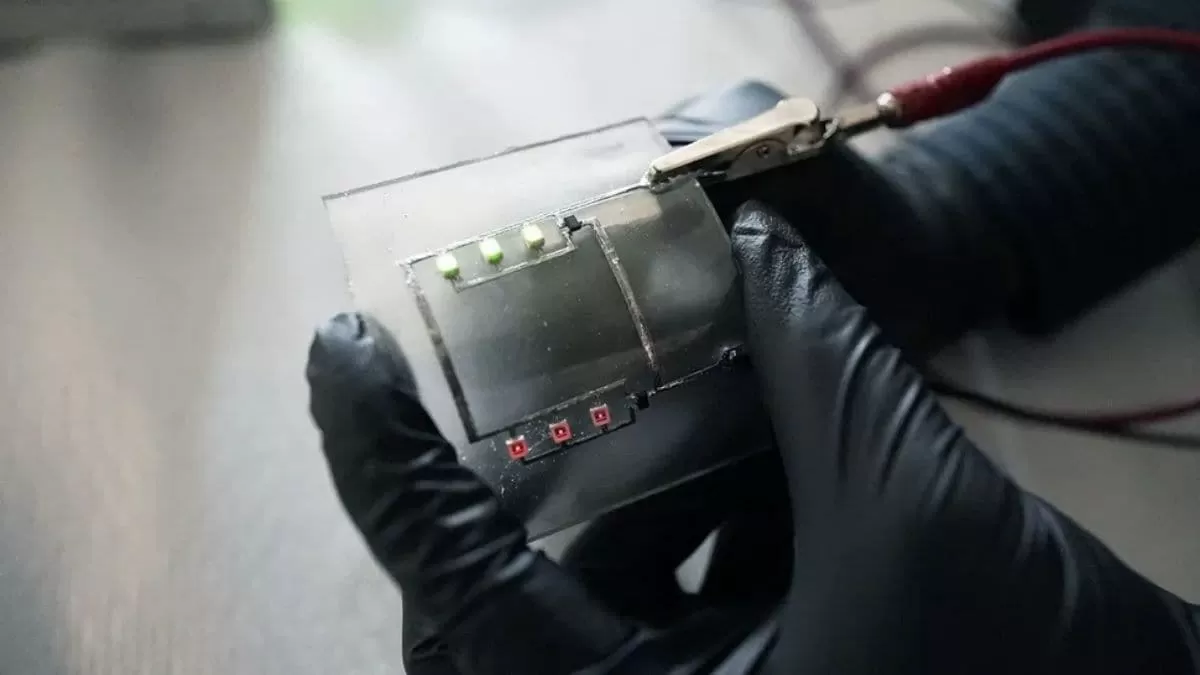
Scientists have made a groundbreaking discovery in the world of electronics with the development of a self-healing, recyclable circuit board. This innovative new material, which utilizes the properties of vitrimer and liquid metal, has the potential to revolutionize the way we think about and use electronic devices. Not only does it maintain conductivity after damage, but it also has the ability to reshape under heat, making it a truly remarkable and versatile material.
The issue of electronic waste, or e-waste, has become a growing concern in recent years. With the constant advancement of technology, more and more electronic devices are being discarded, leading to harmful environmental consequences. Traditional circuit boards, which are made from non-biodegradable materials, contribute significantly to this problem. However, with the development of this new self-healing, recyclable circuit board, we may have found a solution that not only reduces e-waste but also offers a sustainable alternative for electronic devices such as smartphones, laptops, and wearables.
So, how does this self-healing, recyclable circuit board work? The key lies in the combination of two materials – vitrimer and liquid metal. Vitrimer is a type of polymer that has the unique ability to heal itself when damaged. This means that if the circuit board is cracked or broken, the vitrimer will automatically repair itself, restoring the board’s functionality. Liquid metal, on the other hand, is a highly conductive material that can easily flow and change shape when heated. This allows the circuit board to reshape itself, ensuring that the connection between the components remains intact.
One of the most significant advantages of this new material is its ability to maintain conductivity even after sustaining damage. This is a game-changer in the world of electronics, as traditional circuit boards often become useless when damaged, leading to costly repairs or replacements. With the self-healing circuit board, however, the damage can be easily repaired, saving both time and money. This makes it an ideal solution for electronic devices, which are prone to wear and tear.
But that’s not all – the self-healing, recyclable circuit board also offers a sustainable solution for reducing e-waste. With its ability to repair itself, the need for constant replacements is eliminated, thus reducing the number of discarded electronic devices. Additionally, the material can also be easily recycled, making it an environmentally friendly choice. This is a significant step forward in the fight against e-waste and the preservation of our planet.
Moreover, the self-healing, recyclable circuit board also offers a more straightforward and more efficient way to repair and recover materials. Traditional circuit boards are often difficult to repair, requiring specialized equipment and expertise. However, with this new material, the process becomes much more accessible. The damaged area can be heated, allowing the liquid metal to flow and reshape, thus repairing the circuit board. This not only makes it easier to repair, but it also reduces the amount of material that needs to be replaced, making it a more sustainable option.
The potential applications of this self-healing, recyclable circuit board are vast. It can be used in a wide range of electronic devices, from smartphones and laptops to wearables and other gadgets. This means that the impact of this new material could be felt in almost every aspect of our daily lives. Not only will it make our devices more durable and long-lasting, but it will also contribute to a more sustainable future.
In conclusion, the development of a self-healing, recyclable circuit board using vitrimer and liquid metal is a significant breakthrough in the world of electronics. It offers a sustainable solution for reducing e-waste and provides an easy and efficient way to repair and recover materials. With its ability to maintain conductivity after damage and reshape under heat, this material has the potential to change the way we think about and use electronic devices. It is a step towards a more sustainable and environmentally friendly future, and we can only hope to see it being implemented on a larger scale in the near future.
