

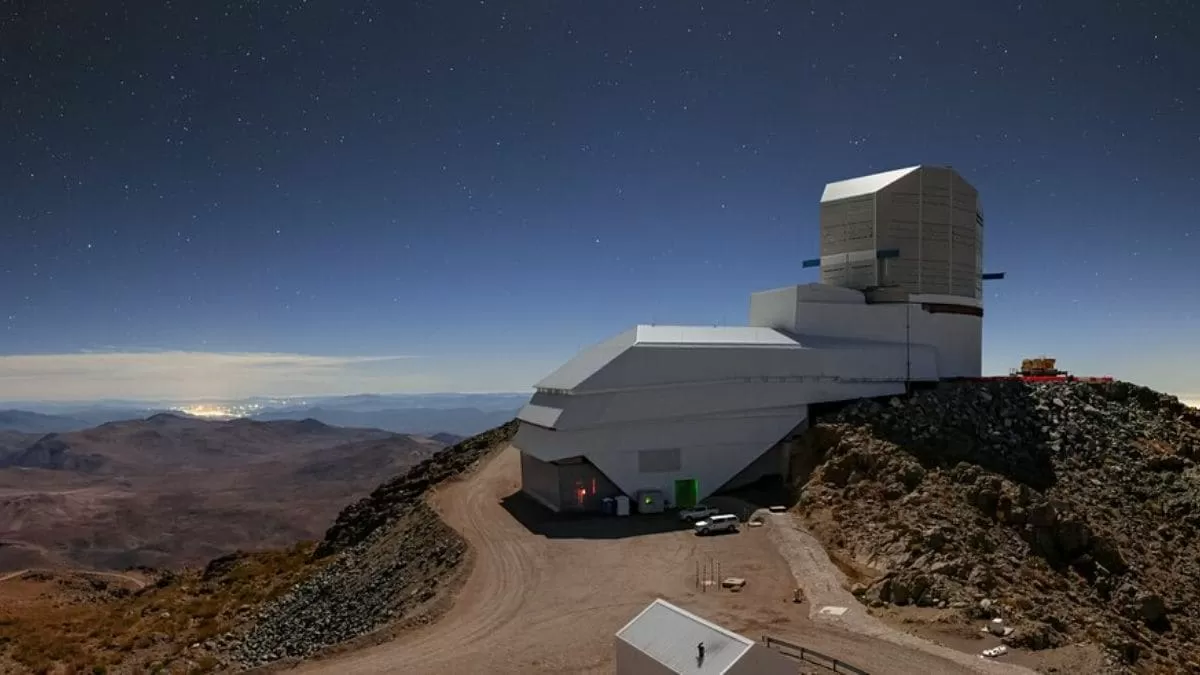
The Vera C. Rubin Observatory, located in Chile, is set to unveil its first images on June 23rd through a global livestream. This highly anticipated event will mark a major milestone in the observatory’s mission to explore dark matter and dynamic cosmic phenomena. The images, captured using a groundbreaking 3,200-megapixel camera, will provide a glimpse into the vast and mysterious universe that surrounds us.
The Vera C. Rubin Observatory, formerly known as the Large Synoptic Survey Telescope (LSST), is a state-of-the-art facility designed to revolutionize our understanding of the cosmos. Its main objective is to conduct the Legacy Survey of Space and Time (LSST), a decade-long project that will scan the southern sky and capture images of billions of galaxies, stars, and other celestial objects. This ambitious survey is expected to transform our view of the universe and unlock some of its greatest mysteries.
The LSST survey will utilize a 3,200-megapixel camera, the largest and most powerful digital camera ever built for astronomical purposes. To put this into perspective, the camera is so powerful that it can capture an area of the sky equivalent to 40 full moons in a single shot. This groundbreaking technology will allow the observatory to capture images with unprecedented detail and depth, providing scientists with a wealth of data to study and analyze.
The Vera C. Rubin Observatory is named after the late astronomer Vera Cooper Rubin, who was a pioneer in the study of dark matter. Dark matter is a mysterious substance that makes up around 85% of the total matter in the universe, yet its exact nature remains unknown. The observatory’s mission to explore dark matter is crucial in our quest to understand the fundamental workings of the universe and its evolution.
In addition to dark matter, the LSST survey will also focus on studying dynamic cosmic phenomena such as supernovae, black holes, and the expansion of the universe. By observing these phenomena over a decade, scientists hope to gain a better understanding of their behavior and potentially discover new and unexpected cosmic events.
The unveiling of the first images from the Vera C. Rubin Observatory is a highly anticipated event in the scientific community. The livestream will allow people from all over the world to witness this historic moment and be a part of the groundbreaking research being conducted at the observatory. It is a testament to the power of technology and human curiosity that we are able to capture and study the wonders of the universe in such detail.
The LSST survey is a collaborative effort involving scientists and engineers from around the world. It is a testament to the power of international cooperation and the pursuit of knowledge. The data collected from the survey will be made available to the public, providing a unique opportunity for anyone to explore and learn about the universe.
The Vera C. Rubin Observatory is not just a scientific facility, but also a symbol of human ingenuity and our insatiable desire to understand the world around us. Its mission to explore dark matter and dynamic cosmic phenomena has the potential to revolutionize our understanding of the universe and inspire future generations to continue pushing the boundaries of knowledge.
In conclusion, the unveiling of the first images from the Vera C. Rubin Observatory is a momentous occasion that marks the beginning of a decade-long journey to explore the mysteries of the universe. The LSST survey, with its groundbreaking technology and ambitious goals, has the potential to transform our view of the cosmos and provide answers to some of the most fundamental questions about our existence. So mark your calendars for June 23rd and join the global livestream to witness this historic event and be a part of the journey towards unlocking the secrets of the universe.
