

Excavations at Israel’s Tel Dan Sanctuary Reveal Centuries of Ritual Cleansing by the Phoenicians
The ancient Near East has always been a hub of diverse cultures and spiritual traditions. And now, new research has shed light on one of the most fascinating aspects of the region’s religious practices – the use of water in sacred ceremonies. Excavations at Israel’s Tel Dan sanctuary have revealed that the Phoenicians, one of the most influential civilizations in the ancient world, had a deep connection with water as a means of ritual cleansing.
Located in northern Israel, Tel Dan is a site of great historical and archaeological significance. It was once a bustling city, known for its strategic location and thriving trade routes. However, recent excavations at the site have uncovered a hidden aspect of Tel Dan’s past – its role as a sanctuary for the Phoenicians.
The Phoenicians, who were renowned for their seafaring skills and extensive trade networks, were also deeply spiritual people. They worshiped a pantheon of gods and goddesses, and their religious beliefs and practices were an integral part of their daily lives. The discovery of a bathing unit at Tel Dan has provided valuable insights into the evolution of their spiritual customs.
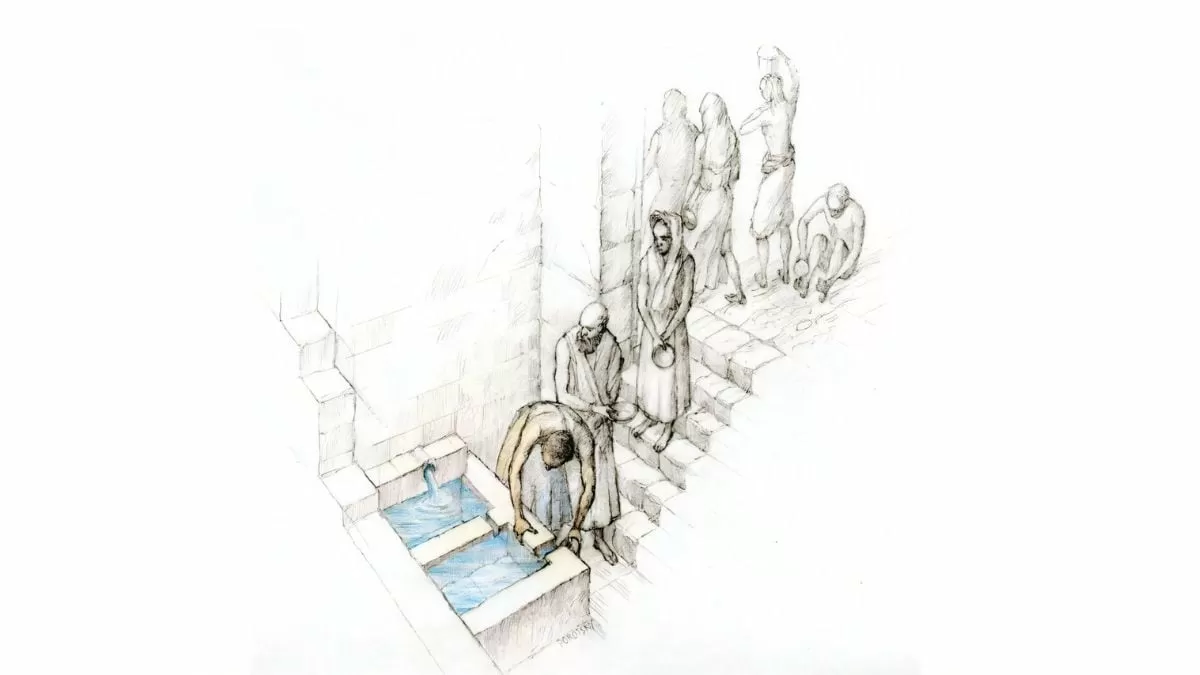
The bathing unit, which is believed to have been used for ritual cleansing, is a complex structure consisting of a series of interconnected pools and channels. It is located in the center of the sanctuary, indicating its significance in the religious rituals of the Phoenicians. The pools were filled with water from a nearby spring, which was considered to be sacred and believed to have healing powers.
Archaeologists have also found evidence of a sophisticated drainage system, which suggests that the water in the pools was regularly changed and renewed. This indicates that the Phoenicians placed great importance on the purity of the water used in their rituals. The discovery of various artifacts, including pottery and offerings, further supports the theory that the bathing unit was an integral part of the Phoenician’s spiritual practices.
What makes this discovery even more intriguing is the fact that the bathing unit was not only used by the Phoenician priests but also by pilgrims who visited the sanctuary. This suggests that the tradition of ritual cleansing was not limited to the elite but was open to all members of society. It also highlights the inclusive nature of the Phoenician’s religious beliefs, where everyone, regardless of their social status, had access to the sacred rituals.
The Phoenicians’ use of water in their religious ceremonies is not a new revelation. However, the discovery at Tel Dan has provided a deeper understanding of the significance of water in their spiritual practices. It is believed that the Phoenicians saw water as a symbol of purification and renewal, and its use in their rituals was a way to connect with their gods and goddesses.
The discovery at Tel Dan also sheds light on the influence of the Phoenician culture on the religious practices of the surrounding regions. It is believed that the Phoenicians’ use of water in their rituals may have influenced other nearby civilizations, such as the Israelites and the Canaanites. This further highlights the importance of Tel Dan as a site of cultural exchange and religious significance.
The excavation at Tel Dan is ongoing, and it is expected that more discoveries will be made in the future. The findings so far have provided a fascinating glimpse into the spiritual customs of the Phoenicians and their use of water in their rituals. It is a testament to the rich and diverse religious traditions that existed in the ancient Near East and their lasting impact on the world.
In conclusion, the excavations at Israel’s Tel Dan sanctuary have revealed that the Phoenicians had a deep connection with water in their religious practices. The discovery of the bathing unit, used for ritual cleansing, offers valuable insights into the evolving spiritual customs of the Phoenicians. It also highlights the inclusive nature of their religious beliefs and their influence on the surrounding cultures. This new research expands our understanding of sacred traditions in the Near East and the significant role of water in local religious ceremonies.
