

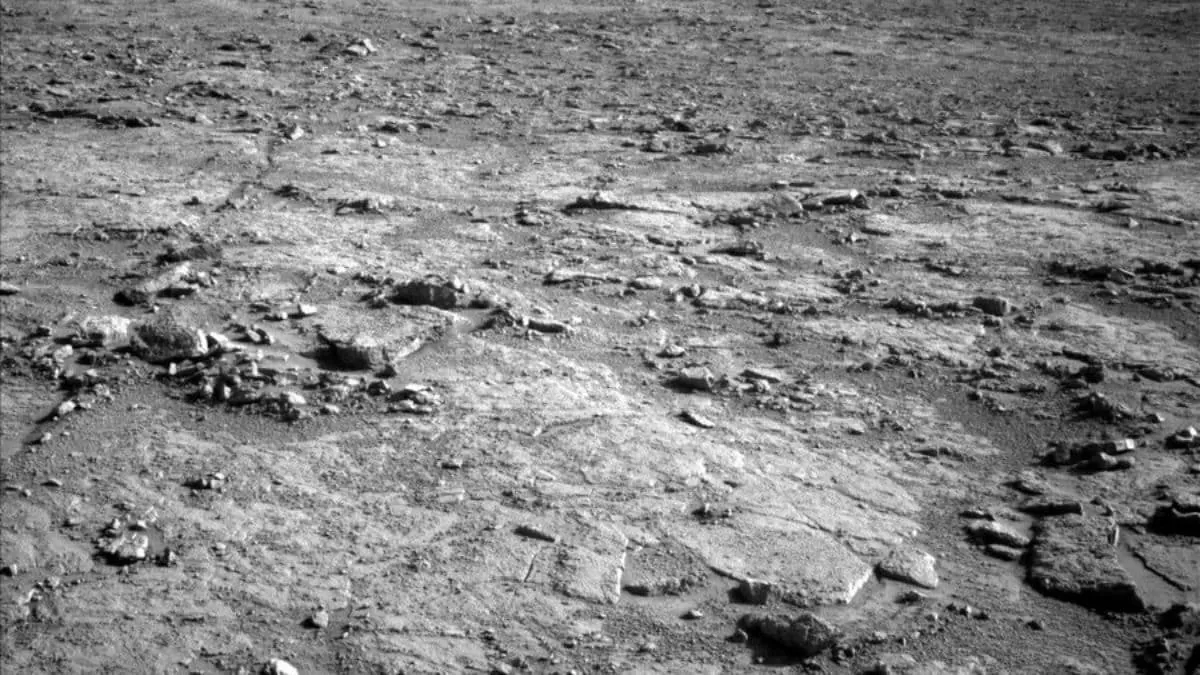
NASA’s Curiosity rover has once again captured the world’s attention as it embarks on a new leg of its mission on Mars. The rover has officially entered the Uyuni quad, a region of the Red Planet that has long been a source of fascination for scientists. This marks an exciting new chapter in the rover’s journey, as it begins to explore this unique area and collect valuable data that could potentially unlock the secrets of Mars’ past.
After completing a 48-metre drive, Curiosity has now settled in the Uyuni quad and is ready to start its scientific investigations. The rover’s main focus will be on remote sensing and contact science, using its state-of-the-art instruments to study the sedimentary textures and surface chemistry of the area. This will provide valuable insights into the geological history of Mars and could potentially reveal clues about the planet’s past environments.
The Uyuni quad is a particularly intriguing location for the Curiosity team, as it is known to be rich in sedimentary rocks. These rocks are formed through the accumulation of sediment, such as sand and mud, over long periods of time. By studying these rocks, scientists hope to gain a better understanding of the conditions that existed on Mars billions of years ago.
One of the main goals of the mission is to search for evidence of past water on Mars. The presence of sedimentary rocks is a promising sign, as water is a key ingredient in their formation. By analyzing the sedimentary textures and surface chemistry, Curiosity will be able to paint a clearer picture of the ancient Martian environment and potentially uncover evidence of water.
But the rover’s mission goes beyond just searching for water. Curiosity will also be studying the chemical composition of the rocks in the Uyuni quad, which could provide valuable insights into the planet’s past habitability. By analyzing the minerals present in the rocks, scientists will be able to determine if the conditions were suitable for life to exist on Mars.
The Uyuni quad is just one stop on Curiosity’s long journey on Mars. The rover has been exploring the Red Planet since 2012, and has already made groundbreaking discoveries, such as evidence of an ancient lakebed and organic molecules. With each new location it visits, Curiosity adds to our understanding of Mars and its potential for hosting life.
The team behind the mission is excited about the new opportunities that the Uyuni quad presents. “We are thrilled to have reached this milestone and to begin exploring this unique area of Mars,” said Ashwin Vasavada, Curiosity’s project scientist at NASA’s Jet Propulsion Laboratory. “We hope to uncover new insights about the planet’s past and its potential for habitability.”
The Uyuni quad is just the beginning of Curiosity’s journey in this region. The rover will continue to explore and collect data, providing scientists with a wealth of information to study and analyze. This data will not only help us understand the history of Mars, but also aid in planning future missions to the Red Planet.
As we eagerly await the new discoveries that Curiosity will uncover in the Uyuni quad, let us take a moment to appreciate the incredible feat that NASA has achieved. The fact that we have a rover on Mars, collecting data and sending it back to Earth, is a testament to human ingenuity and our unquenchable thirst for knowledge. With each new mission, we come one step closer to unraveling the mysteries of our universe.
So let us celebrate this new leg of Curiosity’s mission and look forward to the exciting discoveries that lie ahead. Who knows what secrets the Uyuni quad holds, but one thing is for sure – with Curiosity leading the way, we are one step closer to understanding the Red Planet and our place in the universe.
