

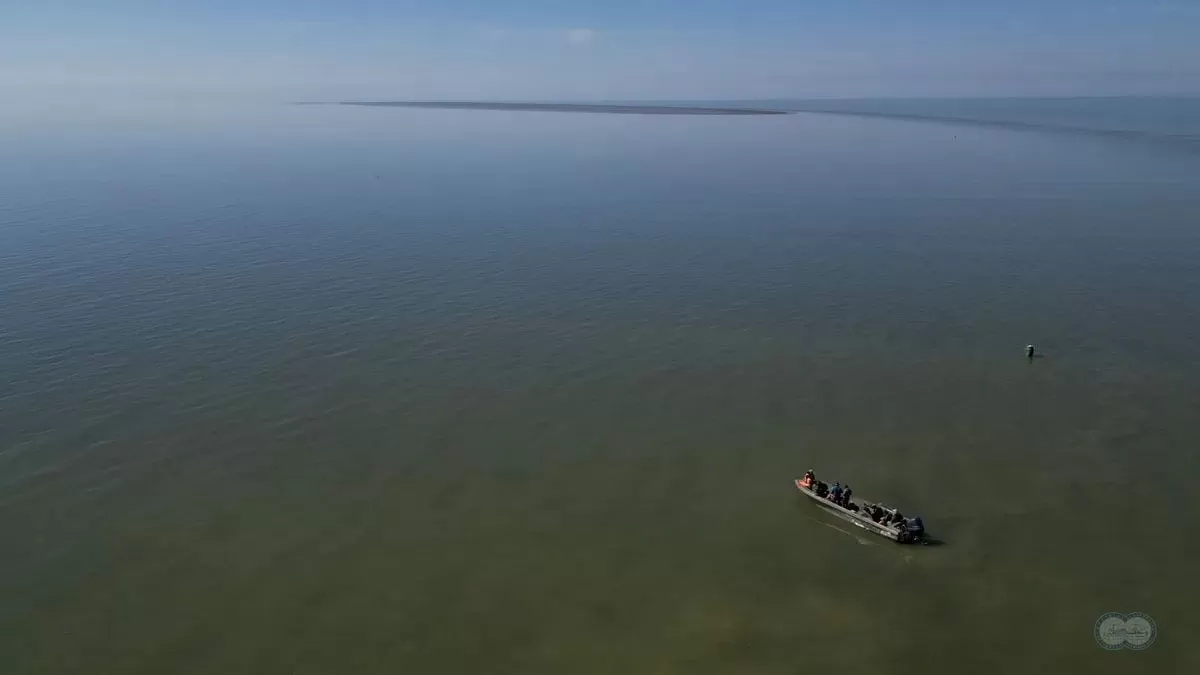
Russian scientists have made a groundbreaking discovery in the Caspian Sea – the existence of a new island. This is an incredible finding, as it is the first time that such an island has been spotted in this region. The island was first spotted via satellite in late 2024, and after thorough verification, Russian scientists have confirmed its existence.
The previously unknown island is located 30 km from Maly Zhemchuzhny Island, in the northern part of the Caspian Sea. It is believed that the islet appeared due to a combination of factors, including climate change and tectonic shifts. As sea levels reached historic lows, the island emerged, making it visible to satellite imagery.
Although researchers were unable to land on the island due to shallow water, they were able to gather valuable information using drones. The images captured by these drones provided strong evidence of the existence of this new landform.
The island, which has been unofficially named “Zoya Island” after the lead scientist who discovered it, is estimated to be around 25 hectares in size. This is an impressive size for an island that was previously unknown to the world. It is also a significant addition to the Caspian Sea, which is the largest inland body of water in the world.
The discovery of Zoya Island has generated a lot of excitement and interest in the scientific community. This is because it could potentially offer valuable insights into the effects of climate change and tectonic movements on the Earth’s surface. It also highlights the importance of using advanced technology, such as satellite imagery and drones, in discovering and understanding our planet.
The presence of this new island also has significant implications for the surrounding marine ecosystem. It is a new habitat that could support a diverse range of plant and animal life. This could potentially lead to the discovery of new species that were previously unknown to us.
In addition, Zoya Island could also have cultural and economic significance. It could provide a new destination for tourists, offering them a unique experience of exploring a newly emerged island. It could also open up possibilities for fishing and other economic activities in the region.
The discovery of Zoya Island is a testament to the continuous efforts of scientists to understand and unravel the mysteries of our planet. It also serves as a reminder of the fragility of our environment and the need to take action to address the effects of climate change.
As we continue to face the challenges of a changing climate, this discovery offers a glimmer of hope. It shows that amidst the chaos and destruction caused by human activities, nature still has the power to surprise us. It also emphasizes the importance of preserving and protecting our planet for future generations.
The Russian scientists who made this remarkable discovery have brought great pride to their country and the entire scientific community. Their dedication, hard work, and the use of advanced technology have made this breakthrough possible.
In conclusion, the verification of a new island in the Caspian Sea by Russian scientists is a momentous event. It has opened up new avenues for research, tourism, and economic activities. It also reminds us to be more mindful of the impact of our actions on the environment. Zoya Island is a symbol of resilience and hope, and we should embrace this new addition to our world with open arms.
