

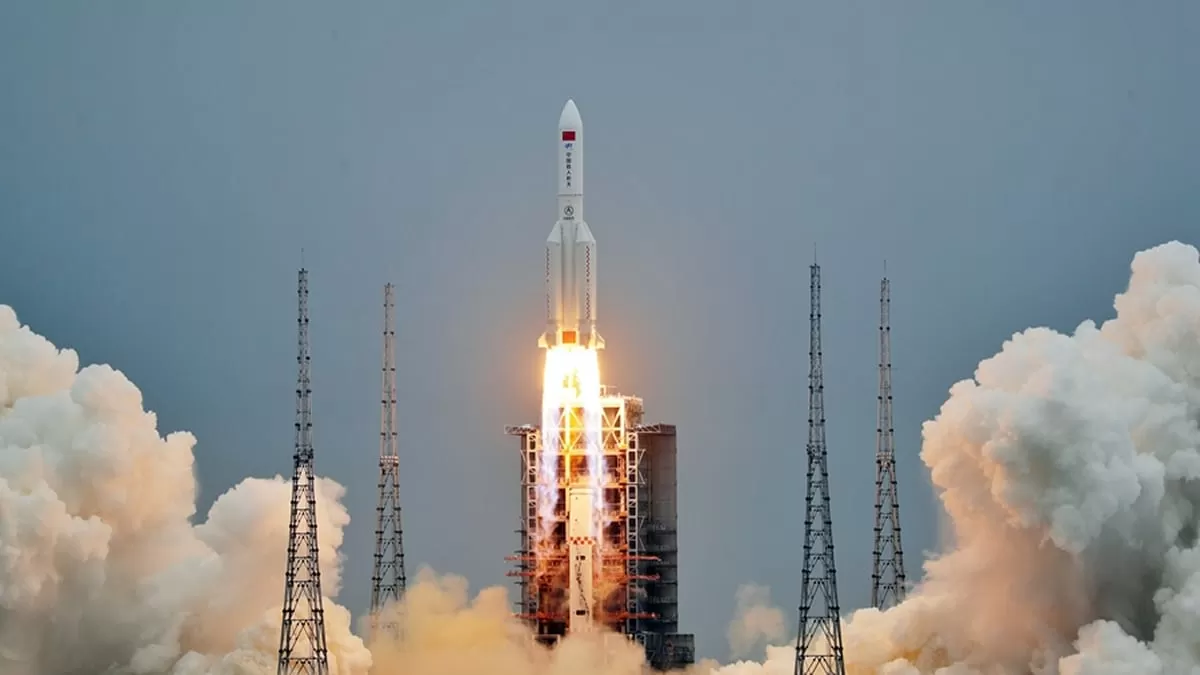
China has once again made a groundbreaking leap in the field of space technology with the launch of the first 12 satellites of its Three-Body Computing Constellation on May 14. This ambitious project, led by ADA Space and Zhejiang Lab, aims to revolutionize the way artificial intelligence (AI) is processed and utilized by introducing a network of 2,800 satellites with a collective capacity of 1,000 peta operations per second.
The Three-Body Computing Constellation is set to be a game-changing technology that will not only enhance the capabilities of AI but also lay the foundation for future space-based computing systems. This project has been in the works for several years and is finally taking shape with the successful launch of the first 12 satellites.
One of the most impressive features of this constellation is its ability to use natural cooling in orbit, making it the first-ever space-based AI network to do so. This will not only reduce the need for external cooling systems but also increase the efficiency and lifespan of the satellites. As a result, the Three-Body Computing Constellation is expected to be more cost-effective and sustainable compared to other space-based computing networks.
But that’s not all. The Three-Body Computing Constellation also boasts high-speed laser communications, allowing for faster data transmission between the satellites and ground stations. This will significantly reduce the processing time for AI algorithms and improve the network’s overall performance.
Designed to process data in space, the Three-Body Computing Constellation will have a wide range of applications in various industries. From weather forecasting and disaster management to navigation and communications, this network has the potential to transform how we use AI in our daily lives.
Moreover, the Three-Body Computing Constellation will also play a crucial role in advancing space exploration. With its advanced computing capabilities, it will enable faster and more accurate data analysis, making it easier for scientists to collect and analyze data from distant planets and galaxies. This, in turn, will open up new opportunities for space research and pave the way for future space missions.
The successful launch of the first 12 satellites is a significant milestone in China’s space journey and a testament to the country’s commitment to innovation and technological advancement. It showcases China’s determination to be at the forefront of space exploration and position itself as a global leader in the field.
The Three-Body Computing Constellation is a prime example of how China is leveraging its expertise in both space and AI technology to create something truly groundbreaking. This project is a result of collaboration between ADA Space, a private company specializing in space technology, and Zhejiang Lab, a research institute dedicated to promoting technological innovation. Their joint efforts have led to the development of a technology that has the potential to change the world.
As we move towards a more digitally-driven era, the demand for advanced computing systems will only continue to grow. The Three-Body Computing Constellation comes at the perfect time to meet this demand and give a glimpse of what the future holds. Its launch marks the beginning of a new chapter in space technology and paves the way for further advancements in the field.
With the Three-Body Computing Constellation, China is once again proving to the world that it is a force to be reckoned with in the realm of space technology. This project is a testament to China’s capabilities and its vision to push the boundaries of what is possible. As we witness the first 12 satellites of this constellation orbiting the Earth, we can only imagine the immense possibilities that it holds for the future. It is truly a remarkable achievement and a source of pride for China and its people.
In conclusion, the launch of the first 12 satellites of the Three-Body Computing Constellation is a significant milestone in China’s space program and a giant leap towards the future of AI and space technology. This project has the potential to transform various industries, accelerate space exploration, and elevate China’s position as a global leader in innovation. As we eagerly await the completion of this ambitious network, we can only anticipate the endless possibilities it will bring.
