

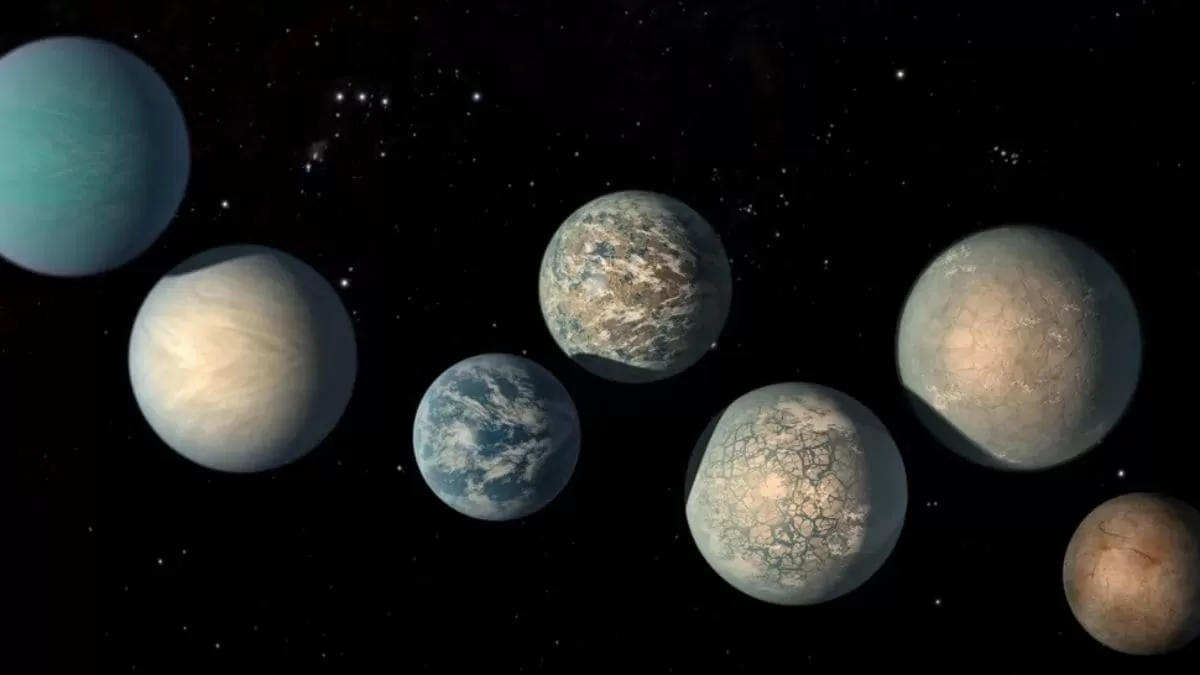
Astronomy has always been a field of wonder and endless possibilities. The vastness of the universe and the countless stars and planets that exist within it have captivated the minds of scientists and stargazers alike. But as we continue to explore the depths of space, one question has remained at the forefront of our minds: are we alone in the universe?
For years, astronomers have been searching for Earth-like exoplanets, planets that have the potential to support life. However, these distant worlds have proven to be elusive, hidden behind the glare of their parent stars. But now, thanks to a groundbreaking new technology, astronomers are harnessing the power of quantum mechanics to directly image these exoplanets and potentially change the way we explore the universe.
The technology in question is a coronagraph, a device that blocks out the light from a star, allowing astronomers to see the faint signals of orbiting planets. But what makes this coronagraph different from previous ones is its use of quantum mechanics. By sorting light waves at the photon level, the device is able to bypass traditional diffraction limits, revealing even the faintest planetary signals.
This breakthrough has the potential to redefine how scientists explore distant worlds and aid in future missions. With traditional coronagraphs, the glare from a star would often overpower the faint signals of an exoplanet, making it nearly impossible to detect. But with the use of quantum mechanics, the coronagraph is able to filter out the star’s light, allowing for a clearer view of the exoplanet.
This technology has already shown promising results in its early stages. In a recent study, astronomers were able to directly image a Jupiter-sized exoplanet orbiting a young star, a feat that was previously thought to be impossible. This discovery not only showcases the potential of this new technology but also opens up a whole new realm of possibilities for future exoplanet research.
But the benefits of this breakthrough extend beyond just exoplanet exploration. The use of quantum mechanics in the coronagraph could also aid in the study of other astronomical phenomena, such as black holes and distant galaxies. By allowing us to see beyond the limitations of traditional diffraction, this technology has the potential to revolutionize our understanding of the universe.
Furthermore, this new coronagraph could also play a crucial role in future space missions. With the ability to directly image exoplanets, scientists can gather more accurate data about these distant worlds, paving the way for potential future missions to explore them in more detail. This could potentially lead to groundbreaking discoveries and advancements in our understanding of the universe.
The development of this new coronagraph is a testament to the power of collaboration between different fields of science. By combining the principles of quantum mechanics with astronomy, scientists have been able to achieve what was once thought to be impossible. This breakthrough not only highlights the importance of interdisciplinary research but also serves as a reminder of the endless possibilities that await us in the vastness of space.
In conclusion, the use of quantum mechanics in the development of a new coronagraph has the potential to redefine how we explore distant worlds and aid in future space missions. By harnessing the power of this groundbreaking technology, astronomers are one step closer to directly imaging Earth-like exoplanets and potentially answering the age-old question of whether we are alone in the universe. As we continue to push the boundaries of science and technology, who knows what other wonders of the universe we will uncover. The possibilities are truly endless.
