

The safety of astronauts is of utmost importance in space missions. Every aspect of their journey is carefully planned and studied to ensure their well-being. One of the biggest concerns in space is the risk of fire emergencies. Unlike on Earth, where gravity plays a crucial role in the spread of flames, in microgravity, the behavior of fire is quite different. To understand and mitigate this risk, researchers have conducted extensive studies on flame spread in microgravity.
The study of flame spread in microgravity was initiated to protect astronauts from potential fire hazards during their missions. In the absence of gravity, flames behave differently, making it challenging to predict their spread and control them. This poses a significant threat to the safety of astronauts and the success of space missions. Therefore, it was imperative to conduct research and gain a better understanding of the behavior of fire in microgravity.
The first study on flame spread in microgravity was conducted in the 1960s by NASA’s Apollo program. The results of this study were crucial in developing fire safety protocols for space missions. However, with advancements in technology and the need for longer space missions, further research was required to enhance the safety measures. In the 1990s, NASA’s Microgravity Science Division initiated a series of experiments to study the spread of flames in microgravity.
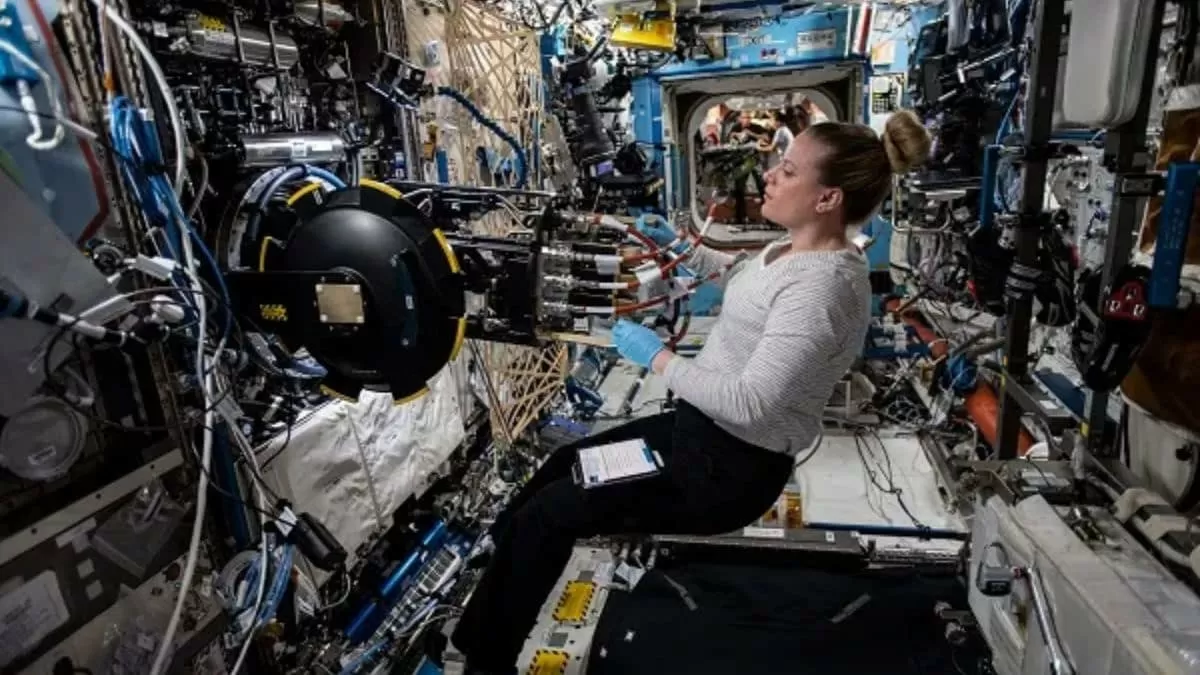
The experiments were conducted on board the Space Shuttle and the International Space Station (ISS). The researchers used a specially designed combustion chamber to simulate microgravity conditions. The chamber was equipped with cameras and sensors to capture and analyze the behavior of flames. The experiments were conducted with different materials, including cotton, paper, and plastics, to understand the impact of different materials on flame spread.
The results of these experiments were groundbreaking. It was observed that in microgravity, flames spread in a spherical shape, unlike on Earth, where they spread in a teardrop shape. This is because in the absence of gravity, hot air rises evenly in all directions, creating a spherical shape. This finding was crucial in developing fire safety protocols for space missions. It was also observed that the spread of flames in microgravity is slower compared to Earth. This is because the lack of gravity reduces the flow of oxygen, which is essential for the combustion process.
The researchers also studied the impact of different materials on flame spread in microgravity. It was found that materials with a higher surface area to volume ratio, such as cotton, spread flames faster than materials with a lower surface area to volume ratio, such as paper. This finding was crucial in determining the materials to be used in spacecraft and space stations to minimize the risk of fire.
The study of flame spread in microgravity has not only helped in developing fire safety protocols for space missions but has also contributed to improving fire safety on Earth. The findings of these experiments have been used to develop more efficient fire extinguishing systems and to enhance the understanding of fire behavior in different environments.
Moreover, the research on flame spread in microgravity has also led to the development of new materials that are more fire-resistant. These materials have been used in spacecraft and space stations, making them safer for astronauts. The findings have also been applied in the aviation industry, where fire safety is of utmost importance.
In conclusion, the study of flame spread in microgravity has been a crucial aspect of ensuring the safety of astronauts in space missions. The extensive research conducted by NASA and other space agencies has provided valuable insights into the behavior of fire in microgravity. The findings have not only enhanced the safety measures for space missions but have also contributed to improving fire safety on Earth. With further advancements in technology, it is expected that the research on flame spread in microgravity will continue to evolve, making space missions safer for astronauts.
