

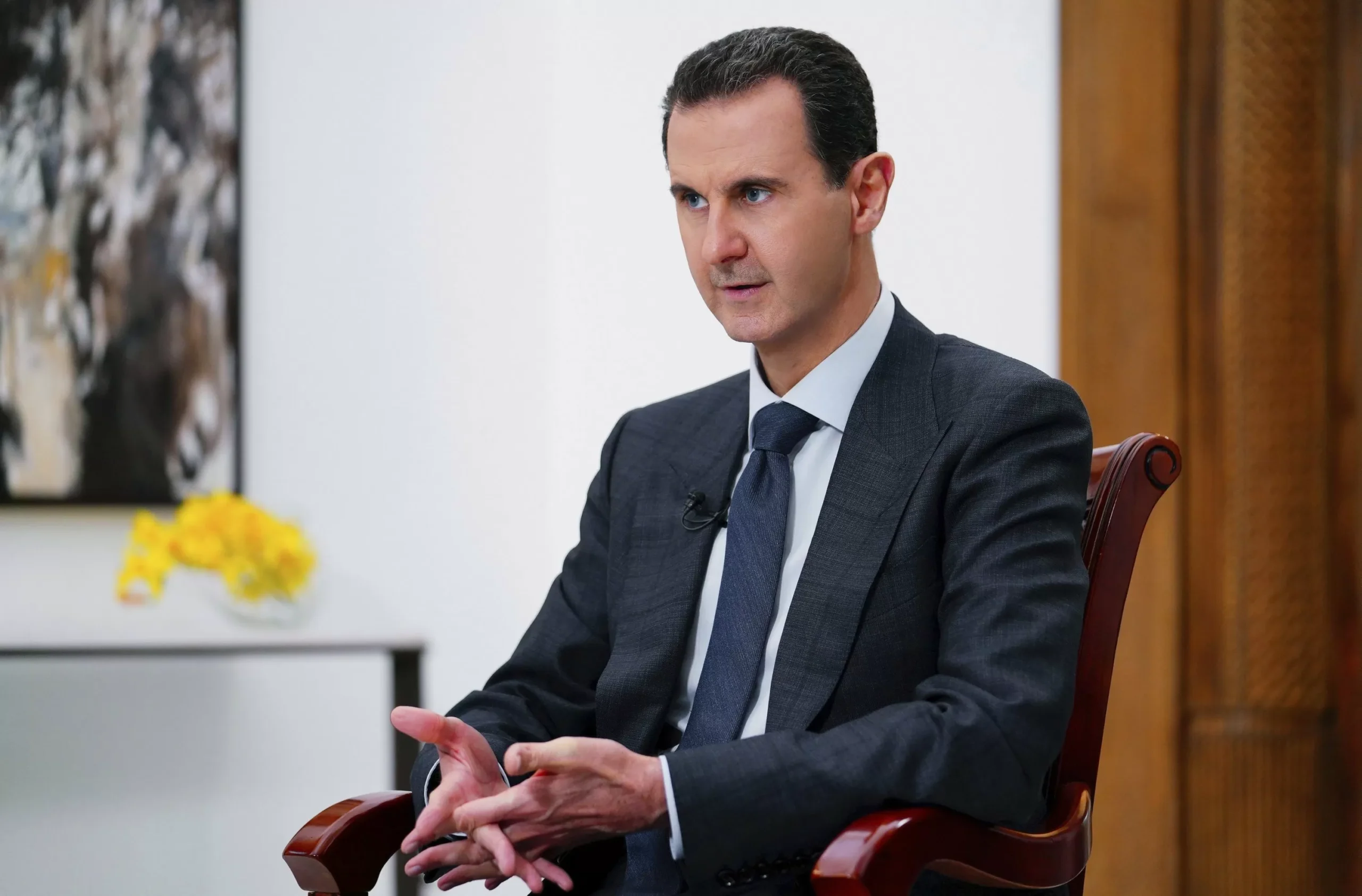
In a significant step towards justice for the victims of the Syrian civil war, French judges have issued arrest warrants for seven former senior Syrian officials, including ousted dictator Bashar Assad. This move comes in response to the 2012 bombing of a press center in Homs, a judicial source confirmed.
The bombing, which took place on 22 February 2012, targeted a press center in the city of Homs, killing two French journalists, Remi Ochlik and Marie Colvin, and injuring several others. The center was a hub for foreign journalists covering the Syrian conflict, and the attack was a clear violation of the protections afforded to journalists in times of war.
The arrest warrants were issued by the Paris-based investigating judges, who have been looking into the case since it was first brought to their attention in 2016 by French journalist and human rights activist, Hala Kodmani. The warrants charge the seven former Syrian officials, including Assad, with “complicity in crimes against humanity” and “complicity in war crimes.”
This is not the first time that French judges have taken action against the Assad regime. In 2019, they issued arrest warrants for three other senior Syrian officials, including Ali Mamlouk, the head of Syria’s National Security Bureau. These warrants were issued in connection with the torture and disappearance of French-Syrian dual citizen, Mazen Dabbagh, who was arrested by Syrian intelligence in 2013.
These actions by French judges are a clear indication that the international community is not turning a blind eye to the atrocities committed by the Assad regime. It is a step towards holding those responsible for the ongoing human rights violations in Syria accountable for their actions.
The French judiciary has a long history of taking a strong stance against human rights violations and war crimes. In 1994, it was the first country to pass a law allowing for the prosecution of war crimes committed outside its borders. This law has been used in various cases, including the Rwandan genocide and the torture and killing of a Turkish worker in Paris by Turkish agents.
The arrest warrants for Assad and his top officials are a clear message that no one is above the law and that justice will be served, no matter how powerful the perpetrators may be. This move also sends a strong message to other dictators and war criminals around the world that their actions will not go unpunished.
The Syrian conflict, which began in 2011, has resulted in the deaths of over 380,000 people and displaced millions more. The Assad regime has been accused of numerous human rights violations, including the use of chemical weapons, torture, and indiscriminate bombing of civilian areas. The international community has long called for accountability for these crimes, and the French judges’ decision is a significant step towards achieving that.
However, it is important to note that these arrest warrants are not a guarantee that Assad and his officials will actually face trial. The Syrian government does not recognize the jurisdiction of the International Criminal Court, and it is unlikely that they will cooperate with the French judiciary. However, this does not diminish the importance of the warrants. It is a symbolic victory for the victims and their families, who have been waiting for justice for almost a decade.
The warrants also serve as a reminder to the international community that they have a responsibility to take action when human rights are violated. It is not enough to condemn and offer humanitarian aid. The perpetrators of these heinous crimes must be held accountable, and this can only be achieved through international cooperation and support.
The French judges’ decision to issue arrest warrants for Assad and his top officials is a courageous and commendable move. It is a clear demonstration of the French judiciary’s commitment to upholding the principles of justice and human rights. This action also serves as a glimmer of hope for the victims of the Syrian conflict, who have suffered for far too long.
As the world continues to grapple with the ongoing COVID-19 pandemic, it is easy to forget about the ongoing conflicts and human rights violations happening in different parts of the world. However, the French judges’ action serves as a reminder that justice must not be forgotten, and the pursuit of it must continue, no matter the circumstances.
In conclusion, the issuance of arrest warrants for Assad and his top officials by French judges is a significant step towards achieving justice for the victims of the Syrian conflict. It is a powerful message to the international community that human rights violations will not be tolerated, and those