

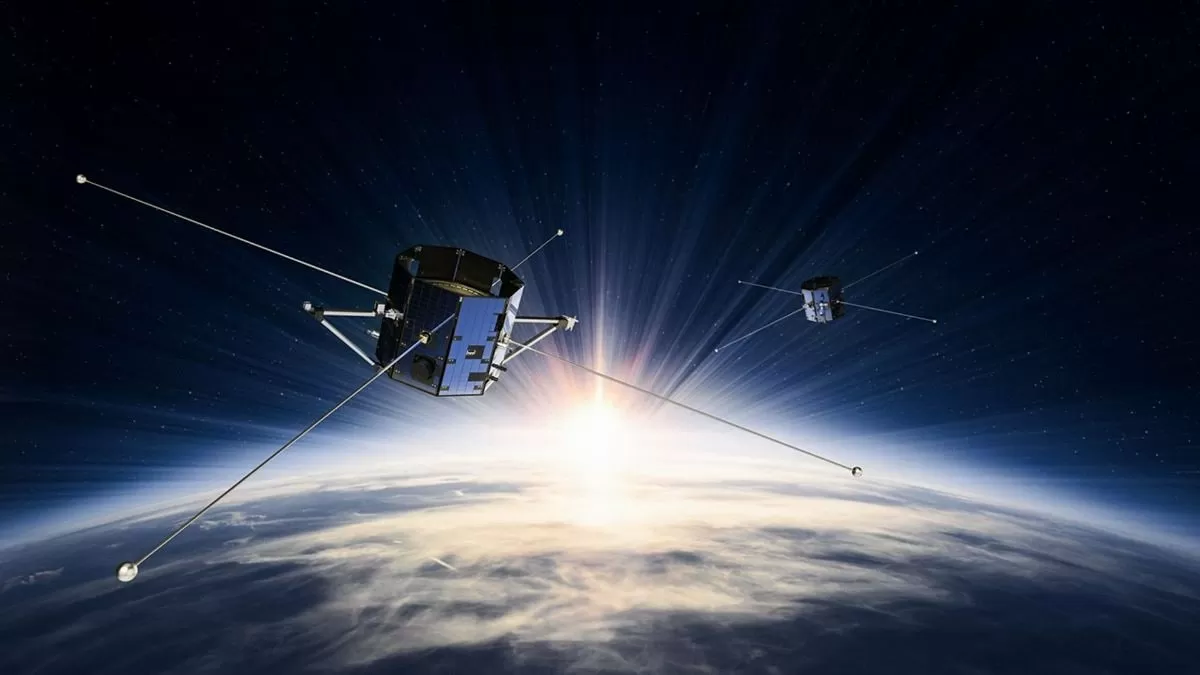
NASA, the renowned space agency, has once again made a significant breakthrough in its ongoing mission to study the mysteries of our universe. On July 23, 2025, NASA launched its twin TRACERS satellites with the aim of studying the effects of solar wind on Earth’s magnetosphere. This mission is crucial in understanding the phenomenon of magnetic reconnection and its impact on our planet.
The two satellites, named SV1 and SV2, were launched from the Vandenberg Air Force Base in California. The TRACERS (Twin Reconnection and Cusp Electrodynamics Reconnaissance Satellites) mission is a joint effort between NASA and the European Space Agency (ESA), with the aim of studying the Earth’s magnetic field and its interaction with the solar wind.
The launch of the TRACERS satellites marks a significant milestone in our understanding of the Earth’s magnetosphere. This protective shield, created by the Earth’s magnetic field, plays a crucial role in shielding our planet from the harmful effects of solar radiation. However, the exact mechanisms of how this shield is formed and maintained are still not fully understood. This is where the TRACERS mission comes in.
The TRACERS satellites are equipped with state-of-the-art instruments and sensors that will allow scientists to study the Earth’s magnetosphere in unprecedented detail. One of the main objectives of the mission is to study the process of magnetic reconnection. This is a phenomenon where the Earth’s magnetic field lines break and reconnect, releasing a massive amount of energy. This process is responsible for creating the beautiful auroras that we see in the night sky.
The TRACERS satellites will also study the cusp region of the Earth’s magnetosphere, where the solar wind has a direct impact on our planet’s magnetic field. This region is of particular interest to scientists as it is where most of the energy from the solar wind is transferred to the Earth’s magnetosphere.
However, shortly after the launch, a power issue was detected on the SV1 satellite, causing intermittent communication with the ground station. This unexpected setback was a cause for concern among the mission team. Upon further investigation, engineers determined that the issue was related to the availability of sunlight on the satellite’s solar panels.
The TRACERS satellites are powered by solar energy, and the power issue on SV1 was caused by the satellite’s orientation in relation to the sun. The satellite’s solar panels were not receiving enough sunlight, resulting in a drop in power supply. This, in turn, caused intermittent communication with the ground station.
NASA and ESA engineers have been working tirelessly to resolve the issue, and they have come up with a plan to recover the SV1 satellite in August. The team will use the satellite’s thrusters to adjust its orientation, ensuring that the solar panels receive enough sunlight to power the satellite. This is a delicate operation, and the engineers are confident that they will be able to recover the satellite successfully.
Meanwhile, the second satellite, SV2, is functioning perfectly and has already started sending back valuable data to the ground station. The mission team is thrilled with the initial data received from SV2 and is eagerly awaiting the recovery of SV1 to have both satellites fully operational.
The TRACERS mission is expected to provide groundbreaking insights into the Earth’s magnetosphere and its interaction with the solar wind. This data will not only deepen our understanding of our planet but also have practical applications in space weather forecasting and protecting our satellites and astronauts from the harmful effects of solar radiation.
The launch of the TRACERS satellites is a testament to NASA’s commitment to pushing the boundaries of scientific research and exploration. The agency’s tireless efforts and dedication have once again resulted in a successful mission, despite the unexpected setback with SV1. The recovery efforts for the satellite are a testament to NASA’s ingenuity and determination to overcome any challenges that come their way.
In conclusion, the launch of the TRACERS satellites is a significant milestone in our quest to understand the mysteries of our universe. The mission will provide us with valuable insights into the Earth’s magnetosphere and its interaction with the solar wind. Despite the minor setback with SV1, the mission team remains positive and motivated, and we can’t wait to see the groundbreaking discoveries that the TRACERS mission will bring.
