

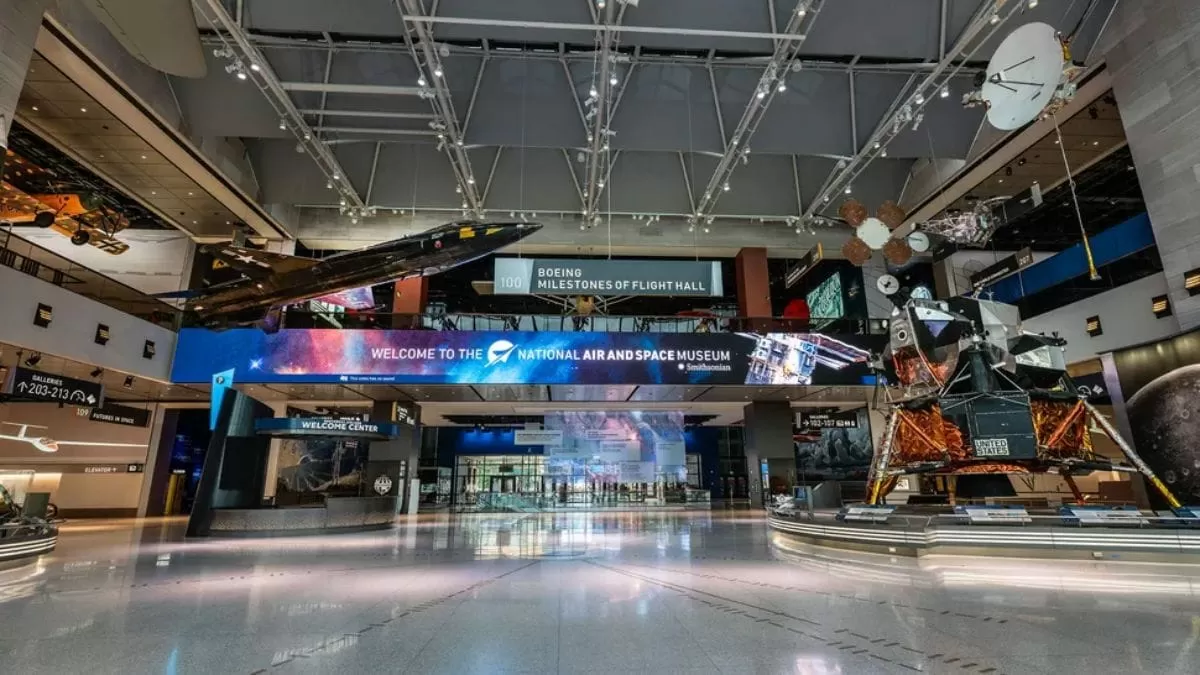
The Smithsonian’s National Air and Space Museum has always been a symbol of human ingenuity and exploration. It is a place where visitors can witness the remarkable achievements of aviation and space travel, and now, it has become even more extraordinary. The museum has recently reopened five state-of-the-art galleries, showcasing a perfect blend of historic aviation milestones and futuristic space technology. This $900 million overhaul is a bold step towards the future, and it promises to take visitors on an exhilarating journey through time and space.
The new galleries are a testament to the museum’s commitment to providing an immersive and educational experience to its visitors. It is a place where history and innovation come together, and where one can witness the evolution of aviation and space travel. The galleries feature some of the most iconic and groundbreaking artifacts, including parts of the SpaceX Falcon 9 rocket, a 3D-printed Mars habitat, and the revived “Friendship 7” capsule.
The SpaceX Falcon 9 rocket parts are a sight to behold. This rocket has played a crucial role in revolutionizing space travel, and now, visitors can get up close and personal with its components. From the powerful engines to the intricate wiring, every detail of this rocket is on display, giving visitors a glimpse into the technology that has made space exploration more accessible than ever before.
But it’s not just about the present and the future; the museum also pays homage to the past. The revived “Friendship 7” capsule is a perfect example of this. This capsule holds a special place in history as it carried astronaut John Glenn on the first American orbital spaceflight in 1962. After undergoing extensive restoration, the capsule is now on display, allowing visitors to relive the momentous journey of John Glenn and the early days of space exploration.
One of the most exciting additions to the museum is the 3D-printed Mars habitat. This exhibit gives visitors a glimpse into the future of space travel and colonization. With the advancements in technology, it is now possible to 3D print structures on other planets, and this exhibit showcases a prototype of a Mars habitat that could potentially house astronauts on the red planet. It is a fascinating display that sparks the imagination and ignites a sense of wonder about what the future holds for space exploration.
The reopening of these galleries is a significant milestone for the Smithsonian’s National Air and Space Museum. It is a culmination of years of planning, research, and hard work. The museum has always been a popular destination for tourists and locals alike, but with these new galleries, it has become a must-visit for anyone interested in aviation and space travel. The exhibits not only showcase the latest technology and advancements but also pay tribute to the pioneers who paved the way for these achievements.
The museum’s overhaul is also a reflection of the ever-changing landscape of aviation and space travel. With private companies like SpaceX making groundbreaking advancements, the future of space exploration is becoming more exciting and accessible. The Smithsonian’s National Air and Space Museum is at the forefront of showcasing these developments and inspiring the next generation of innovators and explorers.
The reopening of these galleries is a testament to the Smithsonian’s National Air and Space Museum’s commitment to providing an educational and immersive experience to its visitors. It is a place where history, technology, and innovation come together to inspire and educate. The exhibits are a perfect blend of the past, present, and future, and they offer a unique perspective on the evolution of aviation and space travel.
In conclusion, the Smithsonian’s National Air and Space Museum has once again proven why it is one of the most iconic and beloved museums in the world. The new galleries are a testament to the museum’s dedication to showcasing the latest advancements in aviation and space technology while also paying tribute to the pioneers who made it all possible. It is a must-visit for anyone with a passion for exploration and a curiosity about the future of space travel. So, come and witness the wonders of the universe at the Smithsonian’s National Air and Space Museum.
