

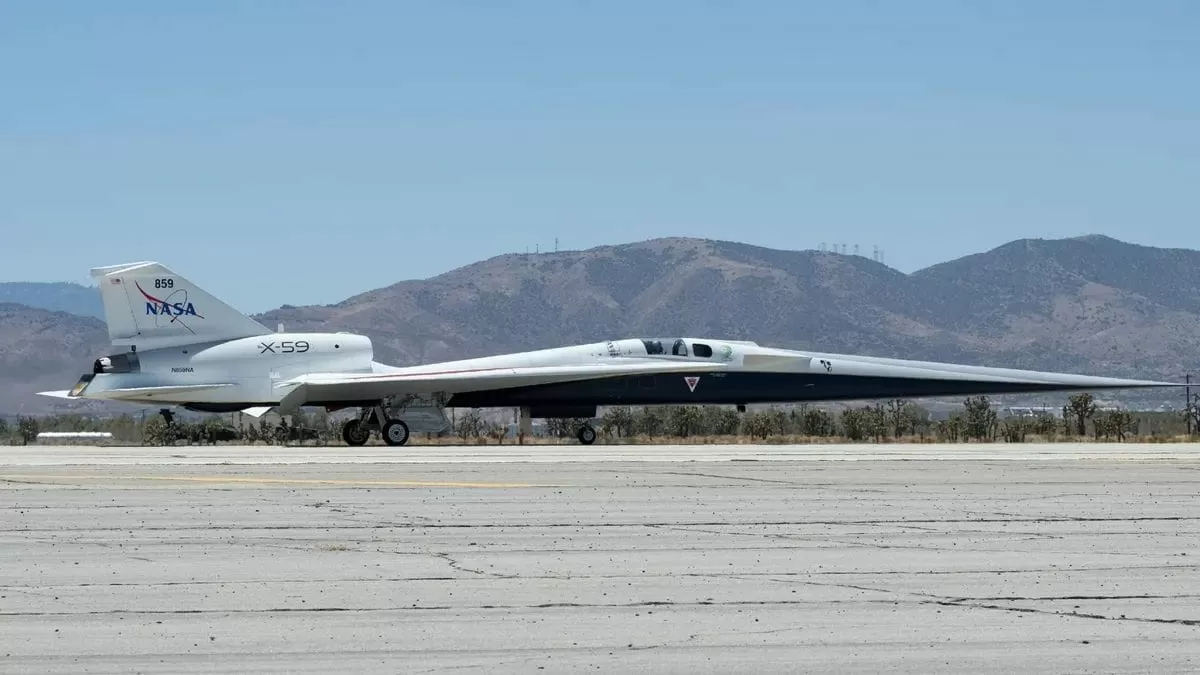
NASA and Lockheed Martin’s X-59 Experimental Aircraft: Paving the Way for Quiet Supersonic Travel
NASA and Lockheed Martin have once again joined forces to push the boundaries of aviation technology with their latest project, the X-59 experimental aircraft. This revolutionary aircraft, designed for quiet supersonic travel, is currently undergoing taxi tests at the U.S. Air Force’s Plant 42 in Palmdale, California. With its unique features and advanced engineering, the X-59 is set to make a significant impact in the world of aviation.
One of the most notable features of the X-59 is its AR-enabled camera vision system. This cutting-edge technology allows the pilot to have a 360-degree view of the aircraft’s surroundings, enhancing safety and maneuverability. The system also includes a heads-up display, providing real-time data and information to the pilot without having to look away from the flight path. This advanced system is a game-changer in terms of flight control and situational awareness.
In addition to its state-of-the-art camera system, the X-59 also boasts a unique boom-reducing shape. This design feature aims to minimize the loud sonic boom typically associated with supersonic flight. By reducing the boom, the X-59 has the potential to make supersonic travel quieter and more accessible, opening up new possibilities for air travel.
The X-59’s development is a joint effort between NASA and Lockheed Martin, with the goal of bringing back supersonic travel in a more sustainable and environmentally-friendly way. The project is part of NASA’s Low-Boom Flight Demonstration mission, which aims to develop technologies that will allow supersonic flight over land without causing a disruptive sonic boom. The success of the X-59 could pave the way for future commercial supersonic flights, making long-distance travel faster and more efficient.
The X-59’s presence at Plant 42 is a testament to NASA’s long-standing legacy at the facility. Plant 42, located in the heart of the Antelope Valley, has been a hub for aerospace innovation since the 1950s. It has been home to iconic programs such as the F-22 Raptor and the Space Shuttle assembly, and now it continues to be a crucial site for groundbreaking projects like the X-59.
The X-59’s taxi tests at Plant 42 mark an exciting milestone in its development. These tests will allow the team to evaluate the aircraft’s performance and make any necessary adjustments before its first flight, which is expected to take place in 2022. The X-59 will then undergo a series of flight tests to demonstrate its capabilities and gather data for future supersonic flight operations.
The X-59 project is a prime example of the power of collaboration and innovation. NASA and Lockheed Martin have once again proven their expertise and dedication to pushing the boundaries of aviation technology. With its advanced features and potential to revolutionize supersonic travel, the X-59 is a testament to the endless possibilities of human ingenuity.
In conclusion, the X-59 experimental aircraft is a remarkable feat of engineering, and its presence at Plant 42 is a testament to NASA’s legacy of groundbreaking aerospace programs. With its AR-enabled camera system and boom-reducing shape, the X-59 is set to pave the way for quieter and more sustainable supersonic travel. We can’t wait to see this incredible aircraft take flight and make history in the world of aviation.
