

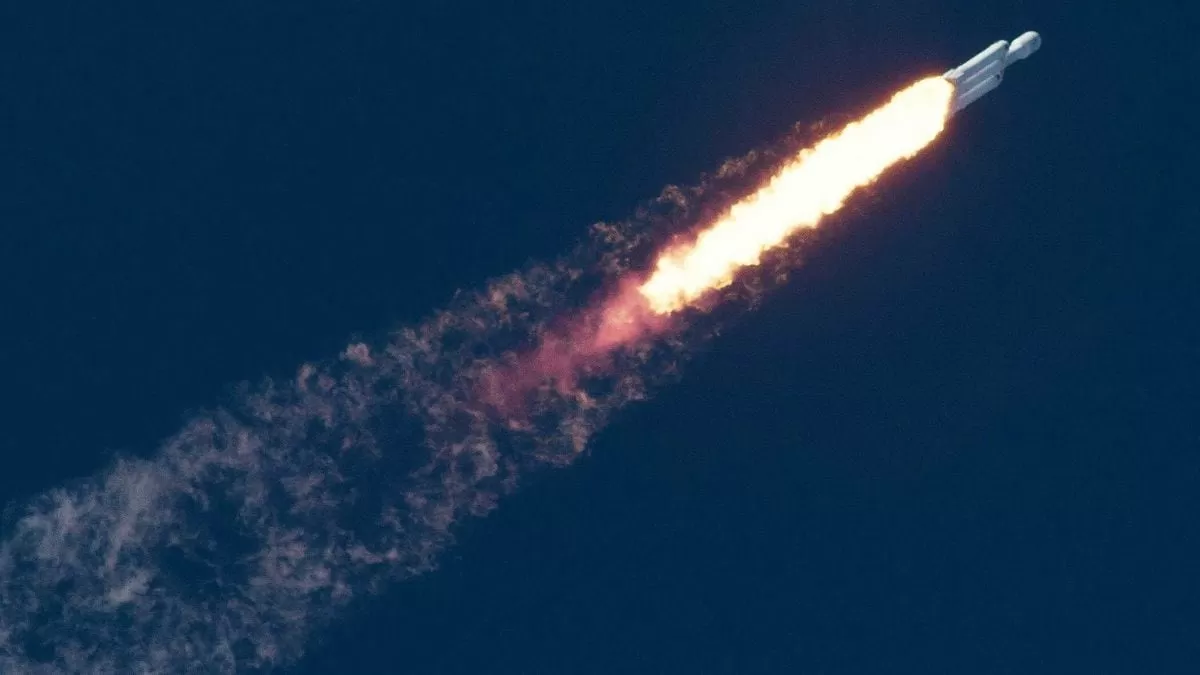
The space industry has seen a tremendous growth in recent years, with more and more rocket launches taking place every year. While this technological advancement is undoubtedly impressive, it may also be compromising the recovery of our ozone layer. According to new scientific studies, the chemicals and pollutants released during rocket launches and satellite re-entry could have long-term environmental impacts. This is a cause for concern and the space industry is urged to take immediate action to protect our planet’s most important protective layer.
The ozone layer is a thin layer of gas in the Earth’s stratosphere that plays a crucial role in shielding our planet from the harmful ultraviolet (UV) radiation of the sun. Without this layer, life as we know it would not be possible on Earth. In the 1980s, scientists discovered a significant depletion of the ozone layer, primarily caused by the widespread use of chlorofluorocarbons (CFCs) in aerosols and refrigerants. This led to the adoption of the Montreal Protocol in 1987, which aimed to phase out the production and use of these chemicals. Thanks to the implementation of this treaty, the ozone layer has slowly been recovering.
However, new studies suggest that the space industry may be undoing the progress made in repairing the ozone layer. Rockets release large quantities of chlorine into the atmosphere, which can damage ozone molecules and contribute to the depletion of the ozone layer. In addition, the soot emitted from rocket engines may also have a negative impact as it can absorb UV radiation and heat up the stratosphere, altering its chemical composition. This, in turn, can affect the formation and repair of the ozone layer.
Furthermore, satellites re-entering the Earth’s atmosphere also release pollutants that can potentially harm the ozone layer. These spacecrafts often carry hydrazine, a highly toxic and flammable compound used as rocket fuel. When these satellites burn up upon re-entry, they release large amounts of nitrogen oxides (NOx) into the atmosphere, which can contribute to the breakdown of ozone molecules.
The potential long-term environmental impacts of these rocket launches and satellite re-entries cannot be ignored. It is crucial for the space industry to take action now in order to protect the ozone layer and ensure its continued recovery. This can be achieved through a combination of regulation, innovation, and the use of cleaner fuels.
First and foremost, there needs to be stricter regulations in place for the space industry to ensure that their activities are not causing harm to the ozone layer. This can include limits on the types and amounts of chemicals and pollutants that can be released into the atmosphere during rocket launches and satellite re-entries. Governments and international organizations must work together to develop and enforce these regulations.
In addition to regulations, there is also a need for innovation within the space industry. Companies and organizations should invest in research and development of new technologies and fuels that are more environmentally friendly. This could include the use of electric or hybrid rockets, as well as the development of cleaner burning fuels that produce fewer emissions.
Finally, the space industry must also prioritize the use of cleaner fuels in their operations. This includes reducing the use of hydrazine in satellite propulsion systems and transitioning to more sustainable alternatives. Efforts to develop and use cleaner fuels not only benefit the environment but can also lead to cost savings for the space industry in the long run.
The ozone layer is a vital component of our planet’s ecological system and it is our responsibility to protect it. The space industry has a significant role to play in this, and it is imperative that they take proactive steps to minimize their impact on the ozone layer. The good news is that with the right regulations, innovations, and use of cleaner fuels, we can continue to enjoy the benefits of space exploration while also safeguarding the ozone layer.
In conclusion, the recent increase in rocket launches may be compromising the ozone layer’s recovery. The chemicals and pollutants released during these launches, along with those from satellite re-entries, could have long-term environmental impacts. It is crucial for the space industry to take action now through regulations, innovation, and the use of cleaner fuels to protect the ozone layer and ensure its continued recovery. Let us work together to preserve our planet’s most important protective shield for generations to come.
