

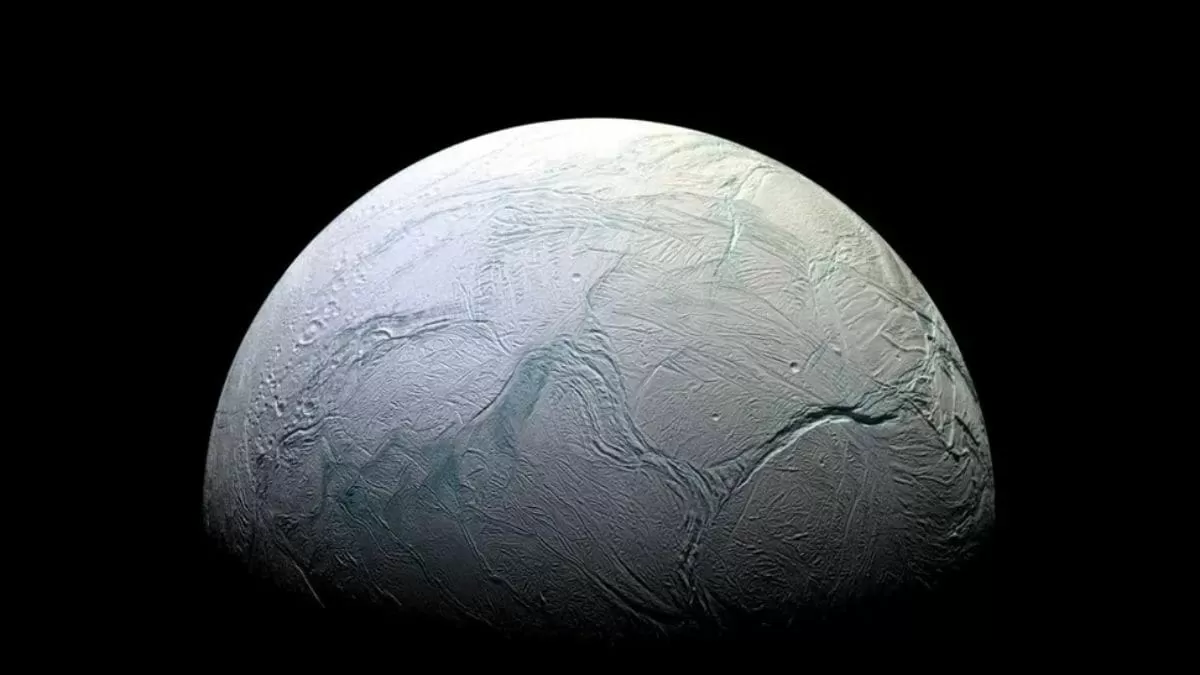
Water is a fundamental resource for life on Earth. But did you know that it also exists in space, in the form of ice? For years, scientists believed that water ice in space was completely amorphous, meaning it had no defined crystal structure due to the extreme cold temperatures in outer space. However, a groundbreaking study from University College London and the University of Cambridge has revealed that this may not be the case.
In a shocking discovery, researchers found that water ice in space may actually contain up to 25% crystalline structure. This discovery was made possible through the use of simulations and X-ray diffraction experiments, which confirmed the presence of nanocrystals in so-called low-density amorphous ice.
Until now, it was widely believed that water ice in space was completely amorphous due to the harsh conditions of outer space. The extreme cold temperatures, lack of gravity, and exposure to cosmic radiation were thought to prevent the formation of any crystal structure. However, this groundbreaking study has challenged that belief and opened new possibilities for our understanding of the universe.
The team of researchers used computer simulations to mimic the conditions of outer space and analyze the behavior of water molecules in these extreme conditions. They found that, under certain conditions, the water molecules could form nanocrystals and create a crystalline structure within the ice.
To confirm their findings, the team also conducted X-ray diffraction experiments on ice samples in a laboratory. This technique involves exposing the ice to X-rays and analyzing the patterns of diffraction to determine the crystal structure. The results of these experiments provided further evidence of the existence of nanocrystals in low-density amorphous ice.
The discovery of crystalline structures in water ice in space is truly groundbreaking. It not only challenges our understanding of the properties of water in extreme environments, but it also has implications for our understanding of the formation of planets and the search for life in the universe.
One of the key implications of this study is the potential for water ice to exist in a crystalline state on other planets and moons in our solar system. This could have a significant impact on our search for extraterrestrial life, as the presence of water is a crucial factor in the development of life.
Moreover, this discovery also has implications for future space missions and the possibility of mining water resources on other planets. The crystalline structure of water ice could potentially make it easier to extract and use as a resource for future space exploration.
The researchers at University College London and the University of Cambridge have truly pushed the boundaries of scientific understanding with this groundbreaking study. Their findings have opened new doors for further research and exploration, shedding light on the complex nature of water in the universe.
This study also serves as a reminder of the importance of continued scientific research and exploration. It is through these efforts that we are able to uncover new knowledge and challenge our existing beliefs, leading to groundbreaking discoveries such as this one.
In conclusion, the discovery of crystalline structures in water ice in space is a significant achievement that has the potential to revolutionize our understanding of the universe. This study not only challenges our previous beliefs but also opens new possibilities for future research and space exploration. It serves as a testament to the power of scientific curiosity and the endless possibilities waiting to be uncovered in the vast expanse of outer space.
