

A new study has shed light on the mysterious phenomenon of dust devils on Mars. These swirling columns of dust and air, which are a common sight on the red planet, may have a surprising ability – to spark lightning-like discharges.
The study, led by researcher Varun Sheel, used computer modeling to simulate the conditions on Mars and how they may contribute to the electrification of dust devils. The results are both fascinating and groundbreaking, providing a deeper understanding of the complex processes that occur on our neighboring planet.
Mars, with its thin atmosphere and dry, dusty surface, is a vastly different environment from Earth. However, the study found that the same principles of frictional charging that occur during dust storms on our planet may also be at play on Mars. As dust grains collide and rub against each other, they create strong electric fields inside the vortices of dust devils.
These electric fields can become so intense that they may lead to lightning-like discharges, similar to the ones we see during thunderstorms on Earth. This is a significant finding, as it was previously thought that the thin atmosphere of Mars would not be able to generate enough electric charge to produce lightning.
The study also found that the size and shape of the dust devil play a crucial role in the electrification process. The taller and narrower the column, the stronger the electric fields become. This means that larger dust devils may have a higher chance of producing lightning discharges.
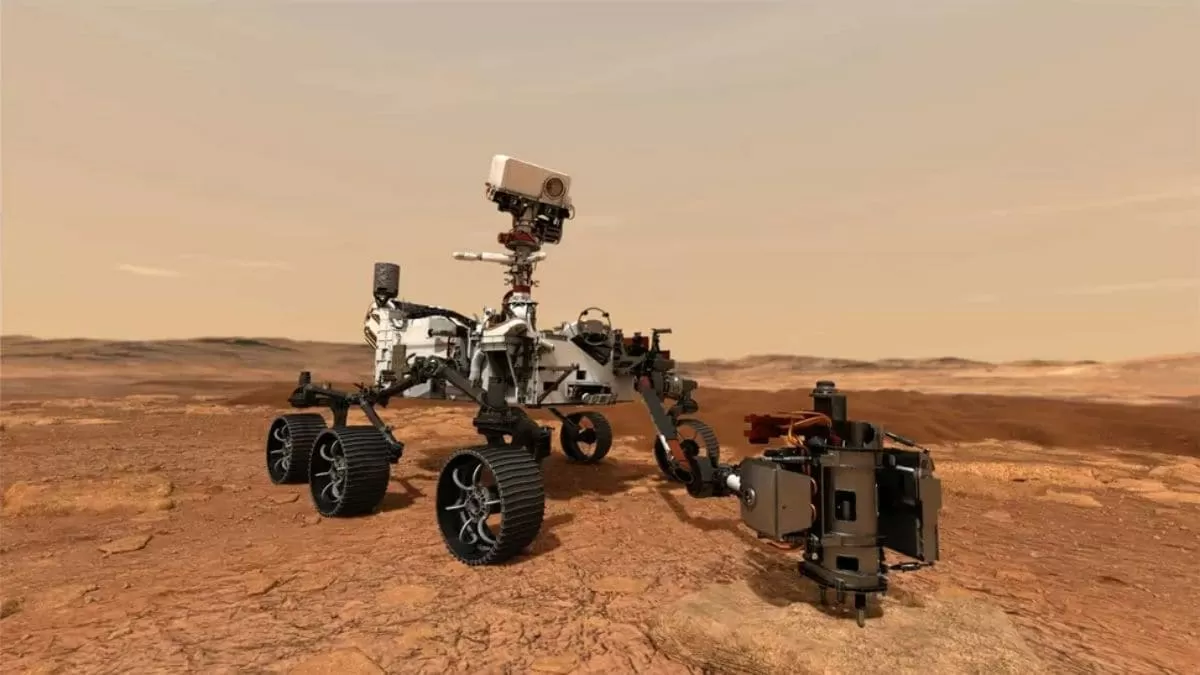
This new understanding of dust devils on Mars has implications for future missions to the planet. With the possibility of lightning, these swirling vortices may pose a danger to rovers and other equipment on the surface. It also raises questions about the potential for life on Mars, as lightning is known to play a crucial role in the development of life on Earth.
But the study also offers exciting opportunities for further research and exploration. By studying the electric fields and lightning discharges on Mars, scientists may be able to gain a better understanding of the planet’s atmospheric and geological processes. This could also lead to the development of new technologies and techniques for studying other planets and their atmospheres.
The research team hopes that their findings will encourage more studies on the electrification of dust devils on Mars. They believe that this is just the beginning of unraveling the mysteries of this fascinating phenomenon.
The study also highlights the importance of computer modeling in scientific research. By simulating the conditions on Mars, the team was able to make significant discoveries that would have been impossible to observe in real-time. This demonstrates the power and potential of technology in advancing our understanding of the universe.
The electrification of dust devils on Mars is a remarkable discovery that adds to the ever-growing list of unique and intriguing features of the red planet. It also serves as a reminder that there is still so much to learn about our neighboring planet, and the universe as a whole.
As we continue to explore and study Mars, we are constantly reminded of the vastness and complexity of our universe. Each new discovery brings us one step closer to understanding our place in the cosmos. And the electrification of dust devils on Mars is just another piece of the puzzle in our quest to unlock the secrets of the universe.
In conclusion, the new computer-modeling study on dust devils on Mars has revealed a surprising and exciting aspect of these swirling columns of dust and air. The possibility of lightning-like discharges adds a new layer of complexity to the already fascinating phenomenon. With this discovery, we are reminded of the endless possibilities and mysteries that await us in the vast expanse of space.
