

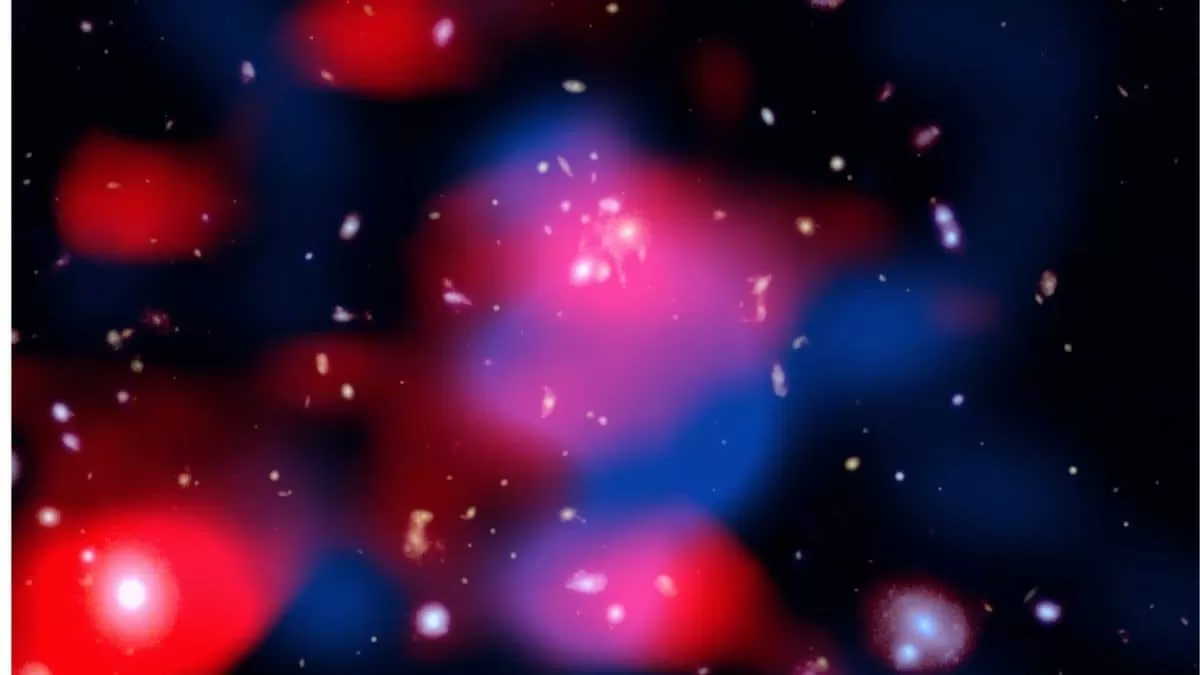
Astronomers have made an incredible discovery that has set a new record for the most distant mini-halo ever detected. Located around the galaxy cluster SpARCS1049, this mini-halo is a staggering 10 billion light-years away from Earth. This groundbreaking finding was made possible by using the LOFAR radio telescope network, which spans eight European countries. The detection of this mini-halo is not only an extraordinary feat of technology, but it also provides us with valuable insights into the mysteries of our universe.
The LOFAR telescope is a revolutionary instrument that operates at low frequencies in the radio spectrum. This makes it the most sensitive telescope of its kind, capable of detecting faint signals from the furthest reaches of space. The international team of astronomers used this powerful tool to observe the SpARCS1049 galaxy cluster, located in the constellation of Leo. What they found was a faint, diffuse glow surrounding the cluster, providing evidence of a giant cloud of high-energy particles and magnetic fields.
This discovery is particularly significant because mini-halos are a relatively new phenomenon in the world of astronomy. These structures are thought to be remnants of ancient galaxy clusters that have been stripped of their gas by powerful cosmic winds. Studying mini-halos can help us understand the formation and evolution of galaxy clusters, which are the largest objects in the universe held together by gravity.
The mini-halo detected around SpARCS1049 is an impressive 1.3 million light-years in diameter, making it one of the largest known mini-halos. Its size and distance also make it an ideal candidate for studying the effects of cosmic winds on galaxy clusters. The observation of this mini-halo provides scientists with a rare opportunity to study the complex interactions between galaxies and the surrounding gas.
The detection of this mini-halo is a testament to the power of collaboration and international cooperation in the field of astronomy. The LOFAR telescope network, which spans eight European countries, played a crucial role in this discovery. By combining the data from different telescopes, the astronomers were able to create a detailed map of the mini-halo, revealing its size, shape, and structure.
One of the most intriguing aspects of this discovery is the fact that the mini-halo is located 10 billion light-years away from Earth. This means that we are seeing it as it was when the universe was only 3 billion years old, less than a quarter of its current age. This provides us with a unique opportunity to study the early stages of galaxy cluster formation and the evolution of the universe.
The detection of this distant mini-halo also has implications for our understanding of the origins of cosmic magnetic fields. The diffuse glow around the galaxy cluster is evidence of strong magnetic fields, which are thought to play a crucial role in the formation of galaxies and galaxy clusters. By studying the properties of this mini-halo, astronomers hope to gain a better understanding of how these magnetic fields are generated and how they affect the evolution of the universe.
The discovery of this mini-halo also highlights the potential of the LOFAR telescope network for future astronomical studies. With its unmatched sensitivity, this instrument has the potential to detect even fainter signals from the most distant parts of the universe. This will provide us with a deeper understanding of the cosmos and the forces that shape it.
In conclusion, the detection of the most distant mini-halo ever discovered is a remarkable achievement for the world of astronomy. It not only sets a new record but also opens up new avenues for studying the formation and evolution of galaxy clusters. Thanks to the powerful LOFAR telescope network and the collaboration of international teams of astronomers, we are one step closer to unraveling the mysteries of our universe. This discovery is a testament to the incredible advancements in technology and our insatiable curiosity to explore the unknown. Who knows what other secrets the universe holds waiting to be uncovered?
