

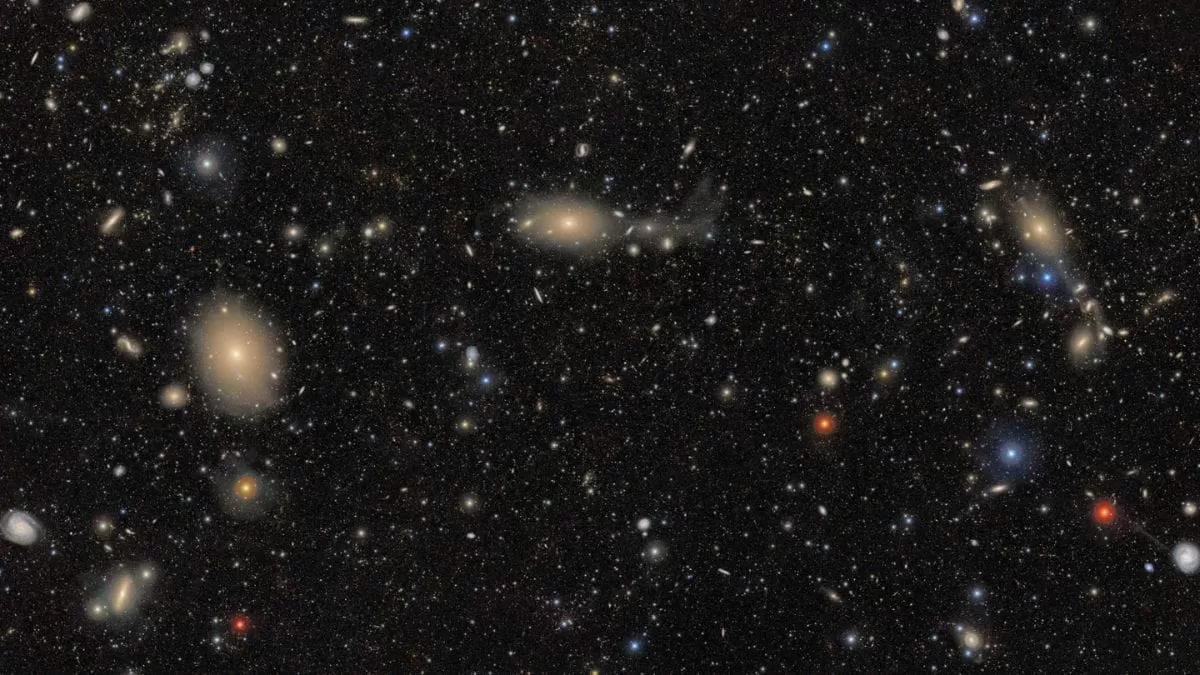
The Rubin Observatory, located in the Chilean Andes, has recently captured its first image, marking the beginning of a decade-long sky survey. This monumental achievement has been made possible by the powerful telescope and LSST camera, which will scan the southern sky every three nights. The observatory’s mission is to unveil hidden galaxies, stellar nurseries, and transient cosmic events, providing scientists with a wealth of data to study and analyze. With this groundbreaking project, scientists anticipate transformative discoveries about dark matter, dark energy, and the mysteries of the universe.
The Rubin Observatory, formerly known as the Large Synoptic Survey Telescope (LSST), is a state-of-the-art facility designed to capture the most detailed and comprehensive images of the night sky. Its 8.4-meter mirror, coupled with the LSST camera, will be able to capture images with unprecedented depth and clarity. This will allow scientists to study the universe in ways that were previously impossible.
The first image captured by the Rubin Observatory is a testament to its capabilities. It shows a staggering 10 million galaxies, each one a unique and awe-inspiring sight. This is just a glimpse of what is to come as the observatory embarks on its ambitious mission to scan the entire southern sky. With its powerful telescope and advanced camera, the Rubin Observatory is set to revolutionize our understanding of the universe.
One of the main objectives of the Rubin Observatory is to study dark matter and dark energy, two of the most elusive and mysterious components of the universe. Dark matter, which makes up about 85% of the universe, is invisible to telescopes and can only be detected through its gravitational effects on visible matter. Dark energy, on the other hand, is believed to be responsible for the accelerated expansion of the universe. By studying these two phenomena, scientists hope to gain a better understanding of the fundamental laws that govern the universe.
In addition to studying dark matter and dark energy, the Rubin Observatory will also provide valuable insights into the formation and evolution of galaxies. By scanning the sky every three nights, it will be able to capture images of galaxies at different stages of their evolution. This will allow scientists to study the processes that shape galaxies and the role of dark matter in their formation.
The observatory’s powerful telescope and LSST camera will also enable scientists to study transient cosmic events, such as supernovae, gamma-ray bursts, and gravitational waves. These events are short-lived and can provide valuable information about the universe’s most extreme phenomena. By capturing images of these events, the Rubin Observatory will help scientists unravel the mysteries of the universe and gain a deeper understanding of its origins.
The Rubin Observatory’s decade-long sky survey is a collaborative effort involving scientists from around the world. It is expected to generate an unprecedented amount of data, which will be made available to the scientific community for further analysis. This open data policy will allow scientists to collaborate and share their findings, leading to even more groundbreaking discoveries.
The first image captured by the Rubin Observatory is just the beginning of an exciting journey that will span over a decade. With its powerful telescope and LSST camera, it will scan the southern sky every three nights, providing scientists with a wealth of data to study and analyze. The discoveries made by the observatory are expected to transform our understanding of the universe and pave the way for future advancements in astronomy.
In conclusion, the Rubin Observatory’s first image of 10 million galaxies marks the start of a decade-long sky survey that will unveil hidden galaxies, stellar nurseries, and transient cosmic events. With its powerful telescope and LSST camera, it is set to revolutionize our understanding of the universe and provide valuable insights into dark matter, dark energy, and the formation of galaxies. This ambitious project is a testament to human curiosity and our relentless pursuit of knowledge about the world around us.
