

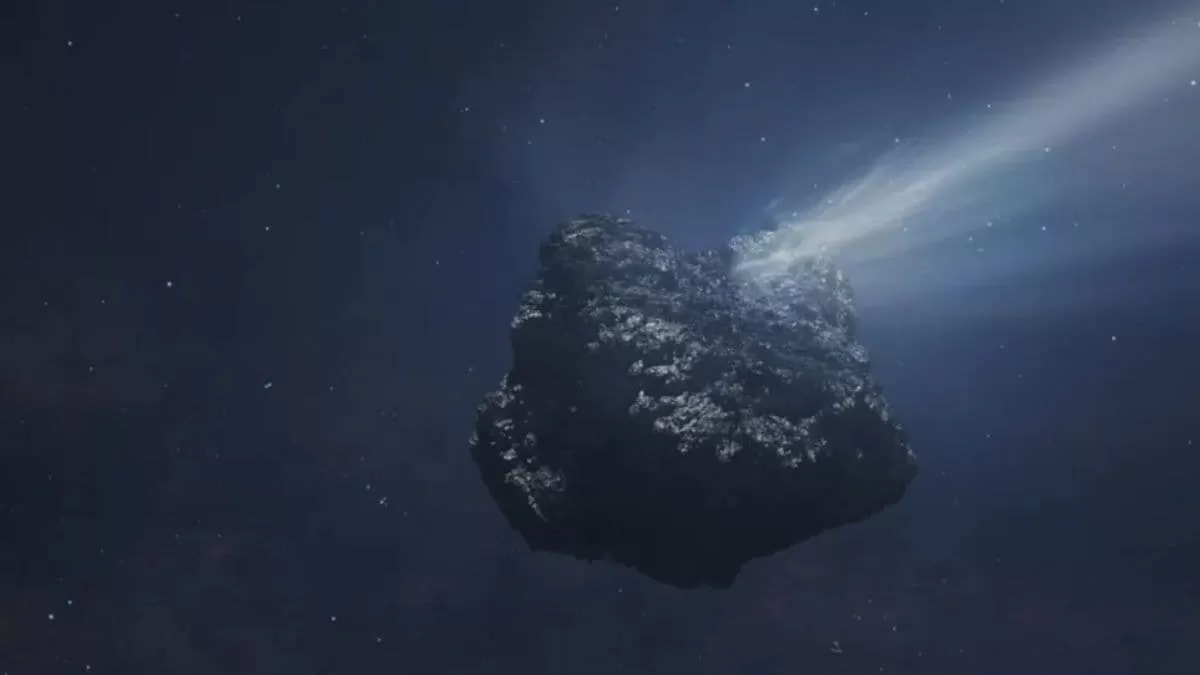
NASA, the renowned space agency known for its groundbreaking discoveries, has recently confirmed an exciting new finding. The comet C/2014 UN271, the largest comet ever discovered from the Oort Cloud, has been confirmed to be chemically active. This discovery has been made possible by the use of the Atacama Large Millimeter/submillimeter Array (ALMA) telescope, which has detected carbon monoxide jets from the comet far beyond Neptune. This highly significant finding offers rare insights into the icy body chemistry and early conditions of our solar system.
The Oort Cloud, a vast region of space located beyond the orbit of Neptune, is believed to be the birthplace of comets. These icy bodies, made up of dust and frozen gases, are remnants of the early days of our solar system. C/2014 UN271, also known as “Bernardinelli-Bernstein”, is estimated to be around 100 kilometers in diameter, making it the largest comet ever discovered from the Oort Cloud.
This discovery of C/2014 UN271’s chemical activity is a significant achievement for the scientific community. The comet’s carbon monoxide jets have provided a rare opportunity to study the chemical composition of these ancient icy bodies. This is the first time that such jets have been detected from a comet originating from the Oort Cloud, making this a groundbreaking discovery.
According to Martin Cordiner, an astrochemist at NASA’s Goddard Space Flight Center in Greenbelt, Maryland, “this detection is incredibly exciting because it allows us to study the chemical makeup of a comet that has been preserved in the deep freeze of the Oort Cloud for billions of years.” The frozen gases found on comets can give us valuable information about the conditions of the early solar system, providing insights into how our planetary system was formed.
The detection of carbon monoxide jets from C/2014 UN271 has opened up new possibilities for studying the chemical makeup of comets. These jets are created when the comet is heated by sunlight, causing the frozen gases to sublimate and escape from the comet’s surface. This process releases not only carbon monoxide but also other gases such as water, methane, and ammonia. By studying the composition of these gases, scientists can gain a better understanding of the early conditions of our solar system.
In addition to studying the comet’s chemical composition, the detection of carbon monoxide jets also allows scientists to measure the comet’s rotation rate. This is done by observing how the jets change over time, as the comet rotates on its axis. This information can help us understand the comet’s physical properties and how it has evolved over time.
The detection of carbon monoxide jets from C/2014 UN271 was made possible by the ALMA telescope, a powerful instrument located in the Atacama Desert in Chile. ALMA is a collection of 66 high-precision antennas that work together to observe the universe in millimeter and submillimeter wavelengths. This allows scientists to study objects that are too cold or too distant to be observed by other telescopes.
The discovery of this chemically active comet is a testament to the advancements in technology and the dedication of scientists around the world. It is a reminder of the importance of continued research and exploration in understanding the mysteries of our universe. As Cordiner puts it, “the detection of these jets is just the beginning. We are looking forward to studying this comet further and unlocking more secrets about the early days of our solar system.”
With this groundbreaking discovery, NASA has once again solidified its position as a pioneer in space exploration. The confirmation of C/2014 UN271’s chemical activity from beyond Neptune is a remarkable achievement that will pave the way for future discoveries and advancements in our understanding of the universe.
In conclusion, the confirmation of comet C/2014 UN271’s chemical activity is a significant milestone in our quest to unravel the secrets of the universe. This discovery, made possible by the ALMA telescope, offers rare insights into the icy body chemistry and early conditions of our solar system. As we continue to explore and learn more about our universe, we can only imagine what other fascinating discoveries await us.
