

Buried in the vast and unforgiving desert of China’s Tarim Basin lies a treasure trove of ancient artifacts, shrouded in mystery and steeped in history. The Bronze Age Xiaohe culture, which thrived in this region over 4,000 years ago, has left behind a legacy that continues to fascinate and intrigue archaeologists and historians alike. Among the most intriguing discoveries are boat-shaped coffins, cattle artifacts, and enigmatic upright poles, which have long puzzled experts. However, a new analysis by archaeologist Dr. Gino Caspari has shed new light on these ancient symbols, revealing a complex belief system and a water-centric worldview.
The Xiaohe culture, named after the site where it was first discovered in the 1930s, flourished in the Tarim Basin from approximately 4,200 to 3,800 years ago. This was a time of great innovation and cultural exchange, as the Silk Road, an ancient network of trade routes, passed through the region, bringing goods and ideas from distant lands. The Xiaohe people were skilled farmers, herders, and craftsmen, and their intricate burial rituals and elaborate grave goods attest to their rich and complex culture.
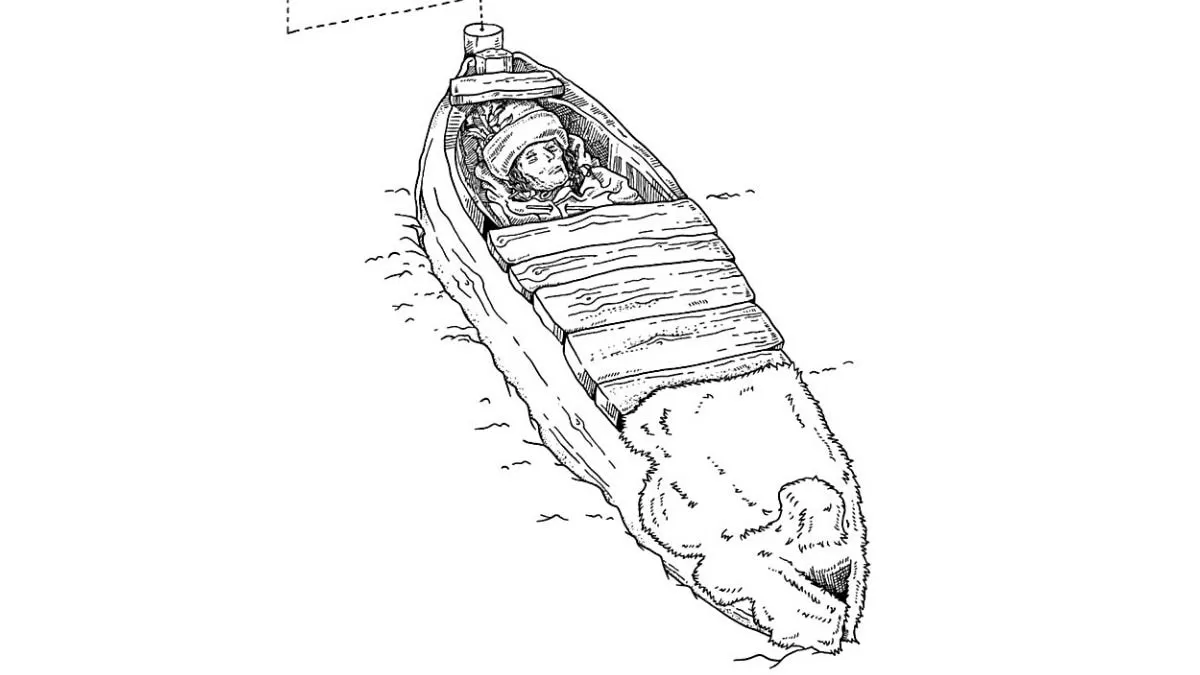
One of the most striking features of the Xiaohe culture is their boat-shaped coffins. These wooden coffins, which resemble boats with pointed ends, were found in the desert sands, some as long as 3 meters. The coffins were adorned with intricate carvings and contained the remains of the deceased, along with a variety of grave goods, such as pottery, weapons, and jewelry. For years, archaeologists have debated the significance of these boat-shaped coffins, with some suggesting that they represent a journey to the afterlife. However, Dr. Caspari’s new analysis has revealed a different interpretation – that these coffins symbolize a mirrored afterlife.
According to Dr. Caspari, the boat-shaped coffins were not meant to represent a physical journey to the afterlife, but rather a symbolic one. The pointed ends of the coffins represent the entrance and exit to the afterlife, while the middle section represents the journey through the underworld. This mirrored afterlife concept is further supported by the discovery of two sets of coffins placed together, one right-side up and one upside down, suggesting a reflection of the journey to the afterlife.
In addition to the boat-shaped coffins, the Xiaohe culture also left behind a wealth of cattle artifacts, including sculptures, figurines, and pottery decorated with images of cattle. This is not surprising, as the people of this region were known for their skill in animal husbandry. However, Dr. Caspari’s analysis has revealed a deeper meaning behind these artifacts. In the Xiaohe culture, the cow was not just a domesticated animal but a sacred one, representing fertility, abundance, and the connection between the earthly and spiritual realms. The prevalence of cattle artifacts in Xiaohe burials suggests that these animals played a significant role in their beliefs and rituals.
Perhaps the most enigmatic of all the Xiaohe artifacts are the upright poles, also known as totem poles. These poles, made of wood or stone, were found in various locations throughout the region, often standing alone or in clusters. For years, their purpose has been a mystery, with some suggesting they were used as markers or boundary stones. However, Dr. Caspari’s analysis has revealed that these poles were central to the Xiaohe culture’s water-centric worldview.
The Tarim Basin is a harsh and arid landscape, where water is scarce and precious. The Xiaohe people, who relied on agriculture and herding for survival, had a deep reverence for water and its life-giving properties. The upright poles, which often featured carvings of water birds and fish, were believed to be a conduit between the earthly and spiritual worlds, connecting the people to the life-giving powers of water. In a world where water was scarce, these poles represented hope and a connection to the divine.
Dr. Caspari’s new analysis of the Xiaohe artifacts has provided a deeper understanding of this ancient culture and their beliefs. The boat-shaped coffins, cattle artifacts, and upright poles all point to a complex belief system and a water-centric worldview. These discoveries not only shed light on the Xiaohe culture but also provide a glimpse into the cultural exchange and innovation that flourished along the Silk Road
