

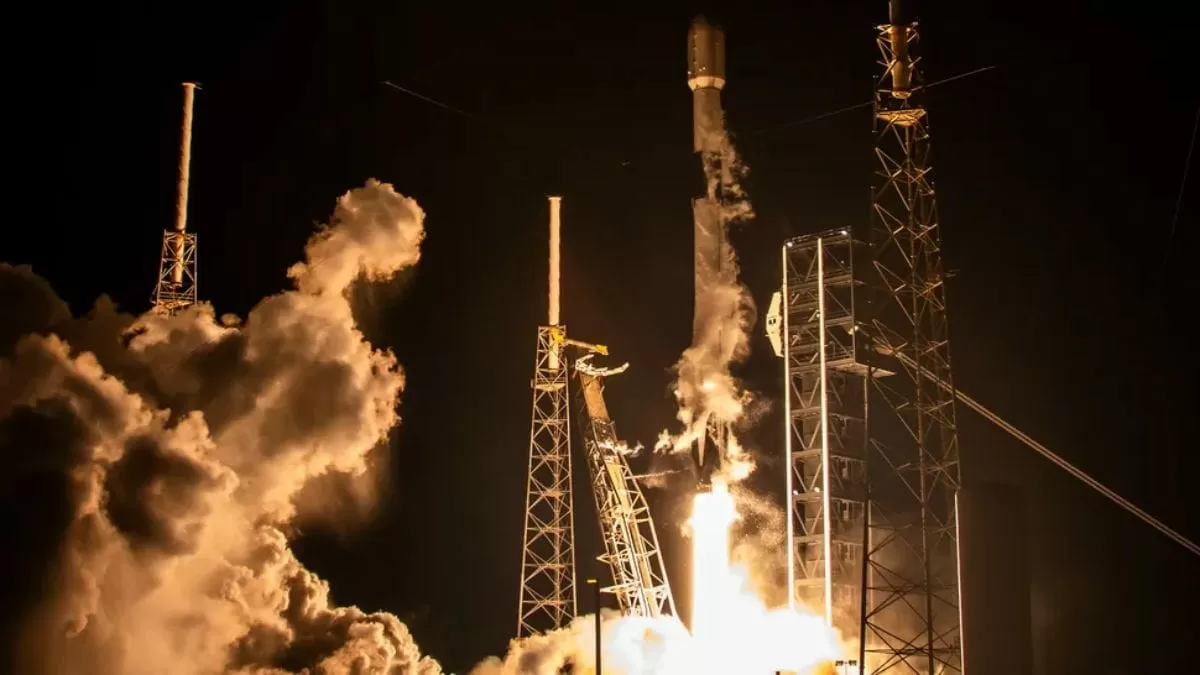
On May 20, 2025, history was made once again as SpaceX successfully launched its 60th Falcon 9 mission of the year from Cape Canaveral Space Force Station. This time, the rocket used for the mission was a brand-new booster, B1095, adding to the company’s impressive track record of innovation and progress in the space industry.
The Falcon 9 rocket lifted off at 11:19 p.m. EDT from Launch Complex 40, carrying 23 Starlink V2 Mini satellites into low Earth orbit. This marked another milestone for SpaceX, as it continues to expand its Starlink constellation, which aims to provide high-speed internet access to remote areas of the world.
What makes this launch even more remarkable is the fact that 13 of the 23 satellites are equipped with Direct to Cell technology, a revolutionary feature designed to provide internet connectivity directly to cell phones without the need for additional hardware. This technology has the potential to bridge the digital divide and bring internet access to millions of people who previously had limited or no access.
The successful launch of B1095 and its payload of Starlink V2 Mini satellites is a testament to the hard work and dedication of the SpaceX team. It is also a testament to the company’s commitment to pushing the boundaries of space exploration and technology.
SpaceX has been making headlines for its achievements in recent years, and this launch is yet another feather in its cap. The company has been at the forefront of the space race, with its reusable rockets and ambitious plans for Mars colonization. With each successful launch, SpaceX is proving that it is not just a dreamer but a doer, making space exploration more accessible and affordable.
The Falcon 9 booster used for this mission, B1095, is a new addition to the SpaceX fleet. It is a testament to the company’s continuous efforts to improve and innovate. The booster is designed to be reusable, reducing the cost of space missions significantly. This is a crucial step towards making space travel more sustainable and commercially viable.
The launch of B1095 also marks the 60th Falcon 9 mission of the year for SpaceX, a remarkable achievement in itself. This is a testament to the company’s efficiency and reliability in delivering payloads to space. With each successful launch, SpaceX is setting new records and pushing the boundaries of what is possible in space exploration.
The Starlink V2 Mini satellites carried by B1095 are a crucial part of SpaceX’s ambitious plan to provide high-speed internet access to the world. These satellites are smaller and lighter than their predecessors, making them easier and more cost-effective to launch. With the addition of Direct to Cell technology, these satellites have the potential to revolutionize internet connectivity and bridge the digital divide.
The successful launch of B1095 and its payload of Starlink V2 Mini satellites is a significant step towards achieving SpaceX’s ultimate goal of creating a global internet network. This network has the potential to connect people from all corners of the world, providing access to information, education, and opportunities that were previously out of reach.
As we look towards the future, it is clear that SpaceX is leading the way in space exploration and technology. With each successful launch, the company is making space more accessible and affordable, paving the way for a new era of space exploration and innovation.
In conclusion, the successful launch of B1095 and its payload of Starlink V2 Mini satellites is a testament to the hard work, dedication, and innovation of the SpaceX team. It is a significant step towards achieving the company’s ambitious goals and making space more accessible and affordable for all. With each launch, SpaceX is proving that the sky is not the limit, and the possibilities in space are endless. We can’t wait to see what the future holds for SpaceX and the world of space exploration.
