

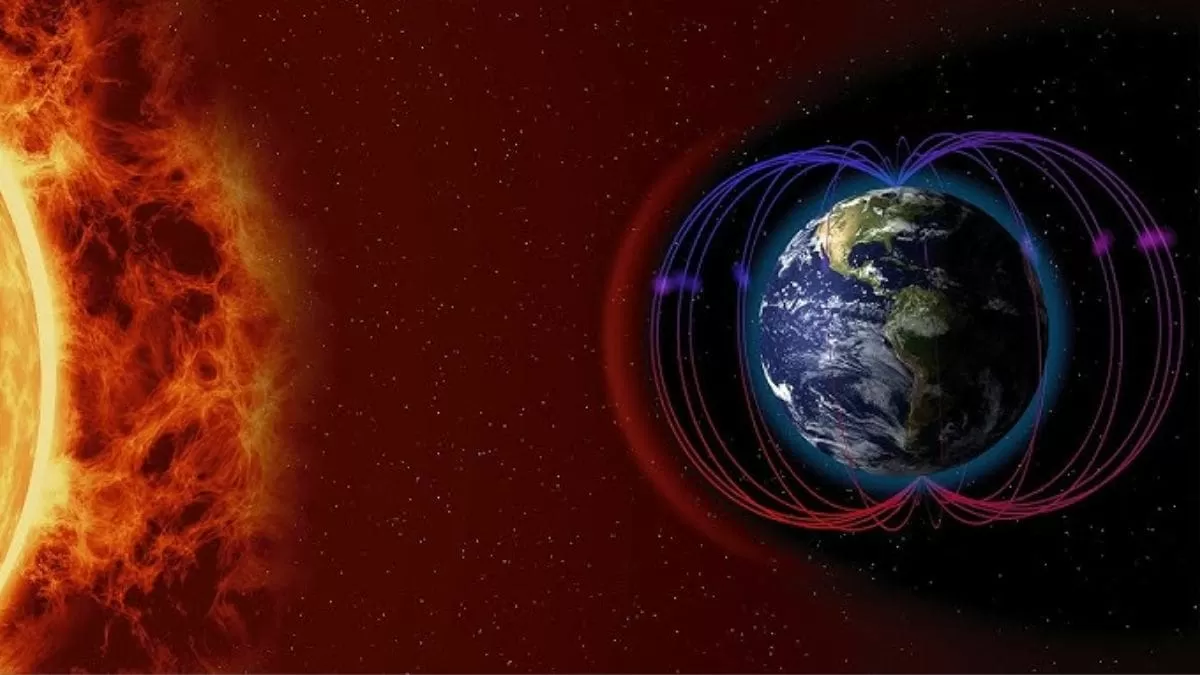
In a groundbreaking discovery, Finnish scientists have confirmed that Earth was struck by a massive solar storm 14,300 years ago, making it the most powerful solar event ever recorded. This incredible finding was made possible through the analysis of carbon-14 spikes in Ice Age tree rings, shedding light on the devastating effects of space weather and the urgent need to protect our modern infrastructure.
The solar storm, which occurred during the last Ice Age, was over 500 times stronger than the infamous 2003 Halloween Storm, which caused widespread disruptions to satellite communications and power grids. The new research, published in the journal Proceedings of the National Academy of Sciences, has redefined our understanding of solar risk and highlighted the potential consequences of a similar event in the modern era.
The study was led by Dr. Minna Palmroth, a professor at the University of Helsinki and a leading expert in space weather. Her team analyzed ancient tree rings from the Arctic and found a significant increase in carbon-14 levels, which can be directly linked to a powerful solar storm. This is because the high-energy particles from the storm react with nitrogen in the Earth’s atmosphere, producing carbon-14.
According to Dr. Palmroth, the findings are a wake-up call for the potential impact of solar storms on our modern technology-dependent society. “We now have concrete evidence that a solar storm of this magnitude can occur, and it’s crucial that we take steps to protect our infrastructure from such events,” she said.
Solar storms are a natural phenomenon caused by the release of energy from the Sun. They can produce a range of effects, from beautiful auroras in the sky to disruptions in satellite communications and power grids on Earth. While smaller storms occur frequently, the 2003 Halloween Storm and the newly discovered ancient event are considered extreme events, with the potential to cause significant damage.
The 2003 Halloween Storm caused widespread power outages in Sweden and disrupted satellite communications, leaving planes and ships without GPS navigation. It also caused a surge in radiation levels, posing a threat to astronauts in space. However, the newly discovered ancient storm was much more powerful, with the potential to cause catastrophic damage to our modern infrastructure.
The study has also highlighted the importance of understanding and monitoring space weather. Dr. Palmroth and her team are now working on developing advanced models to predict the impact of solar storms on Earth. This will help us prepare for and mitigate the effects of future events.
The potential consequences of a powerful solar storm in the modern era are concerning. Our reliance on technology has grown exponentially, and a major disruption to our power grids and satellite systems could have far-reaching effects on our daily lives. From communication and transportation to banking and healthcare, almost every aspect of our society is dependent on technology.
The good news is that we still have time to prepare and protect ourselves from the potential devastation of a solar storm. Governments and organizations around the world are now taking steps to safeguard our infrastructure, including investing in early warning systems and developing backup plans for critical systems.
In addition to these measures, individuals can also take steps to protect themselves. This includes having emergency supplies on hand, such as food, water, and batteries, in case of a power outage. It’s also essential to have a plan in place for communication and transportation in case of disruptions.
The discovery of the ancient solar storm is a significant milestone in our understanding of space weather and its potential impact on Earth. It serves as a reminder that we must take action to protect our modern way of life from the powerful forces of nature. With continued research and preparation, we can ensure that we are ready for whatever the Sun may throw our way.
