

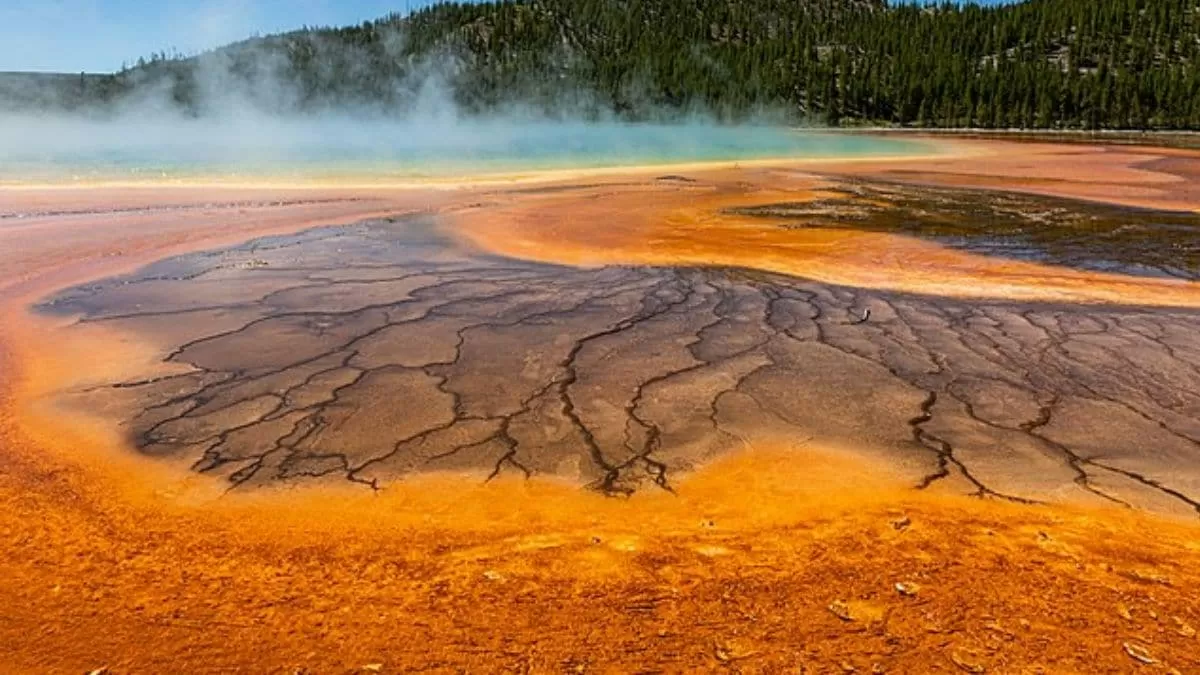
A groundbreaking new study has revealed that Yellowstone National Park, one of America’s most treasured natural wonders, may hold a valuable source of carbon-free helium. This discovery has the potential to revolutionize the global helium industry, which has been facing a severe shortage in recent years.
Helium is a crucial element in various industries, from medical devices to space missions and quantum technologies. However, the traditional method of extracting helium alongside fossil fuels has posed significant environmental concerns. The new study, conducted by a team of scientists from the University of Wyoming, has identified a potential solution to this problem through geothermal co-production.
Geothermal co-production is the process of extracting geothermal energy, which is a renewable and carbon-free source of energy, while also extracting other valuable resources such as helium. This innovative technique has been gaining traction in recent years, and the results of this new study show its potential for solving the global helium shortage.
According to the study, Yellowstone National Park is home to vast underground reservoirs of helium, trapped in the same rock formations that produce geothermal energy. These reservoirs have been found to contain helium concentrations significantly higher than those found in traditional helium sources, such as natural gas fields. This means that Yellowstone has the potential to become a major supplier of helium, meeting the growing global demand.
The scientists involved in the study have expressed their excitement over this discovery, stating that it could have a significant impact on the helium industry. “This is a game-changer for the helium industry,” says Dr. Robert B. Smith, a geophysicist at the University of Wyoming and one of the lead researchers on the project. “We have identified a potentially vast source of helium that could be extracted in an environmentally friendly way.”
The findings of this study have also been welcomed by environmentalists, who have long been concerned about the negative impact of conventional helium extraction methods on the environment. Traditional helium extraction involves drilling for natural gas, which often results in the release of harmful greenhouse gases into the atmosphere. Geothermal co-production, on the other hand, is a clean and sustainable method that has the potential to significantly reduce the carbon footprint of the helium industry.
In addition to its environmental benefits, the discovery of helium reserves in Yellowstone National Park could also have a significant economic impact. The United States is currently the world’s largest producer of helium, with most of its supply coming from the Federal Helium Reserve. However, the reserve is expected to run out within the next few years, and the country will have to rely on imports to meet its demand. The new study suggests that Yellowstone could potentially become a domestic source of helium, reducing the country’s reliance on foreign imports and boosting its economy.
The potential of Yellowstone National Park to become a major supplier of carbon-free helium has sparked great interest in the scientific community. Further studies and explorations will be needed to determine the exact amount of helium present in the park and the most effective methods for extraction. However, the initial findings of this study are highly promising and have opened up a new realm of possibilities for the helium industry.
In conclusion, the discovery of carbon-free helium reserves in Yellowstone National Park has the potential to be a game-changer for the global helium industry. Not only does it offer a sustainable and environmentally friendly solution to the growing helium shortage, but it also has the potential to boost the economy and reduce the country’s reliance on foreign imports. As further research and developments take place, we can only hope that the potential of geothermal co-production in Yellowstone will be fully realized, paving the way for a greener and more sustainable future.
