

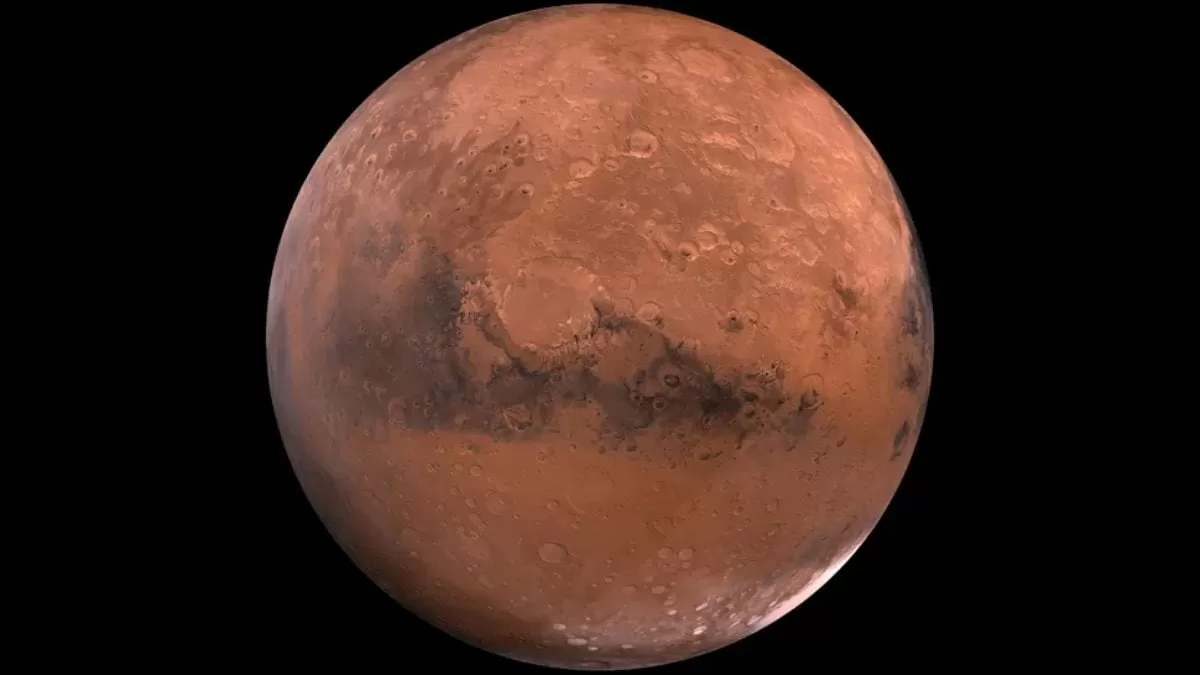
Scientists have always been fascinated by the mysteries of the Red Planet –Mars. From its barren and desolate landscape, to the possibility of ancient life, Mars has always been a subject of intense study and research. And now, recent findings have once again sparked the interest of the scientific community as they have uncovered compelling evidence suggesting that early Mars was surprisingly wet, with extensive networks of lakes and river basins shaped by rainfall and snowfall.
This new discovery challenges the long-held views of a predominantly cold and icy ancient Mars. For years, it was believed that Mars was a dry and frigid planet, with little to no signs of water on its surface. However, with the help of advanced technology and new research techniques, scientists have been able to gather data that paints a different picture of the Red Planet’s past.
The evidence for a wet early Mars comes from the analysis of geological features on its surface. These features, known as valley networks, bear a striking resemblance to those formed by rivers and streams on Earth. This has led scientists to believe that these networks were once carved by running water, suggesting that liquid water once flowed freely on the Red Planet.
But how did Mars turn from a wet world into the cold and dry planet we know today? The answer lies in its atmosphere. Early Mars had a much thicker atmosphere, which was able to trap heat and produce a mild climate. This allowed for the presence of liquid water on its surface, just like we see on Earth. However, as its atmosphere thinned over time, Mars was no longer able to retain heat, and its surface temperature dropped drastically, leading to the freezing of the water bodies and the formation of ice.
Despite this evidence, current climate models struggle to explain how Mars sustained liquid water for an extended period of time. With its distance from the sun and thin atmosphere, Mars should have been too cold to support liquid water on its surface. But the geological features found on the planet’s surface suggest otherwise, forcing scientists to re-evaluate their understanding of Mars’ ancient climate.
The discovery of an early wet Mars has significant implications for our understanding of the planet’s potential for habitability. Liquid water is a crucial ingredient for life to exist, and the presence of water on early Mars raises the possibility that life may have once thrived on its surface. This opens up a whole new realm of exploration and raises even more questions about the planet’s past.
This discovery also paves the way for future Mars missions. With the possibility of finding signs of ancient life on the Red Planet, scientists are now even more determined to send rovers and probes to explore and gather more evidence. This new finding will guide the research efforts of these missions, and we can expect to learn even more about the fascinating history of Mars in the coming years.
As we uncover more and more about the Red Planet, it is becoming increasingly clear that Mars is a complex and dynamic world, with a rich geological and potentially biological history. The evidence of a wet early Mars challenges our preconceived notions and highlights the need for continued research and exploration.
So, what’s next for Mars? With new technology and advancements in our understanding, we are poised to make even more groundbreaking discoveries on the Red Planet. The possibility of finding traces of ancient life on Mars is an exciting prospect that will continue to drive the curiosity and determination of scientists around the world.
In conclusion, the recent evidence of an early wet Mars is a significant breakthrough that challenges long-held views and opens up new possibilities for the planet’s past and future. It serves as a reminder that there is still so much to learn about our neighboring planet, and with new research and exploration, we are sure to uncover even more fascinating details about the untold story of Mars.
