

In the vast expanse of the universe, there are countless mysteries waiting to be uncovered. One such mystery, the Hercules–Corona Borealis Great Wall, has recently been brought into the spotlight by a team of astronomers. This massive structure, believed to be the largest known in the universe, has now been found to be even more massive and closer than previously thought. This discovery has the potential to reshape our understanding of cosmic scale theories and open up new avenues for exploration.
The Hercules–Corona Borealis Great Wall, also known as the Great Wall or the Great GRB Wall, is a massive cluster of galaxies that spans an astonishing 10 billion light-years. It was first discovered in 2013 by a team of astronomers using the Gamma-Ray Burst (GRB) data collected by the Fermi Gamma-ray Space Telescope. At the time, it was hailed as the largest known structure in the universe, surpassing the previous record-holder, the Sloan Great Wall, by almost three times its size.
However, new research led by astronomers at the National Astronomical Observatory of Japan has revealed that the Hercules–Corona Borealis Great Wall is not only larger but also closer than previously thought. Using new techniques and advanced data analysis, they have extended the boundaries of the Great Wall by around 2 billion light-years, making it a staggering 12 billion light-years wide. This is a significant discovery that not only increases the size of this already mammoth structure but also changes our perception of the universe’s scale.
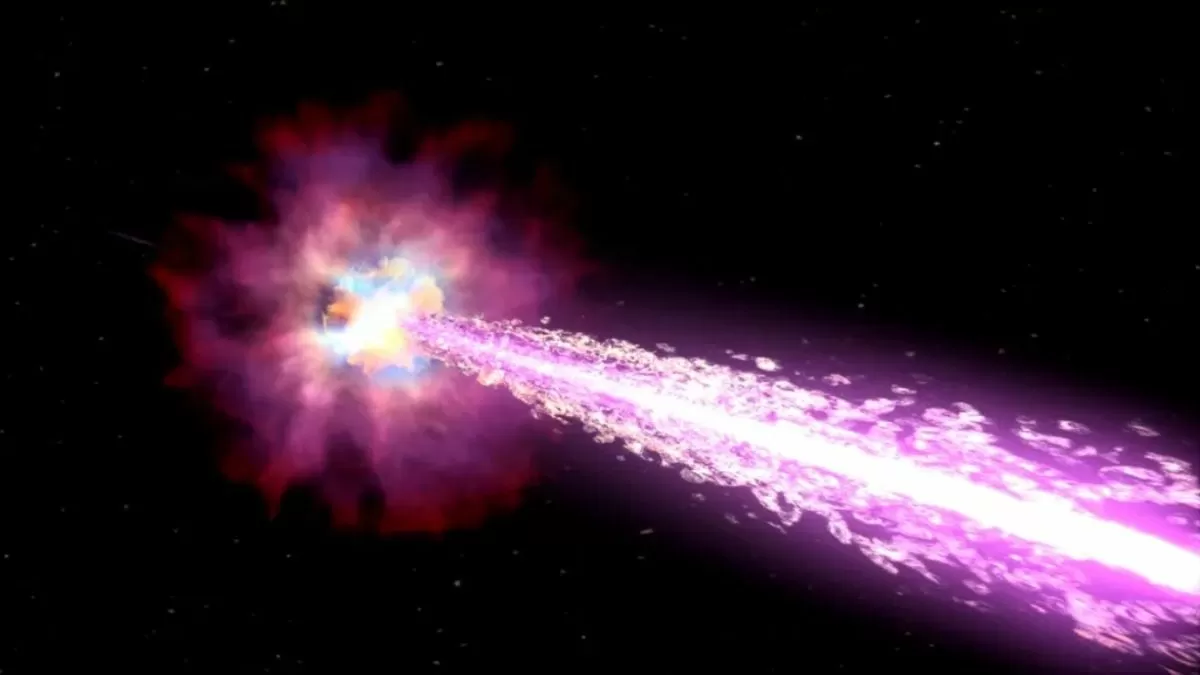
The researchers were able to achieve this feat by analyzing the gamma-ray data from the GRBs emitted by the distant galaxies that make up the Great Wall. These GRBs are intense bursts of high-energy radiation that occur when massive stars collapse or collide, releasing enormous amounts of energy. By measuring the distance and direction of these GRBs, the team was able to map the distribution of galaxies in the Great Wall with unprecedented accuracy.
The new findings have significant implications for our understanding of cosmic scale theories. The Hercules–Corona Borealis Great Wall is believed to be a key structure in the cosmic web, a network of filaments that connect the galaxies in the universe. The updated size of the Great Wall means that these filaments are also longer, which could have a ripple effect on the entire cosmic web and its formation. This could lead to a re-evaluation of current theories and bring us closer to a more accurate understanding of the universe’s structure and evolution.
The discovery also sheds light on the role of GRBs in cosmology. GRBs are one of the most powerful and energetic events in the universe, and their study has the potential to unlock many secrets about the origins and evolution of galaxies. With this latest research, the importance of GRBs in mapping and understanding the universe’s large-scale structure has been further cemented.
Moreover, the revised size of the Hercules–Corona Borealis Great Wall has also brought it closer to our own Milky Way galaxy. This means that it is now within reach of current and future telescopes, opening up new opportunities for studying this colossal structure in more detail. This could provide us with valuable insights into the formation and evolution of galaxies and the processes that drive the growth of structures in the universe.
The discovery of the extended Great Wall is a testament to the rapid advancements in technology and data analysis in astronomy. It is a reminder of the vastness and complexity of the universe and the endless possibilities for exploration and discovery that lie ahead. As we continue to unravel the mysteries of the cosmos, it is discoveries like these that fuel our curiosity and motivate us to push the boundaries of our knowledge.
In conclusion, the new findings on the Hercules–Corona Borealis Great Wall have uncovered a structure that is not only more massive but also closer than previously thought. This has the potential to reshape our understanding of cosmic scale theories and provide us with a deeper understanding of the universe’s structure and evolution. The discovery also highlights the importance of GRBs in cosmological studies and presents new opportunities for future research. As we continue to probe the depths of the universe, we can only imagine what other wonders await us.
