

Iran’s Zagros Mountains: A Geological Wonder Showcasing the Power of Tectonic Plates
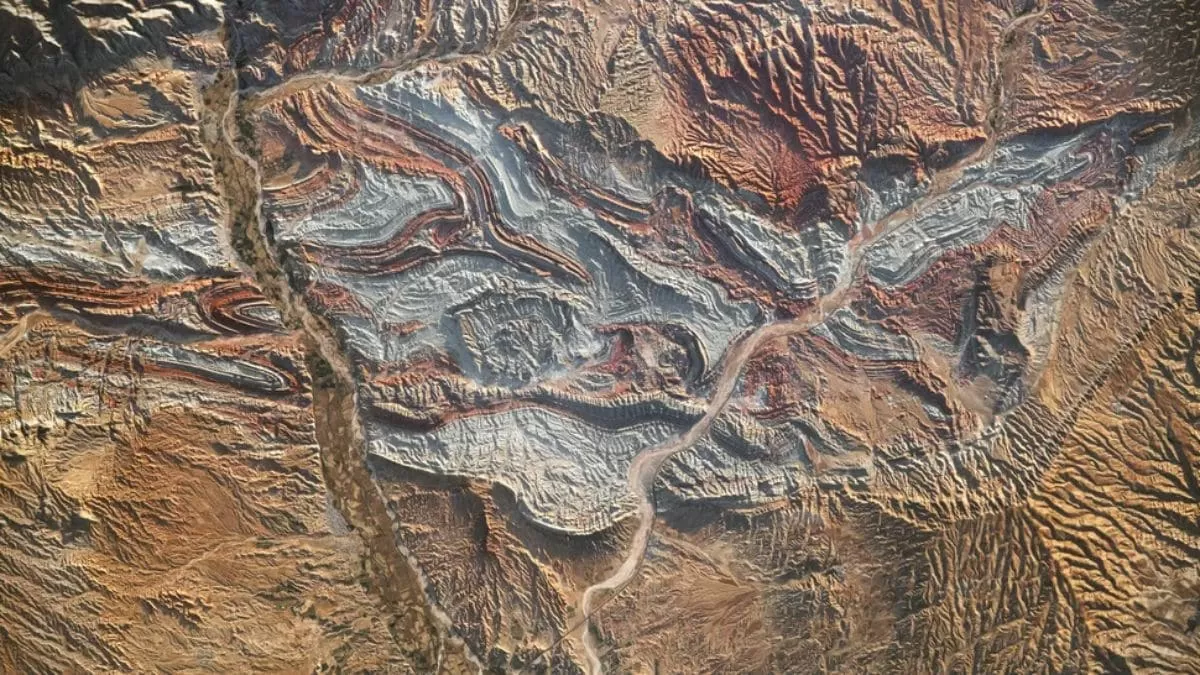
The Earth is a constantly evolving planet, shaped by powerful forces that have been at work for millions of years. One of the most fascinating examples of this is the Zagros Mountains in Iran, which showcase tightly folded rock layers caused by the slow-motion collision of the Arabian and Eurasian plates. These majestic mountains, visible from space, not only offer a breathtaking view but also provide scientists with valuable insights into mountain formation, seismic activity, and Earth’s ongoing structural evolution.
Stretching over 1,500 kilometers from the northwest to the southeast of Iran, the Zagros Mountains are a part of the larger Alpide Belt, a mountain range that extends from the Alps in Europe to the Himalayas in Asia. The Zagros Mountains are a result of the collision between the Arabian and Eurasian plates, which began around 10 million years ago. This collision has caused the Earth’s crust to buckle and fold, creating the stunning landscape that we see today.
The Zagros Mountains are a prime example of a fold and thrust belt, where the Earth’s crust has been pushed together, causing the rocks to fold and stack on top of each other. This process, known as compression, is a result of the two plates pushing against each other, with neither one giving way. As a result, the rocks in the Zagros Mountains have been compressed and folded into tight, parallel ridges and valleys, giving the mountains their unique appearance.
One of the most striking features of the Zagros Mountains is the presence of anticlines and synclines. Anticlines are upward folds in the rock layers, while synclines are downward folds. These folds can be seen in the layers of sedimentary rocks that make up the mountains, with the oldest rocks at the core of the anticlines and the youngest rocks at the core of the synclines. This provides scientists with a timeline of the geological history of the region, allowing them to study the changes that have occurred over millions of years.
The Zagros Mountains are also home to numerous faults, which are fractures in the Earth’s crust where rocks have moved against each other. These faults are a result of the intense pressure and stress caused by the collision of the two plates. The most famous fault in the Zagros Mountains is the Main Recent Fault, which runs for over 1,000 kilometers and is responsible for numerous earthquakes in the region. The presence of these faults has made the Zagros Mountains a hotbed for seismic activity, with earthquakes occurring frequently.
The geological structures of the Zagros Mountains are not only a sight to behold but also provide valuable insights into the Earth’s ongoing structural evolution. By studying the rocks and folds in the mountains, scientists can better understand the processes that have shaped our planet and continue to do so. The Zagros Mountains also serve as a natural laboratory for studying mountain formation, as the ongoing collision between the two plates is constantly changing the landscape.
In addition to their scientific significance, the Zagros Mountains also hold cultural and historical importance. The mountains are home to numerous ancient sites, including the ruins of the ancient city of Persepolis, which was the capital of the Persian Empire. The mountains also provide a habitat for a diverse range of flora and fauna, making it a popular destination for nature lovers and hikers.
The Zagros Mountains are not just a geological wonder, but also a symbol of the raw power of continental tectonics. The collision of the Arabian and Eurasian plates has created a landscape that is both awe-inspiring and humbling, reminding us of the constant changes that shape our planet. As we continue to study and learn from the Zagros Mountains, we gain a deeper understanding of the Earth and its complex processes.
In conclusion, the Zagros Mountains in Iran are a testament to the ongoing evolution of our planet. The tightly folded rock layers, caused by the collision of the Arabian and Eurasian plates, offer a glimpse into the Earth’s past and present. With their stunning beauty and scientific significance, the Zagros Mountains are a true wonder of nature, showcasing the power of tectonic plates and providing us with valuable insights into the ever-changing world we live in.
