

A mysterious event in space has caught the attention of the international community. Three Russian Kosmos satellites, launched earlier this year, have released an unidentified object in orbit on March 18. The incident has left experts puzzled and has raised questions about the intentions behind this unexpected move by the Russian authorities.
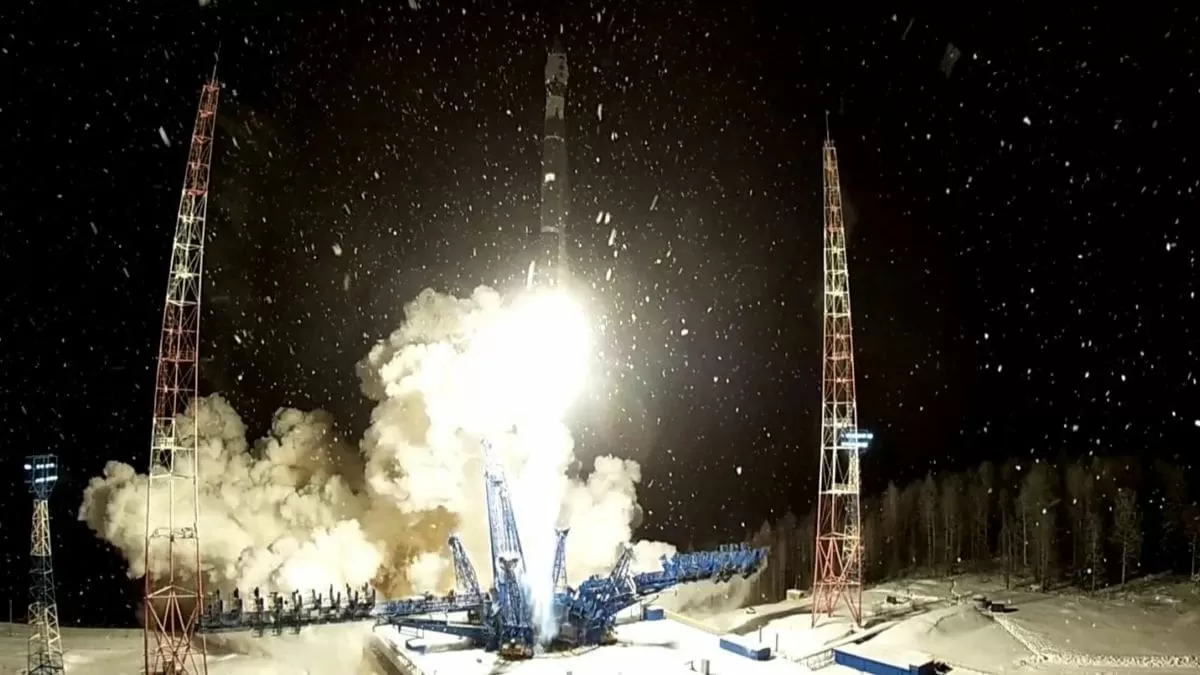
The trio of satellites, known as Kosmos 2542, 2543, and 2544, were launched from Plesetsk Cosmodrome in northern Russia on February 20, 2020. The satellites were expected to perform a variety of tasks, including monitoring the Earth’s surface and gathering data on weather patterns. However, on March 18, an unknown object was released from one of the satellites, sparking curiosity and speculation among space enthusiasts.
The object, which has been described as a small, reflective sphere, has been observed by several space agencies and amateur astronomers. However, its purpose and origin remain a mystery. The Russian authorities have not commented on the incident, adding to the intrigue surrounding this event.
Many experts believe that the release of the object may be linked to military or satellite testing. The fact that the satellites were seen performing maneuvers before and after the object’s release has raised suspicions. Some have even speculated that the object could be a prototype of a new anti-satellite weapon.
However, others have suggested that the object could be a satellite itself, released for testing purposes. This theory is supported by the fact that the trio of satellites was launched under the auspices of the Russian Ministry of Defense. It is not uncommon for countries to test new technologies in space, and the release of this object could be part of such a project.
Despite the lack of official comments from the Russian authorities, there have been some hints that the incident may be related to military activities. The United States Space Command has acknowledged the release of the object and is closely monitoring its movements. This indicates that the object may pose a potential threat to other satellites in orbit.
The release of this unknown object has also raised concerns about the growing militarization of space. With more countries investing in space technologies and the development of anti-satellite weapons, the risk of a space-based conflict is becoming a reality. The incident with the Kosmos satellites serves as a reminder that space is no longer a peaceful and neutral domain.
The international community has called for transparency and cooperation from the Russian authorities regarding this incident. As space activities continue to increase, it is crucial for countries to communicate and collaborate to ensure the safety and sustainability of space operations.
In the midst of all the speculation and concerns, one thing is clear – the Kosmos satellites have certainly captured the world’s attention. The release of this unidentified object has sparked discussions and debates about the future of space exploration and security. It has also highlighted the need for better regulations and protocols in space activities to avoid such incidents in the future.
As we await further updates and explanations from the Russian authorities, one can’t help but marvel at the technological advancements that have made such missions possible. The launch of the Kosmos satellites and the release of this mysterious object is a testament to the capabilities of the Russian space program.
Let us hope that this incident leads to a greater understanding and cooperation among nations in the exploration and utilization of space. The potential of space technology to benefit humanity is immense, and it is essential to ensure that it is used for peaceful purposes.
In conclusion, the release of an unidentified object by the Russian Kosmos satellites has raised many questions and concerns. While experts continue to speculate about its purpose and origin, it is crucial for all countries to work together towards a safe and sustainable future in space. Let us hope that this incident serves as a catalyst for greater collaboration and transparency in space activities.
