

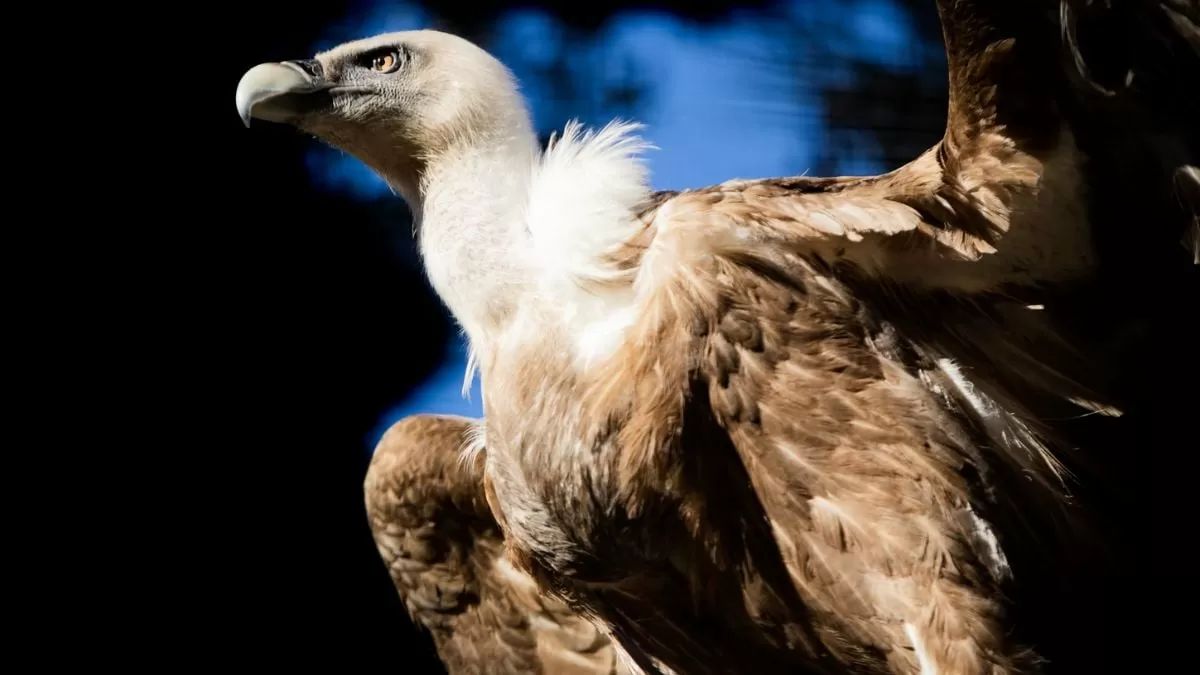
Fossilized feathers of a 30,000-year-old vulture have been discovered in volcanic ash near Rome, Italy. This remarkable find has not only provided a glimpse into the past, but has also revealed a unique preservation process that has captured the attention of scientists around the world.
Unlike typical fossilized feathers, which are usually flattened and two-dimensional, these feathers have retained their three-dimensional structures. This is a rare occurrence in the world of paleontology, and has sparked great interest and excitement among researchers.
The preservation of these feathers is believed to be due to the presence of zeolite minerals in the volcanic ash. Zeolites are a group of minerals that form in volcanic environments and have the ability to trap and preserve organic materials. This is the first time that zeolites have been linked to the preservation of feathers, making this discovery even more significant.
The vulture, which has been identified as a Eurasian black vulture, was found buried in a low-temperature pyroclastic deposit. Pyroclastic deposits are formed when volcanic ash and other materials are ejected during a volcanic eruption. These deposits are known to preserve organic materials, but the low-temperature conditions in which this vulture was buried allowed for the preservation of its feathers in such a unique manner.
The analysis of the fossilized feathers revealed that they were well-preserved and still retained their original coloration. This is a rare occurrence in the world of paleontology, as most fossils are devoid of color due to the natural processes of decay. The presence of color in these feathers has provided scientists with valuable information about the vulture’s appearance and behavior.
This discovery has also shed light on the behavior of vultures during the time of the eruption. It is believed that the vulture was flying over the volcanic area when the eruption occurred, causing it to fall into the ash and become buried. This suggests that vultures were present in the area during the time of the eruption, and were not just scavenging on the aftermath.
The preservation of these feathers has also opened up new possibilities for studying ancient birds. With this new understanding of how feathers can be preserved, scientists can now look for similar preservation processes in other fossilized bird specimens. This could potentially provide a wealth of information about the evolution and behavior of birds in the past.
This discovery has also highlighted the importance of volcanic environments in the preservation of fossils. Volcanic eruptions have the potential to create unique conditions that can preserve organic materials in ways that are not possible in other environments. This has opened up new avenues for research and has the potential to uncover more fascinating discoveries in the future.
The findings of this study have been published in the scientific journal, Scientific Reports, and have already garnered attention from the scientific community. The study was led by Dr. Fabio Maniscalco from the University of Rome, along with a team of international researchers from Italy, Spain, and the United States.
The discovery of these fossilized feathers has not only provided new insights into the past, but has also highlighted the importance of preservation and the role that natural processes play in it. It is a testament to the resilience of nature and its ability to surprise us with its wonders.
In conclusion, the discovery of fossilized feathers of a 30,000-year-old vulture in volcanic ash near Rome has revealed a unique preservation process that has fascinated scientists. The presence of zeolite minerals in the ash has allowed for the preservation of the feathers in their original three-dimensional form, providing valuable insights into the past. This discovery has the potential to open up new avenues for research and could lead to more exciting discoveries in the future.
