

Massive Megaripples Mapped Deep Beneath Louisiana Reveal New Insights into Ancient Tsunami
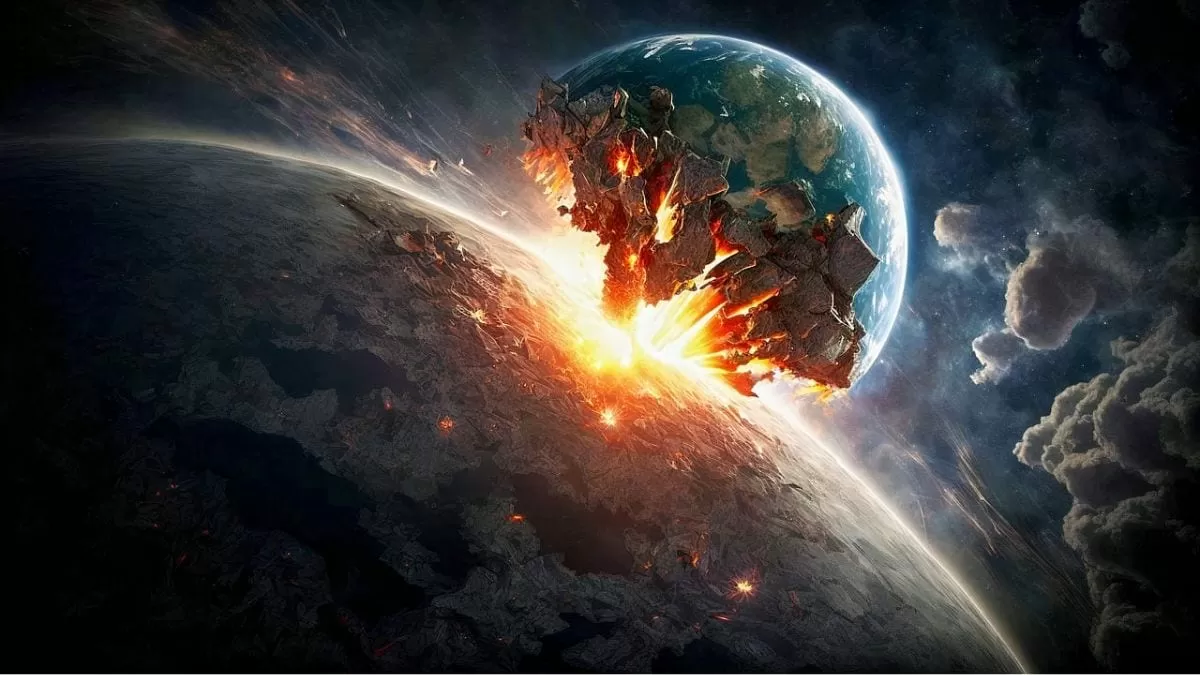
The year was 66 million years ago, and the Earth was a very different place. Dinosaurs roamed the land, and the oceans were teeming with life. But all of that changed in an instant when a massive asteroid, estimated to be 6 miles wide, struck the Earth near the Yucatan Peninsula in modern-day Mexico. The impact was catastrophic, causing a global extinction event and wiping out nearly 75% of all species on Earth, including the dinosaurs.
But the impact of this asteroid, known as the Chicxulub impact, was not limited to just the immediate destruction it caused. Scientists have long speculated about the global impact of the tsunami that was triggered by the impact, and now, new research has shed light on the force and reach of this ancient tsunami.
Using 3D seismic data, a team of scientists from the University of Texas at Austin has mapped massive megaripples deep beneath the surface of Louisiana. These formations, averaging 52 feet in height and spanning 900 square miles, were formed by the tsunami that followed the Chicxulub impact. This discovery has provided new insights into the force of the ancient tsunami and its global impact.
The team, led by Dr. Sean Gulick, used advanced imaging techniques to map the seafloor beneath Louisiana. What they found was a series of massive megaripples, which are essentially underwater sand dunes, formed by the powerful force of the tsunami. These megaripples were buried under layers of sediment over millions of years, but the 3D seismic data allowed the team to see them in unprecedented detail.
The megaripples, which are up to 100 times larger than typical ripples found on the seafloor, provide evidence of the immense force of the tsunami. The team estimates that the waves would have been at least 300 feet high when they reached the coast of Louisiana, and would have traveled at speeds of up to 100 miles per hour. This is equivalent to the force of a category 5 hurricane, but on a much larger scale.
But the impact of the tsunami was not limited to just the immediate coastal areas. The team also found evidence of the megaripples as far as 1,200 miles away from the impact site, in the Gulf of Mexico. This suggests that the tsunami had a global reach, and its effects were felt far beyond the immediate impact zone.
The findings of this study have important implications for our understanding of the Chicxulub impact and its global impact. By mapping these megaripples, scientists can now model the force and reach of the ancient tsunami, providing valuable insights into the events that followed the asteroid impact. This can help us better understand the extinction event that wiped out the dinosaurs and shaped the course of life on Earth.
But the impact of this research goes beyond just understanding the past. The team believes that these findings can also help us prepare for future natural disasters. By studying the force and reach of the ancient tsunami, scientists can develop better models to predict and mitigate the effects of tsunamis caused by asteroid impacts or other catastrophic events.
The discovery of these massive megaripples deep beneath Louisiana is a testament to the power of scientific research and the advancements in technology that allow us to uncover new insights into our planet’s history. This study not only sheds light on the ancient tsunami that followed the Chicxulub impact, but also highlights the importance of understanding natural disasters and their global impact.
As we continue to explore and learn more about our planet, it is discoveries like this that remind us of the incredible forces that have shaped our world and continue to shape it today. The megaripples deep beneath Louisiana are a reminder of the power of nature and the importance of understanding and respecting it. And with continued research and advancements in technology, we can continue to uncover the mysteries of our planet’s past and use that knowledge to build a better future.
