

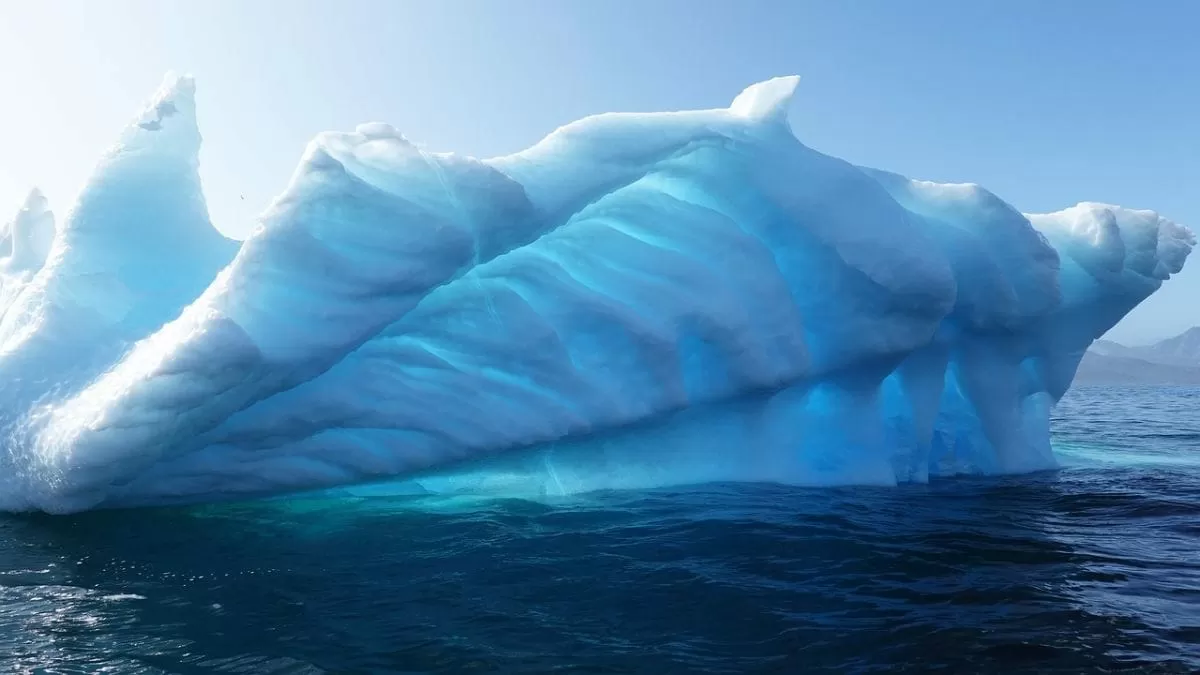
Recent research has revealed a startling discovery about the island of Greenland – a place known for its vast, icy landscape. It turns out that this frozen land was not always covered in ice. In fact, just a million years ago, Greenland was almost entirely ice-free, with a thriving tundra ecosystem that was home to plants like willow and Arctic poppy. This new finding challenges our previous beliefs about the island and sheds light on its ever-changing climate.
Greenland, the world’s largest island, is located in the Arctic region and is known for its massive ice sheet that covers 98% of its surface. This ice sheet is up to 3 kilometers thick in some places and has been a defining feature of Greenland for thousands of years. However, a team of scientists from the University of Vermont, led by Professor Paul Bierman, has discovered evidence that suggests that this was not always the case.
The team collected an ice core sample from the center of the island, which is a long cylinder of ice that contains layers of snow and ice that have accumulated over thousands of years. By analyzing the chemical composition of the ice core, the scientists were able to determine the age of the ice and the climate conditions at the time it was formed.
To their surprise, they found that the ice core contained fossils of plants that are typically found in tundra regions, such as willow and Arctic poppy. These plants are not able to survive in the harsh conditions of an ice sheet, which means that at some point in the past, Greenland must have had a much milder climate.
This discovery is significant because it challenges the widely held belief that Greenland has always been a frozen wasteland. It also raises questions about how the island’s climate has changed over time and what may have caused these changes. The findings also have implications for our understanding of the current climate crisis and how it may affect the Arctic region.
According to Professor Bierman, the evidence suggests that Greenland was once much warmer than it is today, with a climate similar to that of present-day Iceland. This means that the ice sheet we see today is a relatively recent phenomenon, and that the island has undergone significant changes in its climate over the past million years.
The team’s findings have been published in the journal Proceedings of the National Academy of Sciences and have already sparked a lot of interest in the scientific community. Experts from around the world have praised the study for its innovative approach and its potential to change our understanding of Greenland’s history.
One of the most exciting aspects of this discovery is the glimpse it gives us into the past. The fact that Greenland was once a much warmer and greener place is a testament to the ever-changing nature of our planet. It also highlights the importance of studying our planet’s history to better understand its present and future.
The study also has implications for the future of Greenland and its inhabitants. As the world continues to warm due to human activities, the ice sheet on Greenland is melting at an alarming rate. This has already led to rising sea levels and could have devastating consequences for the island and its people.
However, this new research shows that Greenland has been able to adapt to changing climates in the past. This gives hope that the island may be able to withstand the current climate crisis and continue to thrive in the future. It also emphasizes the need for urgent action to reduce our carbon footprint and mitigate the effects of climate change.
In conclusion, the recent discovery that Greenland was once almost entirely ice-free is a groundbreaking finding that challenges our previous beliefs about the island. The presence of fossils of plants that are not able to survive in an ice sheet suggests that the island’s climate has undergone significant changes over the past million years. This discovery not only sheds light on the island’s past but also has implications for its future and our understanding of the current climate crisis. It is a reminder of the ever-changing nature of our planet and the need to take action to protect it.
